British parliamentarians who were previously subject to Chinese sanctions have criticised the selective lifting of these restrictions as sending a "damaging signal" that some individuals are more deserving of protection than others. The sanctions, which included travel bans to China, were lifted following talks between Prime Minister Sir Keir Starmer and Chinese President Xi Jinping during the Labour leader's diplomatic visit to Shanghai.
Parliamentarians Voice Concerns Over Selective Approach
The group of affected MPs and peers, including former Conservative leader Sir Iain Duncan Smith, released a joint statement expressing their dissatisfaction with what they described as the "wrong" approach taken by the Chinese authorities. They emphasised that while sanctions against sitting parliamentarians had been removed, restrictions remained in place against other campaigners and possibly even their own family members.
"The selective lifting of sanctions solely on sitting parliamentarians is wrong," the parliamentarians stated firmly. "Parliament exists to represent and defend the people of the United Kingdom. Seeking or accepting preferential treatment for current MPs and peers sends a damaging signal that some are more deserving of protection than others."

Starmer's Diplomatic Engagement in Shanghai
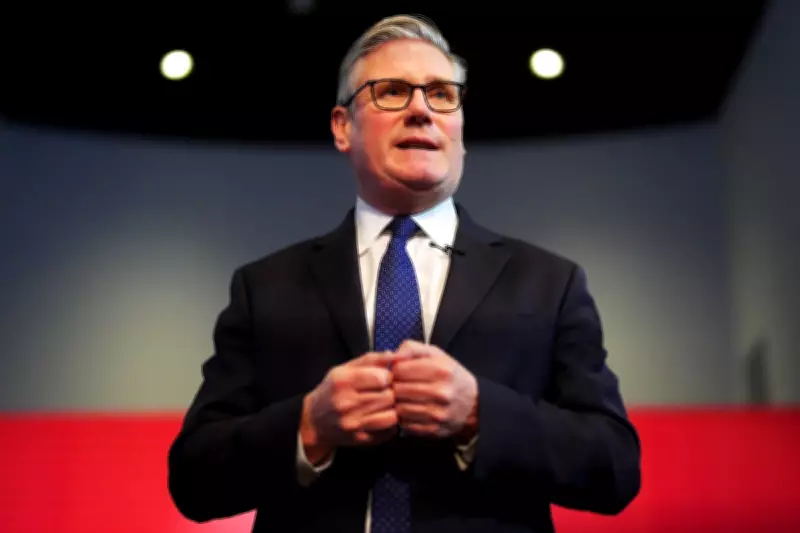
Sir Keir Starmer revealed the lifting of sanctions during a series of broadcast interviews conducted in Shanghai, where he was addressing Chinese and UK business delegations at a House of UK reception. The Prime Minister explained that he felt "duty-bound" to raise the issue of sanctions against British parliamentarians during his discussions with President Xi.
"This has been a cause of concern in Parliament and for parliamentarians for some time and that is why I raised it on this visit," Starmer told ITV News. "And the response from the Chinese is that the restrictions no longer apply and President Xi has told me that that means that all parliamentarians are welcome to visit."
The Prime Minister added that this development underscored his consistent argument that engagement and leader-to-leader dialogue could help resolve difficult issues between the two nations while also creating opportunities for cooperation.
Continued Human Rights Concerns
The parliamentarians made clear that the lifting of sanctions would not deter them from continuing to speak out against human rights abuses, particularly the targeting of the Uighur Muslim minority in China's Xinjiang province. They stated they could take "no comfort" in the decision while pro-democracy campaigner and British citizen Jimmy Lai remained imprisoned and the Uighurs continued to suffer atrocities.
In their joint statement, the affected politicians also called for "clear assurances" that the UK's own sanctions against four Chinese government officials and a state-run organisation involved in human rights abuses in Xinjiang would remain firmly in place. These British sanctions were originally imposed in response to the documented abuses against the Uighur Muslim minority.
Political Reactions and Skepticism
Conservative leader Kemi Badenoch expressed skepticism about the Chinese government's motivations, suggesting the sanctions removal might be temporary and calculated to facilitate President Xi's potential visit to the UK Parliament. "Let's see how long this lasts," Badenoch remarked. "I think that this is something that they have done so that the Chinese president can have a visit to Parliament. I wouldn't be surprised if sanctions go back after that."
Badenoch further criticised the Labour government's approach, stating: "Labour weak, and what they've done is just given China everything they want for absolutely nothing in return."
Chinese Foreign Ministry Statement
The Chinese foreign ministry confirmed the development, stating: "The two sides agreed in principle to resume normal exchanges between the legislatures of the two countries. China welcomes British parliamentarians who have the willingness to visit China more and experience the real China."

It is understood that Britain will not be lifting its own restrictions on Chinese officials in exchange for this gesture from Beijing. The original Chinese sanctions were imposed in 2021 in retaliation for the UK's measures against Chinese officials and included prominent British politicians such as Sir Iain Duncan Smith, former security minister Tom Tugendhat, Commons deputy speaker Nus Ghani, Tory MP Neil O'Brien, former MP Tim Loughton, and peers Lord Alton of Liverpool and Baroness Kennedy of the Shaws.
The parliamentarians noted with concern that sanctions appeared to remain against Mr Loughton as a former MP and other campaigners, reinforcing their argument about the problematic nature of selective sanction relief.