
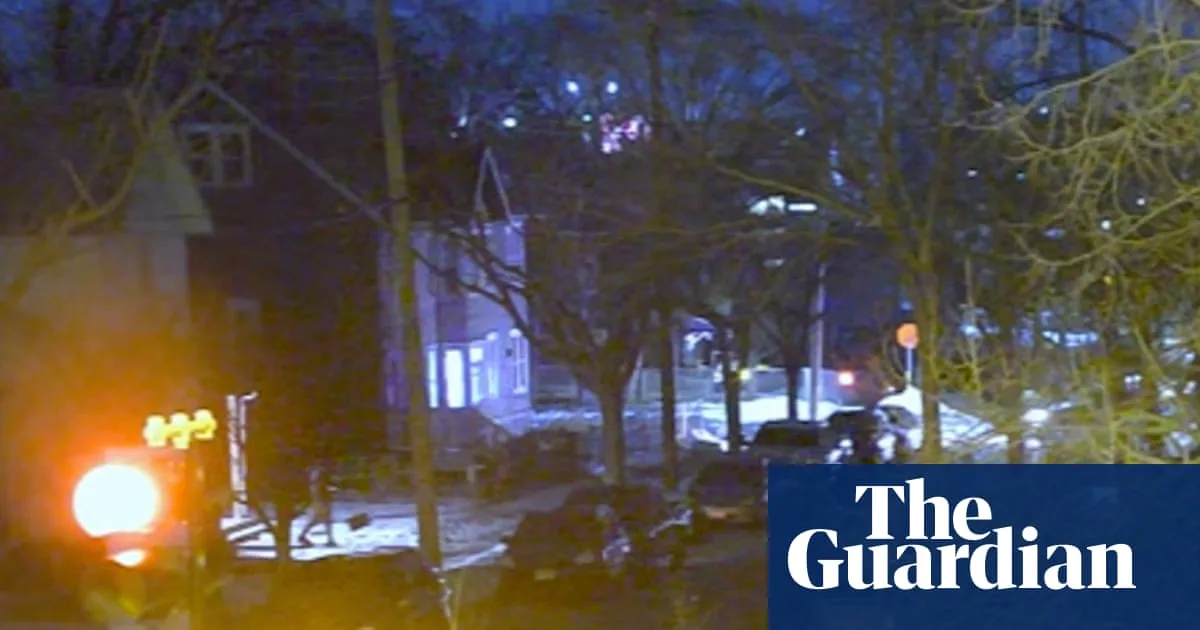
Newly released surveillance footage has undermined the accounts of two US Immigration and Customs Enforcement (ICE) officers involved in a January shooting in Minneapolis, the latest in a series of cases where video evidence has contradicted the agency’s narrative. The incident, part of a large-scale anti-immigration crackdown under Donald Trump, has raised questions about accountability within ICE.
On 14 January, officers attempted to stop a car whose owner was identified as an unauthorised immigrant. The driver, Venezuelan national Alfredo Aljorna, sped off, crashed, and fled toward an apartment building where his roommate, Julio Sosa Celis, stood holding a broad-bladed snow shovel. According to the FBI affidavit, the officers claimed they were attacked and fired at Sosa Celis. Both men were later charged with assaulting a federal officer, but the prosecution collapsed after evidence failed to support the claims of a violent altercation.
The footage, released this week, is the third time video evidence has undermined ICE’s description of an officer-involved shooting in Minneapolis as self-defence. Previous fatal shootings of Renee Nicole Good and Alex Pretti, captured on bystander cellphone videos, appeared so excessive that they prompted a reorganisation of the Department of Homeland Security leadership amid waning public support for the mass deportation campaign.
Muzaffar Chishti of the Migration Policy Institute noted that Minnesota has become a crucial point for accountability in immigration enforcement. Unlike previous responses, ICE Director Todd Lyons has placed the officers on administrative leave and stated they may face dismissal or criminal prosecution for making false statements. An ICE spokesperson confirmed the US attorney’s office is actively investigating the false statements, which could lead to termination or prosecution.
Gabe Sanchez of the Brookings Institution described the developments as “baby steps” but acknowledged movement toward accountability. However, questions remain whether this signals a real shift or merely a softer tone and goodwill gestures. The case highlights how easily the prosecution proceeded initially, with little pushback from investigating agencies, reflecting a broader pattern of impunity within ICE.




