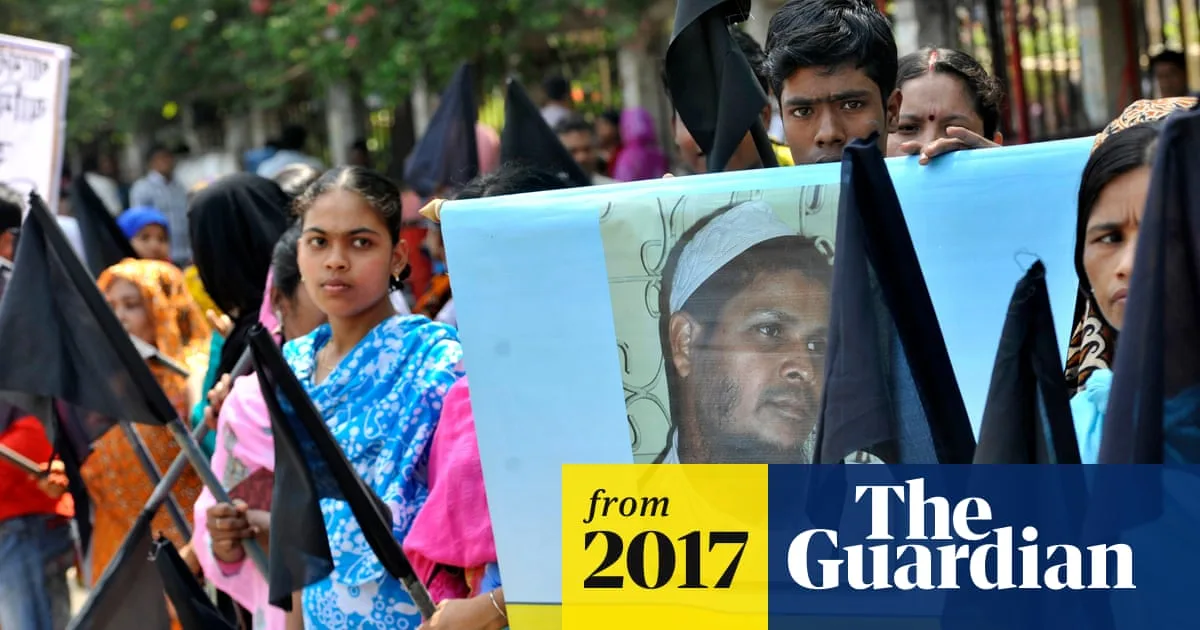
A scathing report by Human Rights Watch (HRW) has accused Bangladeshi authorities of failing to investigate the torture and murder of prominent union activist Aminul Islam, five years after his death. The report, released on the anniversary of his disappearance, criticises the government for not making progress in the case or probing allegations of state involvement.
Islam, 39, worked for the Bangladesh Centre for Worker Solidarity (BCWS), advocating for factory workers' rights. He disappeared on 4 April 2012, and his body was found two days later with severe torture marks, including a hole made by a sharp object and broken toes. Police chief Mahbubul Haq confirmed he was murdered.
HRW deputy Asia director Phil Robertson stated: 'Neither Aminul Islam’s family nor the public know the truth about what happened and who killed him. The authorities seem to have washed their hands of the entire incident by suggesting that his death was due to a private dispute – without investigating the serious allegations of security forces involvement.'
Despite international outrage and a government pledge for a high-level investigation, only one suspect, Mustafizur Rahman, a former garment worker, was charged in 2013. Rahman disappeared at the same time as Islam, and no progress has been made on allegations linking security forces to the killing. HRW and Bangladeshi groups have called for an independent inquiry.
Islam had reported threats and surveillance before his death, due to his work pressing for better conditions and pay. HRW claims that despite labour law reforms after the 2013 Rana Plaza disaster, authorities continue to intimidate workers and unions, with dozens facing fabricated criminal cases after wage strikes.