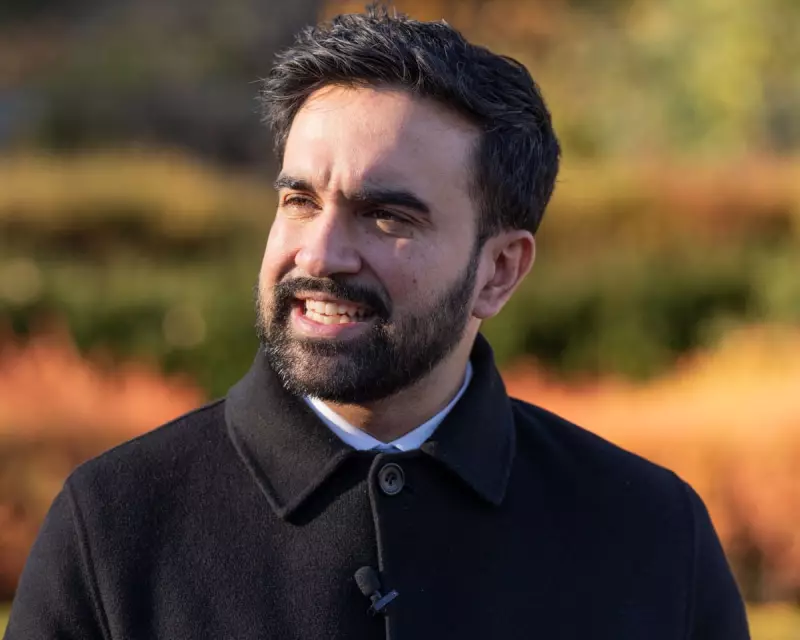
The decisive victory of Zohran Mamdani in New York City's mayoral election on 4 November represents a political earthquake that should concern Benjamin Netanyahu's Israeli government. Mamdani has shattered longstanding political taboos regarding criticism of Israel, achieving electoral success while openly condemning what he describes as genocide in Gaza.
Breaking Political Taboos
What makes Mamdani's achievement particularly remarkable is the demographic context. New York hosts the largest Jewish population in the United States and the second-largest Jewish community globally after Tel Aviv. Conventional political wisdom suggested that criticising Israel would alienate Jewish voters who prioritised defending the Israeli government.
Mamdani demolished this assumption during his campaign by speaking openly about Israel's military actions in Gaza, insisting on equal rights for all Israeli residents, and declaring he would arrest Netanyahu if the Israeli leader visited New York. Despite these positions, approximately one-third of New York's Jewish voters supported his candidacy.

Post-Election Continuation
Since his election victory, Mamdani has maintained his critical stance. During his 21 November meeting with Donald Trump at the White House, the mayor-elect repeated his genocide allegations and noted that the US government funds Israeli military operations. Trump notably allowed these comments to pass without response.
Mamdani further demonstrated his position when a major Manhattan synagogue hosted a group encouraging American Jews to emigrate to Israeli settlements in the occupied West Bank. He correctly noted the illegality of these settlements under Article 49 of the Fourth Geneva Convention, which prohibits population transfers to occupied territory.
Political Context and Implications
While other New York politicians have criticised Israel, Mamdani's approach differs significantly in its directness. Compare his statements to Senate Minority Leader Chuck Schumer's March 2024 speech, which carefully balanced Israel's right to self-defence with concerns about Palestinian civilian casualties. Schumer's measured language contrasts sharply with Mamdani's unfiltered criticism.
The political shift extends beyond Mamdani's individual victory. His success has encouraged other progressive candidates in New York congressional contests to adopt similar positions on Israel, suggesting he has initiated a broader trend.
This development occurs against an international backdrop where Israel faces growing isolation. Germany temporarily suspended arms sales for Gaza operations, while Britain, Canada, France and Australia recognised Palestinian statehood. The International Court of Justice has heard genocide charges against Israel, and the International Criminal Court considers war crime allegations against Netanyahu and his former defence minister.
Israel now depends overwhelmingly on American military aid, arms sales and diplomatic support. The changing political landscape in New York, traditionally a bellwether for American Jewish opinion, suggests that unconditional support for Israel may no longer be politically obligatory in Washington.
This evolution in American politics represents both hope for Palestinian rights and a significant challenge to Netanyahu's government, which can no longer assume automatic American acquiescence to its policies in Gaza and the West Bank.