Iran Grants Passage to Malaysian Vessels Through Strait of Hormuz
In a significant diplomatic development, Iran has announced that Malaysian vessels will be permitted to travel through the Strait of Hormuz. This decision follows high-level talks between Malaysian Prime Minister Anwar Ibrahim and Iranian President Masoud Pezeshkian, as confirmed in a televised address on Thursday.
Diplomatic Efforts Yield Positive Results
Prime Minister Anwar Ibrahim expressed gratitude to President Pezeshkian for allowing the passage of Malaysian ships, stating, "We are now in the process of releasing the Malaysian oil tankers and the workers involved so that they may continue their journey home." The announcement came after Anwar engaged in discussions with leaders from Iran, Egypt, Turkey, and other regional countries to address the critical situation.
Malaysia, despite being an oil-producing nation, relies heavily on oil transported through the Strait of Hormuz, with approximately 50% of its oil supply passing through this vital waterway. Anwar emphasized the necessity of managing the blockade's effects, noting, "For us now, we are compelled to manage the situation because the effects of the blockade at the strait of Hormuz, the war, and the halted supply of oil and gas all have an impact on us."

Limited Traffic Amid Ongoing Tensions
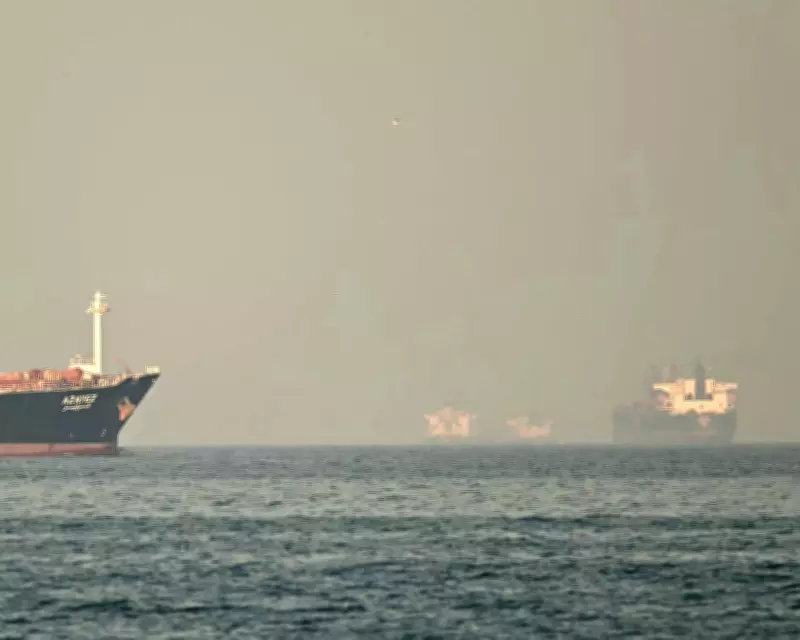
Since Iranian forces effectively blocked the strait in retaliation against US and Israel strikes, only a trickle of cargo ships and tankers have managed to navigate through. Most of these vessels are Iranian, but some from Thailand and China have also made the passage. Earlier this week, a Thai oil tanker safely crossed the strait after diplomatic coordination between Thailand and Iran, without requiring payment to escape the blockade, according to Thai officials and the vessel's owner.
Additionally, at least two Chinese-owned liquefied petroleum gas (LPG) carriers have reportedly transited the strait. A Chinese-owned containership, the Newvoyager, also passed through after making a payment to Iranian authorities, as reported by Lloyd's List. However, not all passages have been smooth; a Thai-flagged cargo ship, the Mayuree Naree, was hit by unknown projectiles earlier this month and has run aground off Iran's Qeshm Island, with three crew members missing after an explosion and fire.
International Response and Future Plans
The UK has recently proposed hosting an international security summit to develop a "viable, collective plan" to reopen the Strait of Hormuz, as the economic fallout from the Iran conflict continues to affect global markets. Defence chiefs are actively discussing strategies to unblock this crucial shipping lane, through which about 20% of global oil supplies typically pass. The ongoing war's impacts are reverberating worldwide, underscoring the urgency of resolving the blockade to stabilize oil supplies and trade routes.