
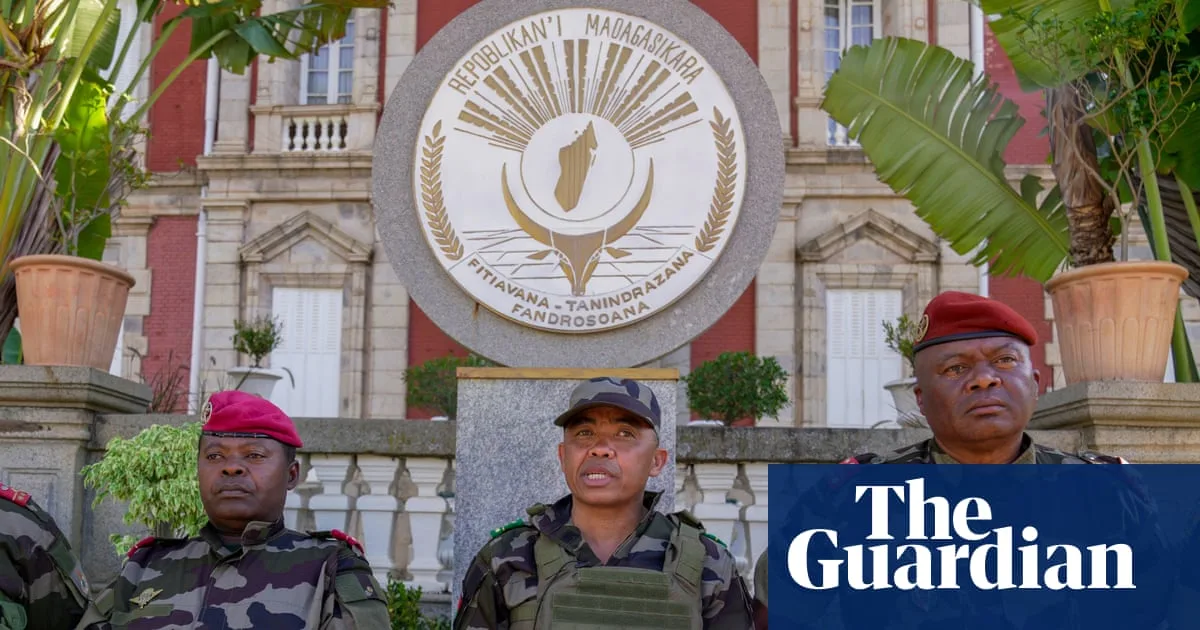
Madagascar’s new military ruler is set to be sworn in as president on Friday, the country’s military said on Wednesday, hours after the African Union suspended the Indian Ocean nation following a coup that ousted President Andry Rajoelina.
The elite Capsat army unit assumed power on Tuesday, moments after parliament voted to impeach Rajoelina amid escalating street protests. Colonel Michael Randrianirina, who has been confirmed as president by the top court, said the transition to civilian leadership would take under two years and include the restructuring of major institutions. “It wasn’t a coup, it was a case of taking responsibility because the country was on the brink of collapse,” he said, pledging elections in 18 to 24 months.
Randrianirina will be sworn in as “president of the refoundation of the Republic of Madagascar” during a solemn hearing of the high constitutional court on 17 October, the military rulers said in a statement. The transition will be overseen by a committee of officers from the army, gendarmerie and police, with consultations under way to appoint a prime minister and form a new government. Randrianirina has long been a vocal critic of Rajoelina’s administration and was reportedly imprisoned for several months in 2023 for plotting a coup.
The swift takeover has drawn international concern. The African Union told AFP on Wednesday it was suspending Madagascar “with immediate effect,” while the United Nations said it was “deeply concerned by the unconstitutional change of power.” France said it was “essential that democracy, fundamental freedoms, and the rule of law be scrupulously upheld,” while Germany’s foreign ministry called for caution and Russia urged restraint and the prevention of bloodshed. The security body of the regional SADC grouping also expressed concern.
In the capital, Antananarivo, calm prevailed late on Wednesday, though uncertainty lingered. A concert was held on the symbolic Place du 13 Mai square, where thousands of protesters and armed vehicles had clashed days earlier. The youth-led Gen Z movement, which initiated protests on 25 September over water and energy shortages before broader anger at the political elite emerged, welcomed Randrianirina’s intervention. “We’re worried about what comes next, but we’re savouring this first victory that gave us hope,” said 26-year-old Fenitra Razafindramanga, captain of Madagascar’s national rugby team. In the northern city of Antsiranana, an entrepreneur named Muriella expressed relief, saying, “It feels like we’ve just been released from prison.”




