French President Emmanuel Macron has aligned with Spain in strongly condemning recent military strikes by the United States and Israel against Iran, branding them as illegal actions that violate international law. In a televised address delivered on Tuesday evening, Macron explicitly stated that the attacks were 'outside the bounds of international law,' echoing similar concerns raised earlier by Spanish Prime Minister Pedro Sanchez.
Military Deployments Announced
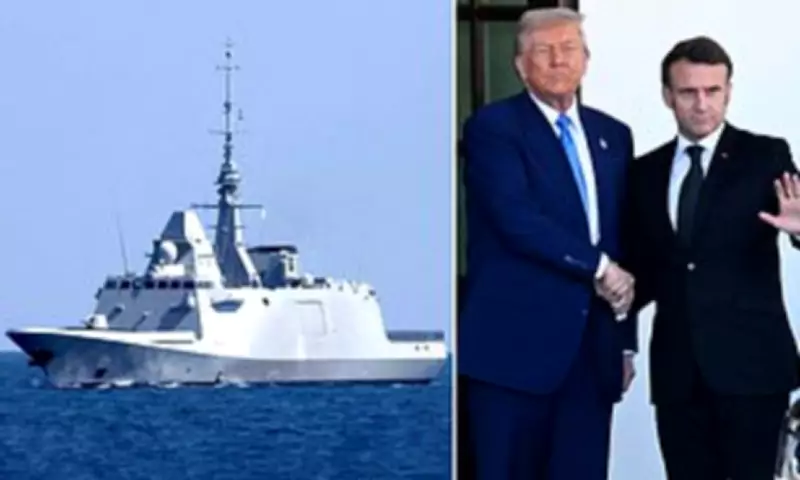
Macron detailed significant military mobilisations in response to the escalating tensions. He has ordered France's nuclear-powered aircraft carrier and accompanying fleet to the Mediterranean Sea, alongside deploying a frigate, the Languedoc, to Cyprus. Additionally, Rafale fighter jets, advanced air defence systems, and airborne radar units have been activated over the Middle East region.
'We will continue this effort as much as necessary,' Macron affirmed, emphasising a commitment to sustained military support. He cited a specific strike on a British air force base in Cyprus on Monday as a catalyst for these actions, noting, 'This requires our support. That is why I have decided to send additional air-defence assets there as well.'
Defensive Posture and Diplomatic Efforts
The French leader insisted that all deployments are 'strictly defensive in nature,' aimed at protecting allies and restoring peace. Macron revealed that France is actively seeking to 'build a coalition to take return of and secure traffic in the Hormuz Strait and the Suez Canal,' highlighting broader strategic concerns. Alongside Germany and the United Kingdom, France is pushing for a ceasefire and has renewed diplomatic negotiations in the volatile region.
International Reactions and Tensions
Macron's address follows Spain's firm stance, with Foreign Minister Jose Manuel Albares declaring that Spain will not permit the use of jointly operated bases in southern Spain for any strikes not authorised by the United Nations charter. Prime Minister Pedro Sanchez had previously warned that such strikes risk creating a 'more uncertain and hostile international order.'
In retaliation, former US President Donald Trump threatened to sever all trade with Spain, asserting, 'We're going to cut off all trade with Spain. We don't want anything to do with Spain.' He controversially added that the US could still use Spanish bases if desired, despite Spain's refusal. However, the feasibility of such a trade cutoff is questionable, as Spain operates under European Union trade agreements negotiated collectively for all 27 member states.
A spokesperson from Spanish Prime Minister Pedro Sánchez's office responded, 'If the US administration wishes to review the trade agreement, it must do so respecting the autonomy of private companies, international law, and bilateral agreements between the European Union and the United States.'
Trans-Atlantic Strains
Macron's speech coincided with Trump hosting German Chancellor Friedrich Merz at the White House. Trump praised Germany for 'helping out' by allowing US access to certain bases, while Merz expressed a shared desire with Trump to topple Iran's current regime. Trump also criticised British Prime Minister Keir Starmer for his reluctance to join the US-Israeli strikes, remarking, 'This is not Winston Churchill that we're dealing with.'
This dispute is straining the trans-Atlantic relationship that Starmer has worked to strengthen, further exacerbated by Trump's 'America first' foreign policy. Trump commented to British tabloid The Sun, 'It's very sad to see that the relationship is obviously not what it was,' noting stronger ties with other European nations like France.
Meanwhile, Merz faced criticism for not defending Spain and Britain following Trump's inflammatory remarks, underscoring the complex diplomatic landscape as Western leaders navigate divergent responses to the Iran conflict.