Brotherly Feud Erupts Over Super Bowl Halftime Show Performance
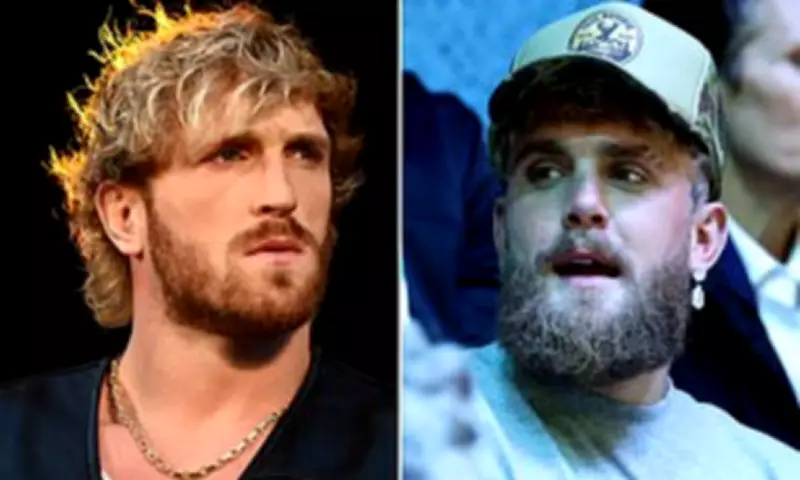
In a dramatic public disagreement, Logan Paul has taken aim at his brother Jake Paul after Jake criticised Puerto Rican artist Bad Bunny as a 'fake American' for performing during the Super Bowl halftime show. The controversy has ignited a fierce debate about cultural representation and American identity.
Jake Paul's Call for Boycott Sparks Outrage
Ahead of the highly anticipated game on Sunday, Jake Paul, aged 29, encouraged fans to boycott the halftime show to express their lack of support for the National Football League. Taking to social media platform X, Jake wrote a lengthy post urging viewers to turn off the broadcast. He described Bad Bunny as 'a fake American citizen performing, who publicly hates America' and stated he could not support the performance.
This stance surprised many followers, given that both Jake and Logan Paul relocated to Puerto Rico in 2021, primarily to leverage tax benefits available on the island. Jake currently resides in a luxurious 12,000 square-foot mansion in Dorado, Puerto Rico, valued at approximately $16 million.

Logan Paul's Firm Rebuttal in Defence of Puerto Rico
Logan Paul swiftly condemned his brother's comments, reposting Jake's words while insisting that his sibling's opinion did not align with his own. The YouTuber, who attended the Super Bowl with his model wife Nina Agdal, wrote clearly: 'I love my brother but I don't agree with this.' He emphasised that 'Puerto Ricans are Americans & I'm happy they were given the opportunity to showcase the talent that comes from the island.'
This defence comes despite Logan having previously stated in a video interview with Fox News at the game that he was not excited for Bad Bunny's halftime show, leading some fans to accuse him of 'damage control' in his later supportive statements.
Public Backlash Highlights Perceived Hypocrisy
Fans were quick to call out Jake Paul on what many described as 'hypocritical comments.' One social media user pointedly remarked: 'You own a house in Puerto Rico and fly its flag when it's convenient. Rather than saying "fake American", just say what you really mean.' Another commented: 'Jake Paul currently lives in Puerto Rico to avoid paying American Taxes. You can't make this up.'
The criticism intensified given Jake's previous displays of Puerto Rican pride, including showcasing the Puerto Rican flag during sports events and wearing it on his boxing shorts during his fight against Anthony Joshua last year. This conflicting behaviour has not gone unnoticed by observers.
Bad Bunny's Performance Divides American Audience
Puerto Rican native Bad Bunny's Spanish-language halftime show has profoundly divided American public opinion. Some viewers complained that the performance was not 'reflective of U.S. culture,' while others insisted it provided positive representation for the Hispanic and Latino community, arguing this is ultimately part of wider American culture.
The performance itself was a spectacular production, transforming the football field at Levi's Stadium in California into a sugarcane plantation complete with domino players, a Latino wedding scene, and utility poles for climbing. Bad Bunny delivered almost his entire set in Spanish, joined by special guests including Lady Gaga, Pedro Pascal, Ricky Martin, Jessica Alba, Karol G, and Cardi B.
Political Dimensions and Trump's Scathing Critique
The controversy took on additional political dimensions when former President Donald Trump called Bad Bunny's all-Spanish Super Bowl halftime show 'one of the worst ever' and 'a slap in the face' to America. Trump criticised the performance as 'absolutely terrible' and claimed there was 'nothing inspirational' about choosing a star who didn't perform in English.
This criticism came just a week after Bad Bunny used his Grammy Awards acceptance speech for Best Música Urbana Album to criticise the Trump administration's U.S. Immigration and Customs Enforcement department. The artist declared: 'We're not savage, we're not animals, we're not aliens. We are humans and we are Americans.'

During his Super Bowl performance, Bad Bunny reinforced this message by holding a football with the words 'Together, we are America' written on it, while a message on the big screen read: 'The only thing more powerful than hate is love.'
Broader Cultural Conversation About American Identity
The Paul brothers' public disagreement has sparked a wider conversation about what constitutes American culture in today's diverse society. While some viewers celebrated Bad Bunny's performance as 'a vibrant, well-put-together celebration and tour of Puerto Rican and broader Latin culture,' others echoed Trump's sentiments, with one social media user writing: 'The NFL had a once in a lifetime to honor the USA with a Happy 250th Birthday half-time show. They blew it with foreign flags and a Spanish speaker.'
The controversy also highlights the complex relationship between Puerto Rico and the mainland United States, with Bad Bunny having previously released a documentary exploring gentrification and displacement of local Puerto Ricans caused by wealthy outsiders moving to the island under tax incentive programs—the very programs the Paul brothers have utilised.
As the debate continues, the fundamental question remains: who gets to define American culture, and what role should the diverse communities that comprise the nation play in that definition? The Paul brothers' very public disagreement has brought these questions to the forefront of national conversation.