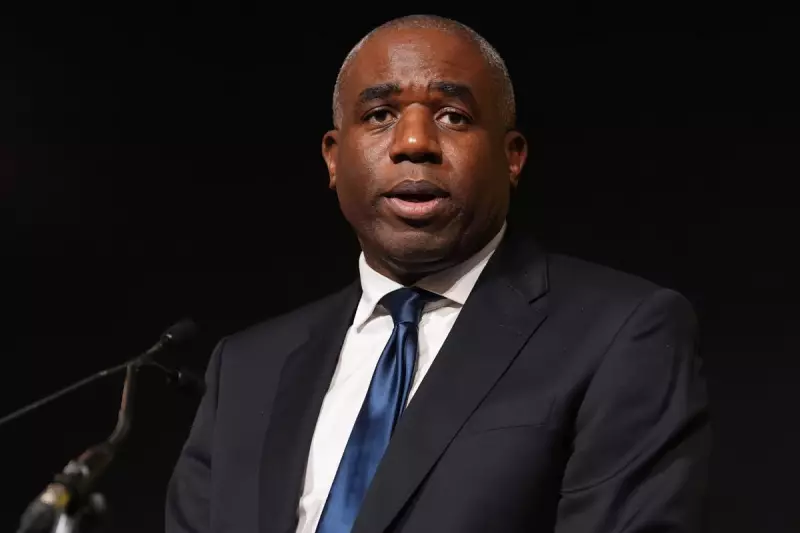
David Lammy has asserted that Donald Trump's dramatic reversal on his threats to annex Greenland was directly prompted by the United Kingdom and European nations expressing their clear "displeasure" with the American president's aggressive stance.
Transatlantic Tensions Over Arctic Territory
The ongoing dispute concerning Greenland has emerged as a significant flashpoint in relations between the United States and Europe, testing diplomatic bonds that have endured for decades. President Trump had previously threatened to impose substantial tariffs on European nations that opposed his controversial bid to take control of the semi-autonomous Danish territory, escalating tensions across the Atlantic.
A Sudden Diplomatic Retreat
However, in a notable shift on Wednesday, the American leader appeared to row back from his confrontational position. He announced he would no longer introduce the threatened tariffs after agreeing what he described as a "framework of a future deal" concerning security in the Arctic region. This agreement followed intensive talks with NATO Secretary-General Mark Rutte, signalling a potential de-escalation.

Furthermore, during a comprehensive and wide-ranging speech delivered at the World Economic Forum in Davos, President Trump appeared to explicitly rule out employing military force to annex Greenland, marking a substantial departure from his earlier rhetoric.
Lammy's Assessment of the Shift
Speaking candidly to the BBC's Political Thinking podcast, Deputy Prime Minister David Lammy provided his analysis of the situation. He stated that the United States, "despite the noise, has responded to our concerns" regarding the Greenland matter.
"Donald Trump stepped back from any suggestion of force and he stepped back from the use of tariffs," Mr Lammy declared. "Why? Because his close friend, the United Kingdom, and European partners expressed their displeasure and he has stepped back."
International Reactions and the 'Rupture' Debate
The Greenland controversy has prompted strong responses from numerous Western leaders. Sir Keir Starmer issued what observers noted was his most robust response yet to President Trump's actions. Meanwhile, French President Emmanuel Macron utilised his platform at Davos to voice opposition to international "bullies," in remarks widely interpreted as criticism of the American approach.
Adding to the chorus, Canadian Prime Minister Mark Carney declared the world was currently "in the midst of a rupture" where "great powers" were employing economic integration as "a weapon" in geopolitical disputes.
Denying a Complete Breakdown
Despite these stark warnings from allies, Mr Lammy insisted in his BBC interview that there had been no fundamental "rupture" in the relationship between the UK and the United States. He sought to downplay suggestions of a complete diplomatic breakdown.
Nevertheless, the Deputy Prime Minister candidly acknowledged that the nature of international relations has undergone significant transformation. "The tectonic plates have shifted. There is profound change," he observed. "And one of those changes is that countries like the United States, and others, can use in this new environment coercion instead of the courts to settle disputes."
This statement underscores a broader concern among European leaders about shifting global norms, where economic and political pressure may increasingly replace established legal and diplomatic channels for resolving international disagreements. The Greenland episode serves as a potent case study in these evolving dynamics between traditional allies.