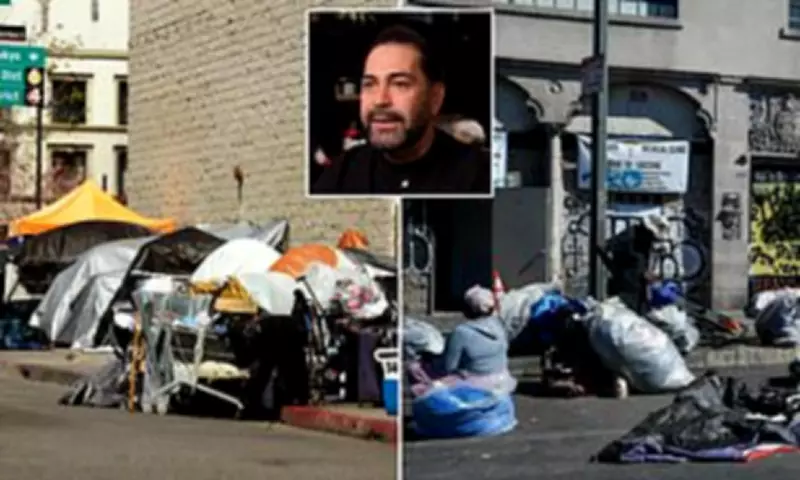
In the early 2000s, Los Angeles was a pop culture paradise, with streets thronged by fans hoping to catch a glimpse of their favourite stars. Today, according to one expert, the City of Angels has lost its glitter, with its once-vibrant nightlife scene officially declared dead.
The Utopian Era of LA Nightlife
Real estate agent and native Angeleno Makan Mostafavi told the Daily Mail that the year 2000 represented a utopian period for Los Angeles. "Everybody wanted to come to LA. Everyone wanted to party in LA," he recalled. "The economy was great, everyone had money. Nobody complained about rent or payments or bills or any kind of headaches. Everybody was well off. Everybody was happy."
During this golden era, it was common to see celebrities like Lindsay Lohan, Britney Spears, and Paris Hilton hitting the clubs. Mostafavi remembered that dining out with friends cost around $80 per person, followed by $8 beers at exclusive venues. Access to the best clubs required connections to promoters or celebrity status, with long lines often leaving ordinary hopefuls outside.

The Stark Contrast of Modern LA
Today, Mostafavi describes a city where stress permeates daily life. "When you do go out, everyone around you is so stressed out from rent bills, just stressed of everyday life, with everything that's going on - the homeless, the crime, the high taxes, the just terrible road conditions," he said. "It's just not as fun anymore."
The financial burden has increased dramatically, with dinner now estimated at $250 per person and drinks reaching $30 each. Meanwhile, club exclusivity has vanished - dress codes have relaxed to the point where "you could go in in sweats and in flats," and lines move freely with minimal waits.
Social and Safety Concerns
Mostafavi identified several factors contributing to LA's nightlife decline. Social media has changed behaviour, with young people now standing around on their phones, cautious that excessive revelry might end up online the next day. Safety concerns have escalated, with women hiding expensive jewellery and bags at home, and men keeping Rolex watches out of sight to avoid robbery.
"Robbers have gotten smart too, now bringing the screwdriver that unlocks the Cartier love bracelets," Mostafavi noted wryly. "It's comical." Crime statistics show 1,393 armed robberies in 2025, slightly down from 1,856 in 2024, but overall violent crimes in Los Angeles County still reached 60,400 last year.
The Impact on Historic Establishments
The decline has affected numerous historic LA venues. Cole's French Dip, credited with creating the iconic sandwich, announced closure in August 2025 due to economic pressures, though customer support has temporarily delayed its shuttering. Le Petit Four restaurant closed after 40 years, unable to cope with rising costs including minimum wage increases from $10 in 2016 to $17.87 today.
"In order for us to survive, we would have to sell $80 steaks," general manager Luc Mena told NBC Los Angeles. Other casualties include the Mayan concert hall (open since 1927), Sunset Boulevard hotspot LAVO, and restaurants Rosaline and The Den. OpenTable data shows restaurant patronage dropped five percent between January and August 2025.
A Broken System Needing Repair
Mostafavi, who has lived in LA since the 1980s, believes the city's problems form a "broken system" that directly impacts nightlife. "If they [the government] can take care of the crime and homelessness and help improve the economy, there's no way [nightlife] would not improve. It would definitely improve," he asserted.
Despite the challenges, Los Angeles was still rated the sixth best US city for nightlife by Time Out in 2025. However, Mostafavi's observations paint a stark picture of transformation from the exclusive, celebrity-filled clubs of the early 2000s to today's more accessible but less vibrant scene.
"It wasn't the celebrities that made people go," he reflected. "The clubs were so fun that the celebrities wanted to have fun too. Everyone had a good time." That era, he suggests, has now passed into history as Los Angeles grapples with complex social and economic realities.