

Discussions between representatives from the United States, Ukraine, and Russia held in Abu Dhabi have been described as constructive, yet significant obstacles remain on the path to a final peace settlement, according to a senior Kremlin official. Kremlin spokesman Dmitry Peskov informed journalists on Monday that while the talks showed positive engagement, no major breakthrough has been achieved so far.
Progress Amid Persistent Challenges
Peskov emphasised that the very initiation of these contacts in a constructive manner can be viewed positively, but he cautioned that serious work lies ahead. The negotiations, which took place on Friday and Saturday, are part of a yearlong effort by the Trump administration to broker a peace deal and conclude nearly four years of intense conflict following Russia's full-scale invasion of Ukraine in February 2022.
Divergent Positions and Security Guarantees
Ukrainian and Russian officials have reportedly agreed in principle with Washington's calls for a compromise, but deep differences persist over the specifics of any agreement. Ukrainian President Volodymyr Zelenskyy also characterised the Abu Dhabi talks as constructive, revealing on Sunday that a document outlining U.S. security guarantees for Ukraine in a postwar scenario is fully prepared, though it awaits formal signing.

Kyiv has consistently insisted on postwar American security commitments as a crucial component of any broader peace agreement with Moscow. This demand stems from Russia's illegal annexation of Crimea in 2014, its support for separatist rebels in eastern Ukraine, and the subsequent full-scale invasion.
Core Issues and Ongoing Conflict
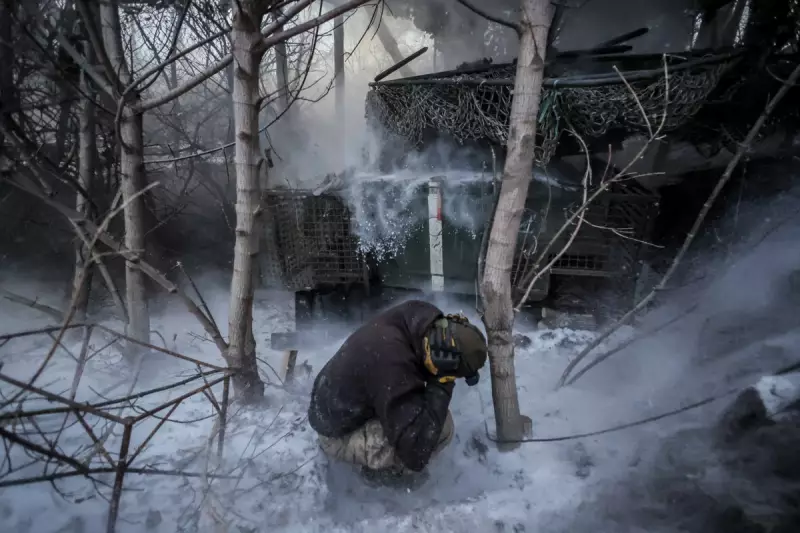
A central point of contention is whether Russia should retain or withdraw from occupied Ukrainian territories, particularly the eastern industrial region known as the Donbas. Meanwhile, the war of attrition continues along the extensive front line in eastern and southern Ukraine, with Ukrainian civilians enduring another harsh winter amid Russian bombardments.
U.S. President Donald Trump has set deadlines for an agreement and threatened additional sanctions on Moscow, but Russian President Vladimir Putin appears unmoved from his public demands. Zelenskyy has acknowledged fundamental differences between Ukrainian and Russian positions, though he indicated last week that peace proposals are nearly ready.
Future Talks and Military Developments
Negotiators are scheduled to return to the United Arab Emirates on February 1 for another round of discussions, according to a U.S. official speaking anonymously. The weekend talks covered a broad range of military and economic matters, including the possibility of a ceasefire prior to a comprehensive deal.
Recent Military Actions
In related developments, Russia's Defense Ministry reported that air defences intercepted 40 Ukrainian drones late Sunday and early Monday, with 34 downed over the Krasnodar region and four over the Sea of Azov. Krasnodar officials stated that drone fragments caused fires at two industrial plants in Slavyansk, resulting in one injury.
Conversely, Ukraine's general staff claimed that an oil refinery in the Krasnodar region, which supplied the Russian military, was targeted by Ukrainian forces. Additionally, Ukraine's air force reported that Russian forces launched 138 drones overnight, with 110 shot down or suppressed and 21 striking targets across 11 locations.
As these diplomatic efforts unfold, the grinding conflict persists, underscoring the complex and protracted nature of the negotiations aimed at ending one of Europe's most devastating wars in recent history.






