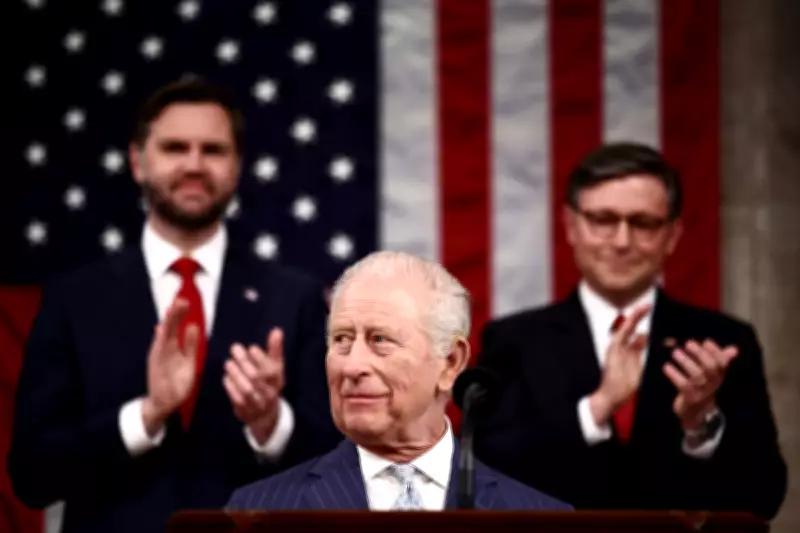
King Charles has hailed the 'truly unique' alliance between the United Kingdom and the United States during a historic address to the US Congress on Capitol Hill. In his speech, the monarch acknowledged victims of sexual abuse in the wake of the Jeffrey Epstein scandal, emphasizing the 'collective strength' of both nations to support survivors.
Key Themes in the Address
The King told assembled lawmakers that the partnership between the two countries is 'more important today than it has ever been.' He stressed that when Britain and America draw on their common values, 'this, I believe, is the special ingredient in our relationship.'
Support for Ukraine and Climate Action
Charles touched on topics such as support for Ukraine and the 'collapse of critical natural systems'—issues not favoured by President Donald Trump—and said the essence of both nations is a 'duty to foster compassion, to promote peace' and 'value all people, of all faiths, and of none.'

Condemnation of Assassination Attempt
The King condemned the attempted assassination of President Trump at a Washington media dinner, declaring that 'such acts of violence will never succeed.' He received a standing ovation for his remarks on the incident.
Historic Context
Charles is midway through a four-day state visit marking the 250th anniversary of American independence. He spoke about the bonds between former enemies, noting that 'the Alliance that our two Nations have built over the centuries – and for which we are profoundly grateful to the American people – is truly unique.'
Reactions and Standing Ovations
The chamber gave 12 brief standing ovations during the speech. Notably, when the King called for the same resolve for Ukraine as after 9/11, some Republican members did not stand. He also drew laughter when he referred to America's Founding Fathers as 'bold and imaginative rebels with a cause' and quipped about the 250 years since independence.
A Buckingham Palace spokesperson said the King was 'deeply honoured' and 'greatly touched by the warmth and generosity of the response.'