Life Under Nets: Kherson's Daily Struggle Against Drone Attacks
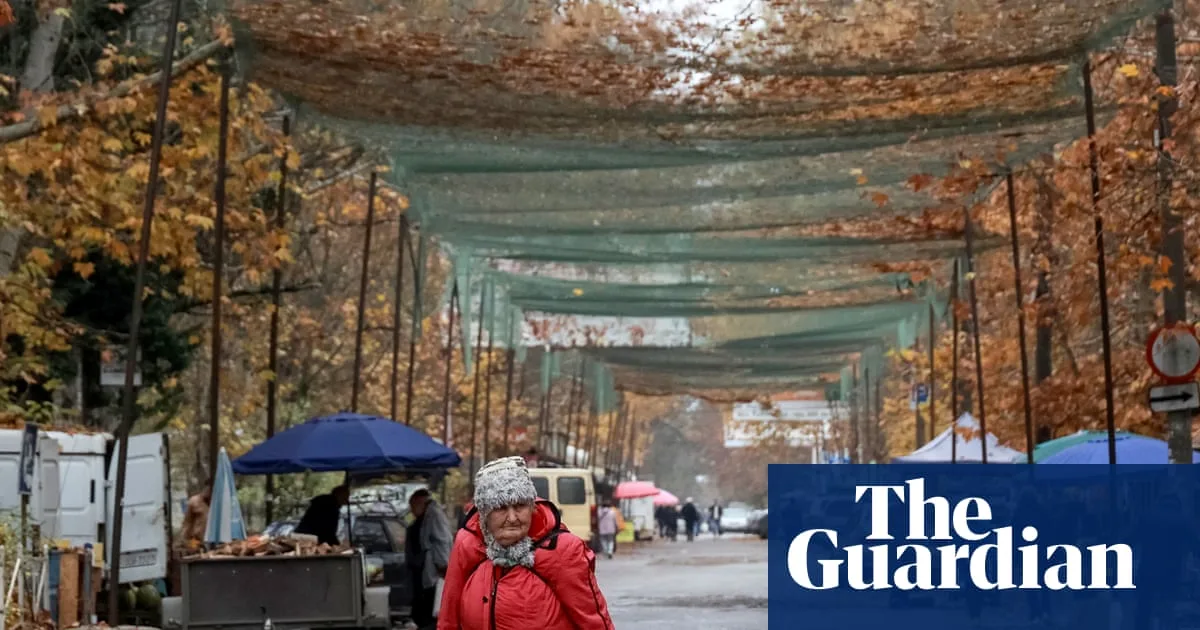
In the frontline city of Kherson, daily life unfolds beneath a canopy of protective netting designed to shield residents from Russian drone attacks. A shopper navigates a market street draped in anti-drone mesh, illustrating the extraordinary measures taken to protect civilians in Ukraine's only major city situated almost directly on the frontline with Russian forces.
Extensive Protective Measures
Kherson's military governor, Oleksandr Prokudin, reveals the scale of this defensive effort. "We are trying to put nets everywhere where people move and walk," he states. "We have more than 100km of nets. We want 200km within the next two months." The ambitious plan aims to install 300km of protective netting by year's end, transforming urban thoroughfares into shielded corridors against aerial threats.
This extensive netting responds directly to the notorious Russian "drone safari" that began in May 2024, during which drones pursued and killed citizens in Kherson's streets. While effective against small exploding drones, the protection remains incomplete against other threats like mines dropped from drones or scattered by rockets.
Underground Adaptation
Beneath the net-draped streets, Kherson's residents have created an alternative world of subterranean activity. In one basement shelter serving as a community centre, crisis psychologist Galyna Lutsenko works with children using art therapy techniques. "The children are always under pressure," she observes. "They are always stressed, with some of the children afraid to come out after the shelling."
Lutsenko, whose own house was hit by Russian shelling in 2024, emphasises the psychological importance of maintaining normalcy. "It is important to give them choices to make them feel that it is not just about surviving," she explains while engaging children with plasticine creations. "But living and feeling everything around them."
Dangerous Reality
The city presents a particularly challenging environment for its remaining 60,000 residents, including 5,000 children, who stay despite the original population of 300,000. Russian forces position themselves just across the Dnipro River, maintaining constant pressure through artillery barrages and drone attacks.
The most perilous area remains the "red zone" – a 1km-deep strip along the Dnipro waterfront facing Russian positions. Within this dangerous territory operates the city's main perinatal clinic, located in an old Soviet-era bomb shelter with blast doors and a drone-netted entrance.
Khrystyna Furman, 23, admitted to the clinic with concerns about premature birth, represents the resilience of Kherson's residents. "Life goes on," she states. "We live on the outskirts. This is one of the most dangerous areas of the city here. But everything is OK. I'm local, all my family are local. And this is my home."
Expanding Underground Infrastructure
Authorities are systematically relocating essential services below ground throughout the region. While bringing children to school within Kherson remains too dangerous, educational facilities have moved underground in surrounding areas.
In Myroliubivka, just 15 minutes from the city, school director Larysa Rybachuk oversees education in basement classrooms. "The first challenge when we started teaching underground was the lack of space," she recalls. "For the children who had lived under Russian occupation, many had not gone further than their courtyards. There was a challenge of resocialising them."
The underground arrangement provides practical advantages during frequent alarms. "We have alarms five times a day here," Rybachuk notes. "You can't hear anything and it makes it easier for the children. They don't have to run out of class to go to the shelter."
Living With Constant Threat
For many residents, daily routines involve careful risk management. Volodymyr Gorbachevsky, director of the perinatal clinic, lives even deeper in the red zone than his workplace. His apartment block, once home to 15 families, now shelters only three.
"I don't go to cafes or restaurants," he explains. "We stay at home and use the internet and watch TV. I only leave the house when it is necessary." He uses the shelter at work because the nearest to his building is two blocks away.
Military governor Prokudin confirms this pattern of cautious behaviour among residents. "Most people try not to go out if it's not necessary," he reports. "This morning I had to go to a couple of events. Twice we had to take cover inside a church and shop because drones had been spotted."
The human cost remains tragically evident. "Just now I've heard a child was injured in the city," Prokudin reveals. "So far this morning we have had five people injured by drones and artillery."
Unique Urban Challenge
Prokudin emphasises Kherson's distinctive position among Ukrainian cities. "There is no other major city in Ukraine like Kherson," he states. "It is 1km from the frontline and from the enemy. If we didn't have the anti-drone protection that we have, we would definitely be a 'grey zone' now."
Despite evacuation efforts targeting the most dangerous areas, most residents resist leaving. "While we are trying to evacuate those in the red zone, most people don't want to leave the region," Prokudin acknowledges.
The response involves expanding both aerial protection and underground facilities. Beyond the netting programme, authorities plan to develop more subterranean clinics and schools throughout the region. "Online schooling is just about surviving," Prokudin explains, "so we are building underground schools but 30km from the frontline. We are also focusing on medical, with 12 underground medical facilities in the region being equipped."
This dual approach – shielding streets above while creating functional spaces below – represents Kherson's determined effort to maintain civilian life amidst relentless conflict, transforming urban infrastructure to protect those who call this frontline city home.