Khamenei's Assassination Ignites Shiite Fury and Regional Unrest
The killing of Iran's Supreme Leader Ayatollah Ali Khamenei in joint U.S.-Israeli military strikes has sent profound shockwaves throughout the Shiite Muslim world, sparking immediate anger and escalating fears of broader regional instability. For Shiite communities globally, the 86-year-old Khamenei was not merely Iran's theocratic ruler since 1989 but a pivotal religious and political icon, whose death has ignited fury from Karachi to Beirut.
Immediate Backlash and Violent Protests
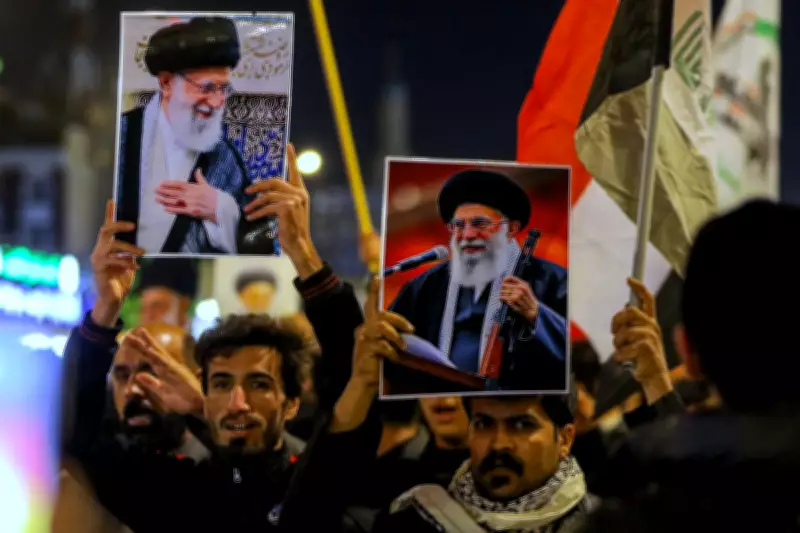
Within hours of the assassination, thousands of enraged protesters flooded streets in Pakistan, attempting to storm the U.S. Consulate in Karachi and clashing with police near the U.S. Embassy in Islamabad. United Nations offices in northern Pakistani cities were also attacked, resulting in at least 34 fatalities and over 120 injuries. Syed Hussain Muqaddasi, head of the Pakistani Shiite political party Tehreek-e-Nifaz-e-Fiqh-e-Jafariya, warned, "If the United States and Israel are not stopped, the entire world will turn into ruins. Peace-loving people must awaken."
In Iraq, demonstrators confronted police near the U.S. Embassy, while in Lebanon, the Iran-affiliated Hezbollah group launched missiles toward Israel for the first time in over a year. This provoked intense Israeli airstrikes that killed dozens and forced tens of thousands to flee their homes in Shiite-majority areas. Israel has mobilized 100,000 reservists and deployed troops into southern Lebanon, threatening further strikes.

Shiite Sentiment and Regional Dynamics
Shiite Muslims, constituting 10% to 15% of the global Muslim population, are concentrated in Iran, Iraq, Bahrain, and Azerbaijan, with significant communities in Pakistan, Lebanon, and Yemen. Mamoona Shirazi, a Shiite activist in Pakistan's Punjab province, expressed, "He was not only our leader but a leader for all. He raised his voice against oppression and was like a father to us." Many Shiites perceive the strikes as a direct assault on their entire community, with Lebanese resident Nasser Khazal stating, "There is targeting of Muslims in general, but the targeting is specifically directed at Shiites."
However, Burcu Ozcelik, a senior research fellow at the UK-based Royal United Services Institute, noted that potential backlash might be tempered by growing frustration, even among Shiites, over Iran's meddling in other countries. She highlighted resistance from younger generations in Iraq to Iran's pervasive influence in security, judiciary, politics, and economy. Ozcelik suggested that unlike the sharp sectarian violence post-2003, there is now a stronger desire for de-escalation, particularly in the Gulf region.
Historical Context and Iranian Strategy
Iran's foreign policy has long involved building alliances with states and armed groups like the Houthis in Yemen and Hezbollah in Lebanon, often framed as protecting Shiite interests but criticized for undermining sovereignty. The Trump administration had demanded Iran sever support to these proxies, a demand rejected by Tehran. Previous assassinations include General Qassem Soleimani in 2020 and Hezbollah leader Hassan Nasrallah in 2024, but Khamenei's death represents the most significant blow. Trita Parsi of the Quincy Institute remarked, "After the assassination of Ayatollah Khamenei, Iran says it has no red lines left."
Wider Regional Turmoil and Existential Perceptions
Tehran's retaliation has plunged the Middle East into chaos, with hundreds of missiles and drones targeting areas as far as Cyprus. Countries like the United Arab Emirates and Qatar scrambled to intercept Iranian weaponry, closing airspace and stranding passengers. Lebanese analyst Qassim Qassir described the conflict as an existential war for Shiites, asserting, "The United States and Israel want to impose their project on the region." As the situation unfolds, the emotional and psychological impact of Khamenei's killing continues to resonate, with Ozcelik emphasizing that the region is still in the early stages of grappling with its implications.