John Oliver Humorously Confronts Uncertain Future Under New Paramount Leadership
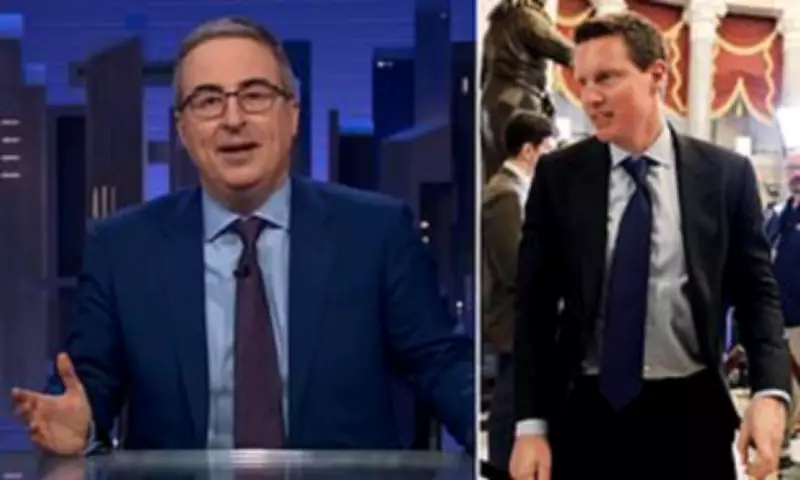
In a characteristically witty monologue, Last Week Tonight host John Oliver openly joked about the potential cancellation of his program following a monumental corporate takeover. The British-born comedian, widely regarded as one of late-night television's most progressive voices, addressed the elephant in the room during Sunday's broadcast: Paramount's accepted $110 billion bid for HBO's parent company, Warner Bros. Discovery, by CEO David Ellison.
A Billion-Dollar Deal with Political Undertones
The acquisition, which received approval last week, places Oliver's show under the umbrella of a media empire now led by Ellison—the son of outspoken Donald Trump supporter Larry Ellison. This development has sparked speculation about potential clashes between Oliver's left-leaning commentary and Ellison's publicly stated apolitical vision for the expanded company.
"If I may quote anyone who’s ever accidentally sat on their Roku remote, ‘Oh shit, I’m in Paramount now, how the f**k do I get out of this?'" Oliver quipped at the top of the show, immediately acknowledging the new corporate reality. He later added during a segment on police body cameras: "There’s no point in the police just stacking up thousands of hours of footage that no one’s ever going to see - especially given that we all know that that is Paramount+’s job."

Direct Challenges to Corporate Authority
The host directly confronted the possibility of cancellation with characteristic boldness: "Hey - what’re they gonna do? Take us over and immediately cancel us? I’m genuinely asking." This remark highlighted the genuine uncertainty surrounding the future of his program under new ownership.
Oliver's concerns are not without precedent. The comedian has established himself as a fierce advocate for progressive causes, including:
- Transgender athletes' rights
- Immigration reform
- Media independence
In August, he mocked Superman actor Dean Cain for joining ICE, and in September, he expressed personal fears about Trump's immigration policies during an interview with Monica Lewinsky, despite his own status as a US citizen.
History of Corporate Criticism
Oliver's Sunday comments followed earlier skepticism about the Paramount-Warner merger rumors. Back in September, he joked: "Please stay the f*ck away from us. You are not my real business daddy, and you never will be!"
The host has also previously taken aim at other media giants. During the controversy surrounding fellow late-night host Jimmy Kimmel's suspension by ABC parent company Disney, Oliver accused Federal Communications Commission Chairman Brendan Carr of orchestrating the removal. "Carr leaned on broadcasters to take down Kimmel," Oliver asserted at the time. "And it’s not like Trump is even trying to hide it."
He further criticized Disney CEO Bob Iger for what he framed as corporate cowardice: "History is also going to remember the cowards who definitely knew better but still let things happen, whether it was for money, convenience, or just comfort."
Broader Media Landscape Implications
The Paramount-Warner merger represents more than just corporate restructuring—it could fundamentally reshape American media. Ellison, 43, successfully outbid streaming rival Netflix by increasing his offer to $31 per share. Following the acquisition, he expressed intentions to repair Americans' trust through changes to Paramount assets like CBS News, a network long plagued by allegations of liberal bias.
Should the merger proceed as expected, CBS News could potentially combine with Warner's prime asset CNN, creating a media powerhouse under Ellison's leadership. The transaction still requires federal approval, with FCC Chairman Carr indicating last week that the commission is poised to approve the bid, similar to Skydance's acquisition of Paramount last year.
Oliver's humorous yet pointed commentary on Sunday night served as both entertainment and social commentary, highlighting the ongoing tensions between creative expression and corporate control in today's rapidly consolidating media landscape.