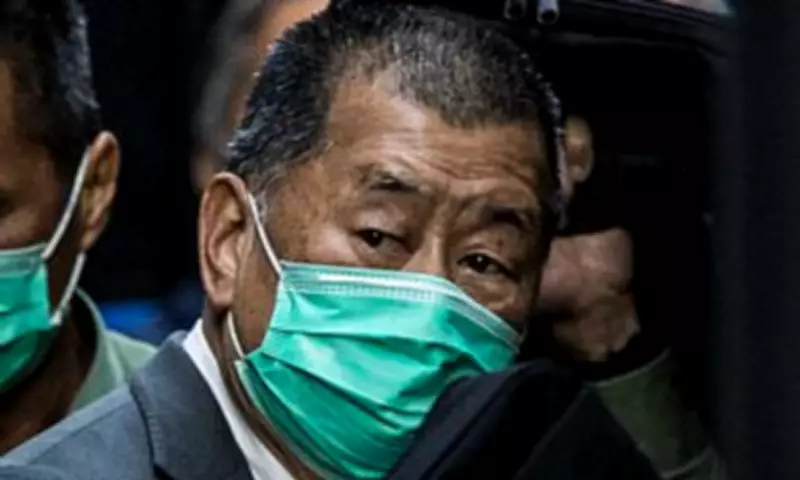
Hong Kong pro-democracy activist and British citizen Jimmy Lai is poised to potentially receive a life imprisonment sentence tomorrow, as a court delivers its verdict following his conviction on national security charges. The 78-year-old founder of the now-defunct Apple Daily newspaper has been incarcerated since 2020, igniting widespread backlash over what critics describe as the systematic erosion of political freedoms in the former British colony under a Beijing-backed crackdown.
International Outcry and Political Fallout
Mr Lai's prolonged detention has fuelled intense diplomatic tensions, with his son joining campaigners in lambasting UK Prime Minister Sir Keir Starmer for allegedly failing to secure stronger commitments for his release during a contentious trip to China last month. Meanwhile, pro-China politicians in Hong Kong have vocally demanded that the former media tycoon be "severely" punished, characterising him as a "pawn" manipulated by the nation's adversaries.
A Controversial Trial and Conviction
After a protracted trial spanning nearly two years, Jimmy Lai was found guilty in December on two charges of conspiracy to collude with foreign forces. Prosecutors in Hong Kong accused him of masterminding the 2019 pro-democracy protests and conspiring to advocate for sanctions against China. Additionally, he was convicted of conspiracy to publish seditious material, related to his newspaper's critical coverage of Beijing's national security law, which he famously labelled "a death knell for Hong Kong."

The legal proceedings have been vehemently condemned by the British government as politically motivated, while UK Parliamentarians have derided the process as a "sham" trial. Concerns are mounting over Mr Lai's deteriorating health, exacerbated by his solitary confinement, adding urgency to calls for his release.
Divergent Perspectives on Justice
Ahead of the sentencing, Hong Kong legislator Ray Wong Wing-wai asserted on Facebook that Mr Lai had "long acted as an agent and pawn for anti-China forces," arguing that severe punishment is both the will of the people and a requirement of the rule of law. In stark contrast, Aleksandra Bielakowska of Reporters Without Borders emphasised that "the eyes of the world will be on Hong Kong," warning that the outcome will send a decisive signal about the future of press freedom in the territory.
Diplomatic Strains and Criticism
Sir Keir Starmer maintained that he engaged in a "respectful" discussion about Mr Lai's plight during his meeting with Chinese President Xi Jinping in Beijing. However, the Prime Minister—nicknamed "Kowtow Keir" by detractors for permitting Beijing to construct a mega-embassy in London—has faced accusations that he should have extracted greater concessions in exchange for the deal. Sebastien Lai, Jimmy's son, recently told MPs that time is running out, questioning why conditionalities were not attached to his father's release given the significance of the diplomatic engagements.
The case underscores deepening fissures in UK-China relations and raises profound questions about the protection of civil liberties in Hong Kong, with tomorrow's sentencing anticipated to reverberate across global political and media landscapes.