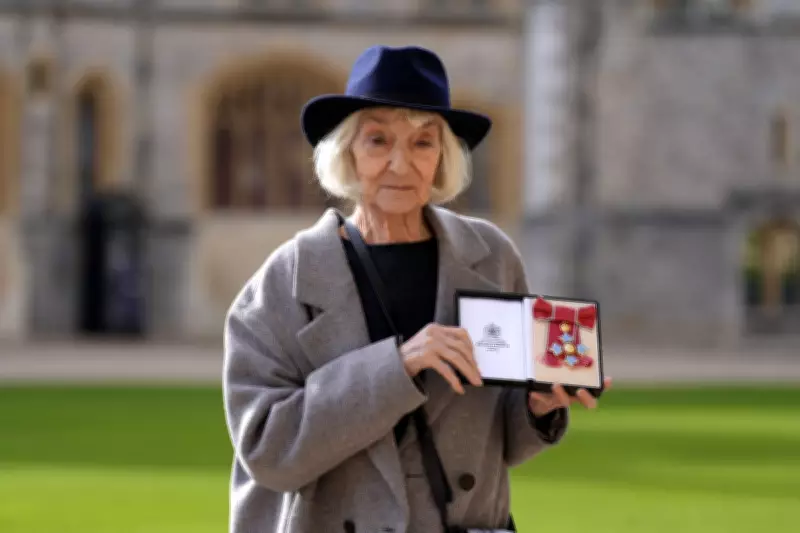
Actress Jane Lapotaire has described it as a profound privilege to portray the King's grandmother in the acclaimed Netflix series The Crown, following her investiture as a Commander of the Order of the British Empire. The ceremony, held at Windsor Castle on Tuesday, recognised Ms Lapotaire's distinguished services to drama, with the King personally presiding over the honours.
A Royal Connection and Dramatic Honour
Ms Lapotaire, aged 81, expressed her deep admiration for His Majesty, noting a longstanding correspondence that began after she performed as Catherine of Aragon for the Royal Shakespeare Company in Stratford. Reflecting on her role as Princess Alice, she emphasised the extraordinary nature of the character, who dedicated her entire life to aiding the poor and sick while adopting a nun's attire without formal convent affiliation.
Impact of The Crown Portrayal
The actress revealed a poignant royal response to her performance, disclosing that approximately two hours after the relevant series aired, the then Prince William visited Princess Alice's grave in Israel. This anecdote underscores the cultural resonance of her portrayal within the royal family and broader public consciousness.

Other Notable Honourees at the Ceremony
The investiture also celebrated other distinguished individuals. Sir Andrew Mitchell, former secretary of state for international development, received a knighthood and humorously thanked his constituents in Sutton Coldfield for tolerating his representation over a quarter-century. Meanwhile, astrophysicist Professor Dame Jocelyn Bell Burnell was appointed a Companion of Honour for her contributions to astronomy, physics, and diversity advocacy.
Advocacy for Women in Science
Dame Jocelyn highlighted the ongoing need to encourage more women into physical sciences, recalling her undergraduate experience as the sole female among 49 men. She noted progress, with women now comprising about a third of such classes, and stressed that visibility of successful female scientists is crucial for normalising their participation and challenging cultural barriers.