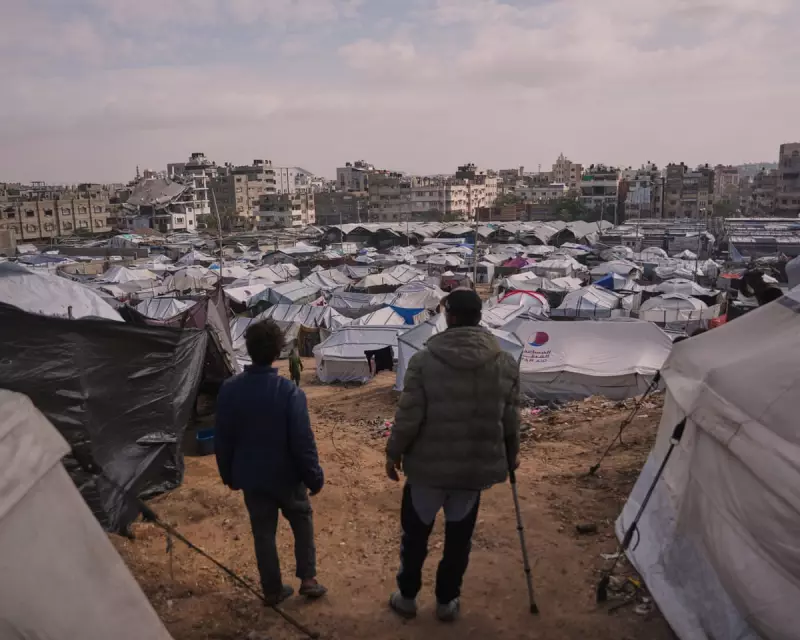
Israel is operating a parallel system for shipments into Gaza, permitting commercial traders to import goods that are strictly prohibited for humanitarian aid organisations, an investigation has revealed.
A Two-Tier System for Essential Supplies
Basic, life-saving items like generators and metal tent poles are on a lengthy Israeli blacklist of so-called "dual-use" items. The Israeli government argues these must be severely restricted as they could be exploited by Hamas or other armed groups for military purposes.
However, for at least a month, Israeli authorities have allowed businesses to transport these very same dual-use items into Gaza. These goods, which include generators and metal pallets that are more durable in winter conditions than wooden alternatives, are now being sold on the open market in Gaza.

Military, diplomatic, and humanitarian sources confirm these commercial shipments pass through the same three tightly controlled Israeli checkpoints that currently block identical goods destined for aid agencies.
"It seems highly improbable that the Israelis don't know about them," one diplomatic source stated. "It's very shocking that these things are able to enter through commercial channels."
Humanitarian Work Undermined, Lucrative Trade Flourishes
This disparity critically limits the work of humanitarian organisations supporting Palestinians during a time of desperate need, while simultaneously creating profitable opportunities for commercial traders who can secure import permits from Israeli authorities.
Tania Hary, executive director of the Israeli human rights group Gisha, which has monitored access controls for two decades, said the policy was consistent with Israel's long track record of exploiting access to Gaza for political goals.
"On the surface the private sector [shipments] can appear to be very confusing and an inconsistency," she said. "But I see it as very consistent with their policy of trying to strengthen the hand of certain actors and weaken the hand of others."
The restrictions have long made trade into Gaza particularly lucrative for those with permits. Items on the dual-use list now sell for huge premiums inside the territory.
Sam Rose, acting director for Gaza at UNRWA, the UN agency for Palestinian refugees, confirmed: "The only way to get a generator right now is on the private sector. There's a mark up on that."
Rose suggested a network of business interests, including Israeli, Egyptian, and Palestinian traders, alongside security companies with Israeli protection and other criminal elements, were profiting from an illegal economy. He added it was unclear but likely that Hamas also took a cut.
US Frustration and a Sweeping, Secretive List
US forces deployed to a new Civil-Military Coordination Center (CMCC) in southern Israel in October, tasked with aiding logistics, were reportedly surprised to find the biggest challenge was political. They began clashing with Israeli counterparts over restrictions almost immediately.
An early confrontation centred on metal tent poles. Shelter is a critical need with winter setting in and nine out of ten Palestinian homes destroyed, yet Israel deems the poles needed for sturdy tents as dual-use.
US officers at the CMCC rapidly compiled a list of at least a dozen key humanitarian items they wanted removed from the dual-use list, with tent poles a priority. Weeks later, Israel has not lifted restrictions on any of them.
"It is clearly not security interests that are driving decision-making here," said one western source. "The dual-use list is just another way to control what enters Gaza."
The dual-use list itself is sweeping in scope, kept secret until an item is rejected, and has been imposed arbitrarily. Older versions obtained by Gisha include broad categories like "communications equipment," which could cover most modern electronics.
Items barred on dual-use grounds in recent years have included solar panels, smoke detectors, crutches, wheelchairs, and walkers.

Broader Obstacles and a Looming Catastrophe
The dual-use list is not the only barrier. Israel also bans items it decides do not address urgent humanitarian needs. This category includes paper and pencils to restart education for 600,000 children, and frozen beef and mutton for a malnourished population. Aid groups are limited to chicken, while commercial traders import all meats.
Overall aid flows into Gaza remain well below levels agreed under the ceasefire, according to data analysed by the Associated Press. While increased food shipments have staved off famine for now, UN experts warn about 1.6 million people face "crisis" levels of hunger in the next four months.
The situation is exacerbated by winter weather and a lack of shelter, with at least three young children killed by hypothermia this month, according to the UN.
In a further concerning development, Israel this week told 37 NGOs active in Gaza they must cease operations within 60 days unless they hand over detailed information on their Palestinian staff. Diplomats warn stopping this work would have catastrophic consequences.
The EU's humanitarian chief, Hadja Lahbib, stated: "IHL [international humanitarian law] leaves no room for doubt: aid must reach those in need."
Responding to the allegations, Cogat, the Israeli defence ministry unit controlling access to Gaza, denied "preventing or delaying" aid or applying looser rules for commercial traders. It stated policy was implemented "in a uniform manner" for all sectors and that alternatives for dual-use items were offered to international organisations.