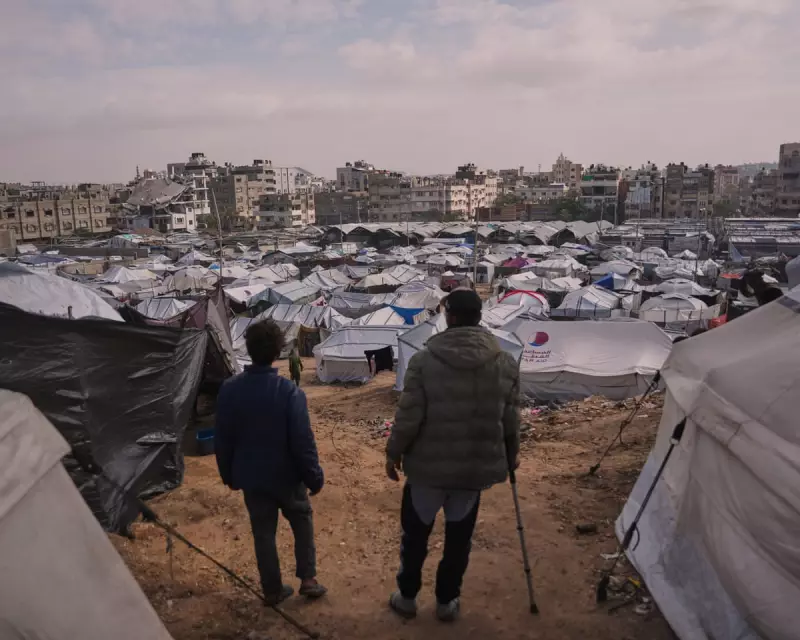
Israel is operating a two-tier system for shipments entering Gaza, permitting commercial traders to import goods that are strictly prohibited for humanitarian organisations, according to multiple sources. This disparity is severely limiting life-saving aid for Palestinians while creating a lucrative market for businesses with the right permits.
A Tale of Two Systems: Aid Blocked, Commerce Flourishes
Basic supplies deemed essential for survival, including generators and metal tent poles, are on a lengthy Israeli blacklist of so-called "dual-use" items. The Israeli government justifies the severe restrictions by arguing that Hamas or other armed groups could repurpose these items for military ends.
However, for at least the past month, Israeli authorities have allowed commercial businesses to transport these very same dual-use items into the besieged territory. These goods, which include the more durable metal pallets needed for winter conditions, are now available for purchase on Gaza's open market. They pass through the same three tightly controlled Israeli checkpoints that currently block shipments of identical goods destined for aid agencies.

"It seems highly improbable that the Israelis don't know about them," a diplomatic source stated. "It's very shocking that these things are able to enter through commercial channels."
Weaponising Aid and Undermining Relief Efforts
The policy has drawn sharp criticism from human rights observers who see it as a deliberate strategy. Tania Hary, executive director of the Israeli rights group Gisha, said the approach was consistent with a long-standing policy of using access to Gaza to achieve political objectives. "I see it as very consistent with their policy of trying to strengthen the hand of certain actors and weaken the hand of others," she explained.
The impact on humanitarian work is profound. Sam Rose, the acting director for Gaza at UNRWA, confirmed that the only way to obtain a generator currently is through the private sector, where prices are heavily marked up. He suggested a network of business interests on all sides, including Israeli, Egyptian, and Palestinian, alongside "criminal elements," were profiting from the situation.
"What's not clear to me is whether Hamas is getting a cut. I would assume so but have not seen any confirmation of this," Rose added. The disparity creates what he called a "two-tier system," which undermines the UN-led humanitarian response that Israel is obligated to support under international law.
Bureaucratic Obstacles and International Frustration
Even the creation of a new US-led Civil-Military Coordination Center (CMCC) in October has failed to resolve the issue. US officers at the centre, including Lieutenant General Patrick Frank, quickly identified the dual-use list as a major impediment. They compiled a list of over a dozen critical items, with metal tent poles for winter shelters near the top, that they wanted removed from restrictions. Weeks later, Israel has not lifted bans on any of them.
"It is clearly not security interests that are driving decision-making here," said one western source familiar with the discussions. "The dual-use list is just another way to control what enters Gaza."
Cogat, the Israeli defence ministry unit overseeing access to Gaza, denied applying different rules. A spokesperson stated policy was implemented "in a uniform manner" for all entities and claimed medical aid groups had been given permits for generators "over the last month."
The dual-use list itself is secretive and sweeping. Older versions obtained by Gisha include broad categories like "communications equipment." In recent years, items barred have included solar panels, crutches, wheelchairs, and even smoke detectors.
Beyond dual-use, other bureaucratic hurdles persist. Israel bans items it claims do not address "urgent humanitarian needs," including paper and pencils for schools and frozen beef and mutton, limiting aid groups to chicken while traders import all meats. Combined with limited crossing points and convoy delays, the flow of aid remains critically low.

The consequences are dire. UN-backed experts warn that while increased food shipments have staved off famine, 1.6 million people face "crisis" hunger levels in the coming months. Winter weather exacerbates the crisis, with the UN reporting at least three young children killed by hypothermia this month alone.