Israel has lifted restrictions at Jerusalem's holy sites following the announcement of a fragile ceasefire, ending nearly six weeks of limitations imposed throughout the war with Iran. Worshippers were able to pray again on Thursday, marking a significant moment for religious communities in the city.
Restrictions Lifted Across Key Religious Sites
Jerusalem's police confirmed on Wednesday that they would remove restrictions on all holy sites, deploying hundreds of officers and volunteers across the city. During the now-paused conflict, access had been either completely prohibited or limited to just a few dozen faithful at a time at Christian, Jewish, and Muslim sites. This subdued celebrations for Lent, Passover, and Ramadan, impacting some of the holiest locations for adherents of these faiths.
Reopening of Al-Aqsa Mosque and Western Wall
The Al-Aqsa Mosque compound, which had been closed for much of Ramadan and the Eid al-Fitr holiday, reopened with dawn prayer on Thursday, according to Jerusalem's Islamic Waqf, the Jordanian religious authority overseeing the site. At the adjacent Western Wall in the Old City—the holiest site where Jews can pray—dozens of men and women were observed bowing their heads in prayer, signaling a return to normalcy.

Timing for Orthodox Easter Celebrations
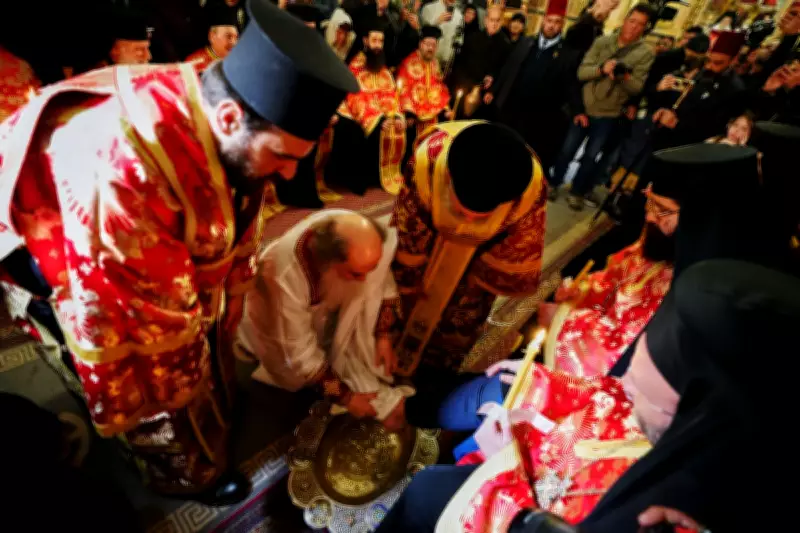
The lifting of restrictions comes just in time for Orthodox Christians, who celebrate Easter on Sunday, a week after Catholic and Protestant observances. This precedes the centuries-old Holy Fire ceremony associated with the holiday. On Saturday, thousands of Christians are expected to gather in the Church of the Holy Sepulchre, holding unlit candles as they pack into the sprawling 12th-century basilica, built on the site traditionally believed to be where Jesus was crucified and buried.
Backlash and Criticism During the Conflict
The restrictions sparked significant backlash last month when Israeli police prevented Catholic leaders from entering the Church of the Holy Sepulchre to celebrate a private Mass on Palm Sunday—the first such incident in centuries. This action triggered a wave of criticism from the United States and other nations. Israeli Prime Minister Benjamin Netanyahu stated there was no "malicious intent," explaining that Cardinal Pierbattista Pizzaballa was barred due to safety concerns, though he was later allowed to enter on Easter Sunday.
Worshippers' Reactions and Accusations
On Thursday, worshippers expressed joy as they entered Al-Aqsa for the first time in weeks. Mohammed Al-Qassas described the experience as akin to "human beings being reborn," while Biljana Vaslic, a tourist from Serbia, called it "one of the happiest moments in my life." However, others accused Israel of using the war as an excuse to restrict access. Omar al-Kiswani, director of the mosque, remarked, "This is a grace from God after 40 days of using the war as a pretext."
Historical Context of Restrictions
Even before the war, heightened restrictions were in place at Al-Aqsa. During Ramadan prayers in early February, Israel limited the number of Palestinians allowed to enter from the West Bank to 10,000, permitting only men over 55, women over 50, and children up to age 12. Similar measures have been imposed in the past, citing security concerns, highlighting ongoing tensions in the region.