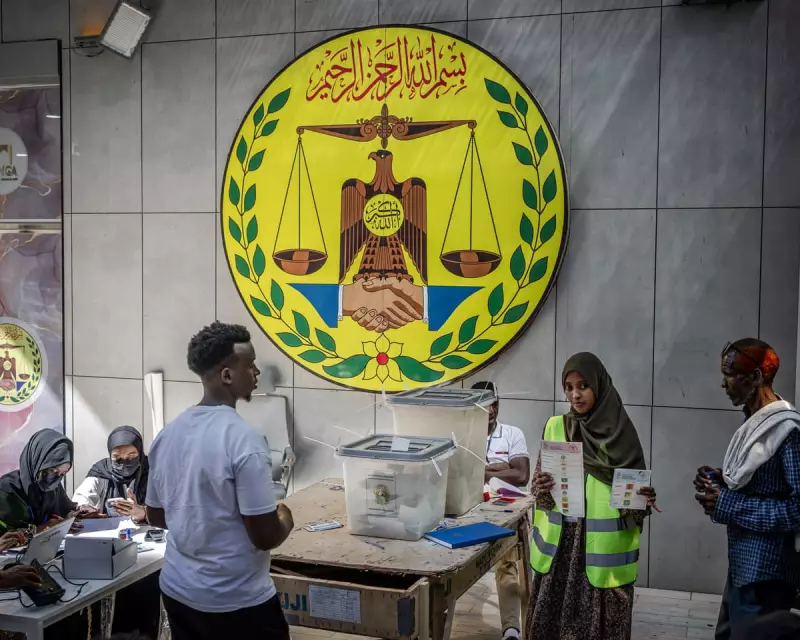
In a historic diplomatic breakthrough, Israel has become the first country in the world to formally recognise the self-declared Republic of Somaliland as a sovereign state. The move ends a 34-year quest for international recognition by the breakaway territory, which declared independence from Somalia in 1991 but has remained unrecognised by any other United Nations member.
A Formal Declaration After Secret Talks
The Israeli Foreign Minister, Gideon Sa'ar, announced the pivotal decision on Friday, confirming that the two parties had signed an agreement to establish full diplomatic relations. The accord includes plans to open embassies and appoint ambassadors, cementing a new bilateral relationship. Sa'ar revealed the recognition followed a full year of confidential negotiations between the two governments.
Israeli Prime Minister Benjamin Netanyahu underscored the development's significance in a video call with Somaliland's President, Abdirahman Mohamed Abdullahi. Netanyahu described the burgeoning friendship as "historic" and extended an invitation for the president to visit Jerusalem. President Abdullahi promptly accepted, stating he would be "glad to be in Jerusalem as soon as possible."

Strategic Motivations and Regional Backlash
The Israeli Prime Minister's office framed the declaration as being "in the spirit" of the 2020 Abraham Accords, which normalised Israel's relations with several Arab nations. However, the move has ignited immediate condemnation from key regional players.
Egypt and Turkey issued a joint statement strongly criticising Israel's decision. They accused Israel of "overt interference in Somalia's domestic affairs" and suggested the recognition aligned with an expansionist policy aimed at obstructing Palestinian statehood.
Analysts point to Somaliland's strategic location as a primary motivator for Israel. The territory sits at a crucial point in the Horn of Africa, directly south of Yemen across the Gulf of Aden. Israel has conducted extensive airstrikes against Houthi rebels in Yemen over the past two years.
A November report from Israel's Institute for National Security Studies suggested Somaliland could serve as a valuable forward base for intelligence monitoring, logistical support, and direct operations concerning the Yemen conflict. Somaliland already hosts a military base operated by the United Arab Emirates in Berbera, a facility seen as integral to the UAE's campaign against the Houthis.
The Long Road to Recognition and Future Prospects
For Somaliland, a territory of roughly 6.2 million people with a history of relatively stable democratic transfers of power, this recognition is a monumental achievement. President Abdullahi had previously told the Guardian that international recognition was a matter of "when and who," not "if."
The issue has also garnered attention in Washington. The controversial "Project 2025" document, linked to Donald Trump's political circle, advocated for US recognition of Somaliland as a counterbalance to growing Chinese influence in Djibouti. Furthermore, Republican Senator Ted Cruz wrote to Trump this August urging him to take that step, noting Somaliland's support for Israel and the Abraham Accords.
Nevertheless, the US administration remains reportedly divided, with concerns that recognising Somaliland could jeopardise military cooperation with the Federal Government of Somalia, where US troops assist in the fight against the al-Shabaab militant group.
While celebrating a democratic tradition, Somaliland has faced criticism for an "erosion of political rights and civic space" in recent years, as noted by Freedom House, with journalists and opposition figures facing repression.
Israel's groundbreaking recognition of Somaliland reshapes the diplomatic landscape of the Horn of Africa, introducing a new actor into complex regional dynamics and setting a precedent that other nations may now be forced to consider.