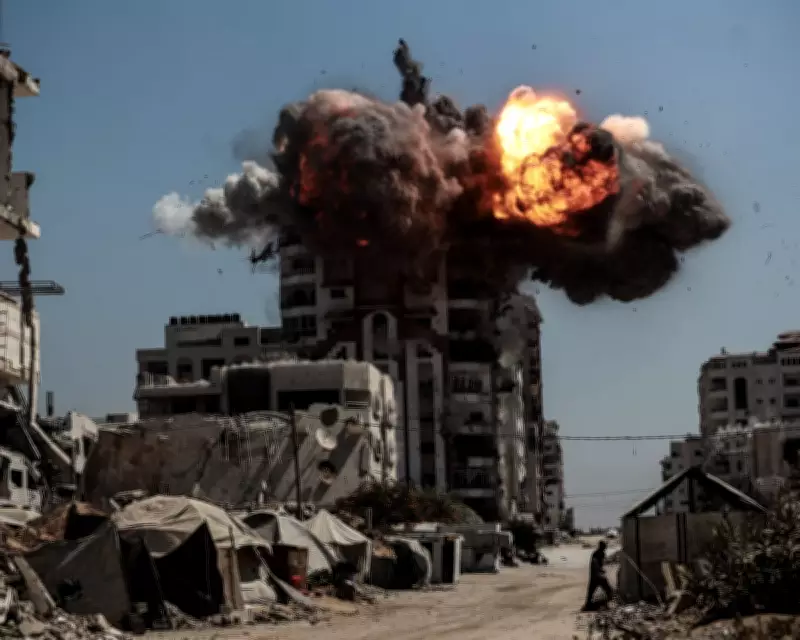
In a remarkable policy reversal, Israel's military establishment has publicly acknowledged that the casualty figures compiled by health authorities in Gaza are broadly accurate. This represents a stark departure from years of official Israeli attacks on the data, which had been consistently dismissed as "Hamas propaganda" and labelled as fundamentally unreliable.
A Significant Shift in Official Stance
During a confidential briefing for Israeli journalists, a senior security official disclosed that approximately 70,000 Palestinians have been killed by Israeli military operations in Gaza since October 2023. This figure explicitly excludes individuals who remain missing under the rubble of destroyed buildings. For the first time since the conflict began, Israel has provided its own estimate of the overall death toll, having previously only released numbers concerning militants it claimed to have eliminated.
Contrasting Figures and Historical Context
Gaza's health authorities have maintained that the direct death toll from Israeli attacks has exceeded 71,660 people, with at least 10,000 more presumed buried in the wreckage of bombed structures. This new Israeli assessment brings the official figures closer together, though discrepancies remain. The Israeli military had previously asserted it killed around 22,000 militants in Gaza, which by its own latest estimate suggests that more than two-thirds of the 70,000 deceased were non-combatants.

This civilian casualty percentage is notably lower than the 83% indicated by a classified Israeli military database, yet it substantially exceeds the 50% casualty rate previously claimed by Prime Minister Benjamin Netanyahu. According to reports from the Times of Israel, military analysts are still conducting reviews to determine the precise breakdown between combatants and civilians, but they have conceded the overall toll compiled by Gaza health authorities is "largely accurate".
Broader Implications and Credibility Questions
This abrupt change in position raises profound questions about Israel's defence of its military campaign in Gaza. A United Nations commission, alongside various human rights organisations and academic scholars, has accused Israel of committing acts of genocide within the territory. The Israeli newspaper Haaretz responded to the briefing by asking: "What other accusations could turn out to be true?" The publication urged the Israeli public to consider what this belated recognition signifies about the credibility of both the army and the government regarding Israel's conduct throughout the Gaza conflict.
Scrutiny of Civilian Casualties Intensifies
The acknowledgment is likely to intensify international scrutiny of civilian casualties in Gaza. For over two years, Israeli officials and media outlets systematically attacked the Palestinian figures, often characterising them as politically motivated fabrications. This criticism persisted despite a long track record of reliable record-keeping by Gaza health authorities during previous conflicts, where final death tolls recognised by Israel and independent observers, including the UN, were broadly consistent with Palestinian data.
Remarkably, the new death toll estimate received minimal coverage within the Israeli media landscape. While most major outlets attended the briefing, with the exception of Haaretz, they initially ignored the revised figure. Yedioth Ahronoth newspaper quoted the statistic in a report primarily focused on diplomatic negotiations between the US, Qatar, and Israel, citing an official who stated: "Our estimate is that roughly 70,000 Gazans were killed in the war, not including missing persons." The paper's online platform, Ynet, published a brief article on the toll late on a Thursday evening, but it failed to become a headline story on television news broadcasts.

Military Spokesperson Response and Border Developments
A military spokesperson declined to either confirm or deny the specific figure presented at the briefing, stating only that "the details published do not reflect official IDF data." Concurrently, the Israeli military announced it will reopen the crucial Rafah crossing between Gaza and Egypt on Sunday, marking the first time since Israeli forces seized control of the border area nearly two years ago, in May 2024.
Palestinians who left Gaza can now apply to return for the first time since the war began, according to a spokesperson. A European Union force will supervise operations at the crossing, but Israel will retain full control over all individuals entering and leaving. The reopening of Rafah has been positioned as a central component of US efforts to advance a ceasefire plan for the territory into its second stage. However, the crossing will only be accessible to pedestrians, meaning it will not alleviate the severe shortages of food, shelter aid, medicine, and other essential humanitarian supplies within Gaza.
The Palestinian casualty database does not provide a detailed breakdown between fighters and non-combatants, but it does identify the majority of the deceased by name, date of birth, and Israeli-issued identity numbers. This latest development represents a pivotal moment in the ongoing conflict, forcing a reassessment of previously disputed information and highlighting the complex challenges of wartime accountability.