Iran's Regime Confronts Unprecedented Dual Crisis as Strategic Options Narrow
Forty-seven years after the Islamic Revolution, Iran faces a strategic reality unlike any in its history: a simultaneous crisis of domestic legitimacy and an external military threat so severe that regime survival can no longer be assumed. The Islamic Republic has weathered wars, sanctions, assassinations, mass protests, and international isolation through projecting strength abroad while suppressing dissent at home. However, this established survival strategy appears to be failing as internal unrest intensifies and American military pressure mounts under President Donald Trump's renewed administration.
Trump's Military Buildup Forces Tehran's Hand
President Trump has mobilised a formidable naval armada to the Middle East, including the USS Abraham Lincoln carrier strike group, guided-missile destroyers, expanded air presence, and advanced missile defence systems. This substantial force projection signals a fundamental shift in American strategy from containment to compelling a final resolution of the long-running conflict with Iran. The stark choice presented to Tehran's leadership is either accepting a US-imposed settlement or facing potential destruction of the Islamic Republic in its current form.
Trump's previous actions during his first presidential term foreshadowed this aggressive approach, including abandoning the 2015 nuclear deal, reimposing comprehensive sanctions, and authorising the assassination of Quds Force commander Qassem Suleimani in 2020. Now returned to office, the American president appears determined to complete this project by forcing Iran to either accept terms favourable to Washington or confront military strikes aimed at dismantling the regime entirely.

Internal Unrest Reaches Critical Levels
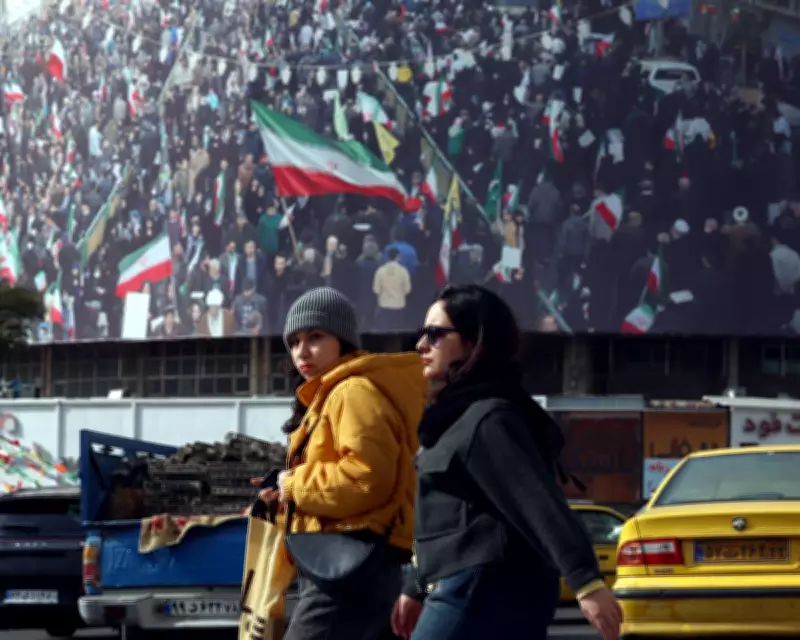
Within Iran's borders, the political system shows profound exhaustion after years of economic decline, systemic corruption, currency collapse, and mass emigration that have hollowed out the social contract between rulers and citizens. The protest movement that began in 2017 has evolved into something more dangerous for the regime, with the "Woman, Life, Freedom" uprising in 2022 and recent mass demonstrations revealing a society that has largely lost its fear of state authority.
Protesters have grown increasingly bold and angry despite rising costs for dissent, with January's crackdown representing the most violent suppression in the regime's history. Official figures confirm over 6,000 deaths, with approximately 17,000 additional recorded fatalities still under investigation, indicating the severity of the government's response to internal opposition.
Regional Influence Crumbles as External Threats Mount
Externally, Iran has lost its strategic footing as its regional projection of power faces systematic erosion. Since October 7th, Israel's campaign against Tehran's so-called axis of resistance has steadily undermined Iranian security through open airstrikes across the region, high-level targeted assassinations, and sophisticated cyber-operations. Last summer's twelve-day conflict marked a significant escalation as Israel moved its shadow war into the open, actively pushing Iran toward direct confrontation with the United States.
Simultaneously, Iran's own strategic choices have created vulnerabilities. Efforts to build influence through proxy militias across Iraq, Syria, Lebanon, and Yemen were intended to deter attack by raising regional conflict costs, but instead created multiple points of exposure. Nuclear brinkmanship, once a source of diplomatic leverage, has become the primary justification for international pressure, while revolutionary ideology that previously mobilised support now leaves Iran increasingly isolated in a region weary of ideological conflict.
Three Dangerous Scenarios for Iran's Future
The critical question facing Tehran is not whether confrontation will occur, but what form it will ultimately take. Three distinct scenarios present themselves, each carrying significant dangers for the Iranian people and regional stability.

Scenario One: Forced Compromise - Under intense pressure, Iran might accept a comprehensive deal limiting its nuclear programme, allowing intrusive inspections, constraining missile capabilities, and reducing regional influence in exchange for sanctions relief and potential American investment. While preventing immediate war, this agreement would carry heavy political costs domestically, widely perceived as a bargain struck solely for regime preservation rather than national interest.
Scenario Two: Controlled War - The United States could coordinate precision strikes against Iranian leadership, missile forces, air defences, and remaining nuclear infrastructure, aiming to cripple the regime's military capabilities. This would likely trigger Iranian retaliation against US bases, shipping lanes, and Israeli cities, potentially mobilising proxy forces across the Gulf. The American objective would be regime transformation, but the probable outcome would involve prolonged instability, elite fragmentation, and violent struggles over future leadership succession.
Scenario Three: Uncontrolled Collapse - Combined external pressure and internal unrest could fracture the regime, creating not a liberal transition but a dangerous power vacuum. Competing security factions, economic breakdown, and regional intervention might transform Iran into a long-term source of instability reminiscent of Libya and Syria, producing outcomes potentially more perilous than the current regime.
Diplomatic Mechanisms Fail as Regional Tensions Escalate
What makes the current moment particularly dangerous is the absence of functioning diplomatic brakes. The international mechanisms that previously contained conflict no longer operate effectively. Europe lacks meaningful influence in mediating with Iran, Russia remains distracted by its war in Ukraine and reluctant to invest in conflict resolution, while China exercises caution and shows little willingness to lead diplomatic initiatives.
Regional states attempt last-ditch diplomacy and crisis management, but simultaneously prepare for potential conflict impacts. All parties - Israel, the United States, and Iran - appear locked in escalation logic rather than restraint, with none of the three scenarios pointing toward immediate stability or democratic transition for the Iranian people.
For Iran and the broader Middle East, the central question has shifted from whether crisis can be defused to how much damage will occur before the situation reaches its inevitable conclusion. The Islamic Republic faces its most severe challenge since the revolution's inception, with domestic legitimacy eroding as external military threats intensify, creating unprecedented peril for the regime and potentially catastrophic consequences for regional stability.