Iran's Decades-Long War Strategy: Mosaic Defence Outlasts Air Campaign
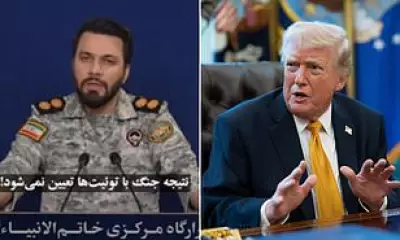
Unlike the approach of former US President Donald Trump, Iran's regime has meticulously plotted for this conflict over multiple decades. Tehran has spent years developing comprehensive plans to function without its central leadership, constructing a defence system specifically designed to survive extensive attacks and ultimately draw the United States into an unwinnable ground war. This strategic preparation has proven crucial as the conflict enters its third week.
The Headless Government That Refuses to Fall
Despite nearly three weeks of intensive air strikes against Iranian targets, the regime continues to operate effectively even after losing its supreme leader. The system known as "mosaic defence" has been implemented for battlefield decision-making, counter-attacks, and maintaining state control. Tehran anticipated that Israel would lead American efforts to destroy its theocracy using overwhelming air power, and prepared accordingly for this exact scenario.
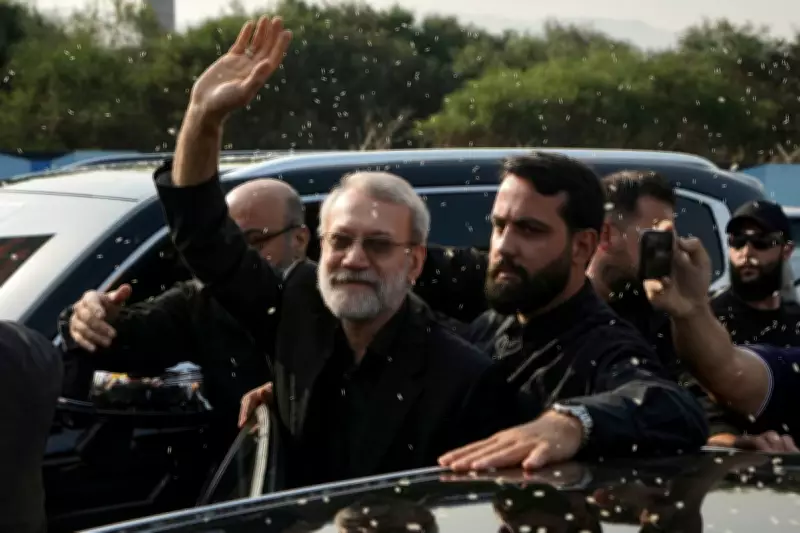
The relative success of this preparation is demonstrated by Iran's continued, though reduced, attacks on neighbouring countries and US bases throughout the Gulf region. Remarkably, Tehran maintains its ability to strangle the strategically vital Strait of Hormuz despite the confirmed deaths of Supreme Leader Ali Khamenei and Ali Larijani, who previously led Iran's systems of state oppression as secretary of the supreme national security council.
Decentralized Command Structure Proves Resilient
The doctrine of "mosaic defence" finds its roots in the cell structures of resistance movements and terrorist organisations dating back to World War II. The fundamental principle involves creating a chain of command that can survive even when individual links are broken, with each component functioning as an autonomous, self-regulating entity. Local commanders receive specific authority, capacity, and inviolable orders to continue operations regardless of circumstances.
This decentralized approach has withstood more than 4,000 air strikes targeting Iranian command and control centres, local police stations, and both above-ground and underground structures associated with the Islamic Revolutionary Guard Corps (IRGC). The extensive bombing campaign has obliterated numerous key facilities, yet the regime's operational capabilities persist through this carefully designed redundancy system.
Asymmetric Warfare Experience Informs Current Strategy
Iranian Foreign Minister Sayed Arahgchi has explicitly outlined Tehran's strategic thinking, drawing upon decades of experience gained by the IRGC Quds Force. This expertise was developed through supporting militia groups that attacked US forces in Iraq and Afghanistan, running Hezbollah operations in Lebanon, and testing advanced military technology against the Israel Defence Forces. Additionally, Iran has trained alongside Hamas fighters, pioneering "asymmetric warfare" techniques in Gaza for over twenty years.
"We've had two decades to study defeats of the US military to our immediate east and west. We've incorporated lessons accordingly," the foreign minister declared on social media on March 1. "Bombings in our capital have no impact on our ability to conduct war. Decentralized Mosaic Defense enables us to decide when—and how—war will end."
Ground War Preparation and Strategic Calculations
While Israel and the United States focused primarily on aerial bombardment as their pathway to regime change, Tehran spent decades preparing for the ground war it believes will ultimately determine the conflict's outcome. The IRGC studied and contributed to the failures of US-led forces in both Iraq and Afghanistan, incorporating these lessons into their defensive planning. Iranian strategists understand that their country's vast territory—comparable in size to Western Europe—would present enormous challenges for any ground invasion force.
Current IRGC commanders, who now integrate the Basij militia into their structure, operate under standing orders to continue fighting regardless of circumstances. The command structure maintains redundancy with alternative commanders positioned at least four levels deep within the hierarchy. Some units focus on controlling the Strait of Hormuz using sea drones and covert operations to disrupt global fuel trade routes, while others target Gulf nations hosting US bases with drone attacks that have prompted expatriate evacuations.
Political Dimensions and Strategic Miscalculations
There are emerging signs that former President Trump is losing patience with the conflict's progression. His administration may not have fully comprehended that Iran's regime had prepared specifically to survive a prolonged war, nor anticipated Tehran's willingness to engage American ground forces directly. Compounding this potential strategic miscalculation, Trump removed many experienced and intellectually independent leaders from US military and intelligence organisations during the initial days of his second term.
The former president now relies on advice from his "secretary of war" Pete Hegseth, whose strategic understanding has been questioned by observers. For Iran's long-term planners, ultimate victory would involve creating a conflict that Trump has no clear pathway to conclude successfully. The regime's decades of preparation have created a resilient defensive system that continues to function despite intensive bombardment and leadership losses, challenging initial assumptions about how quickly air power alone could determine the conflict's outcome.