Iran's Power Vacuum: Security Chief Larijani Poised to Succeed Khamenei
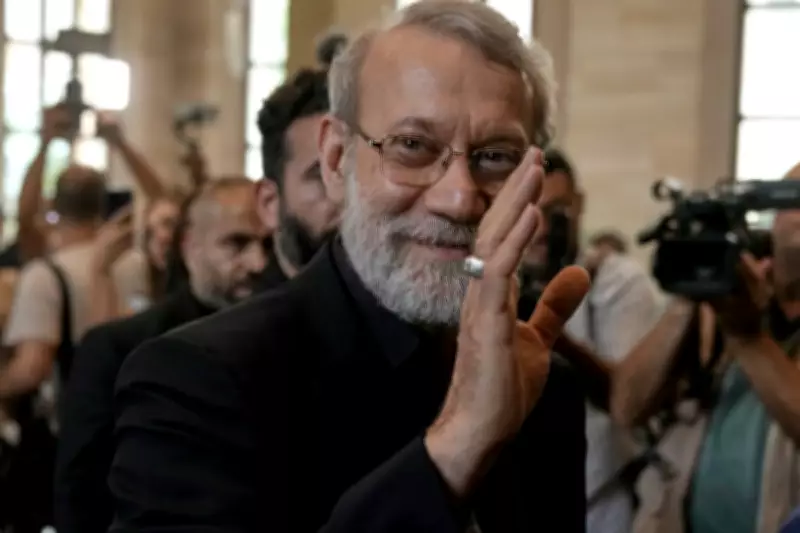
In the wake of Ayatollah Ali Khamenei's death following joint US-Israeli strikes, Ali Larijani, the leader of Iran's Supreme National Security Council, has emerged as the figure most likely to step into the resulting power vacuum. Experts warn that instead of a cleric, Iran's next leader could be a hardline security official who pushes the state toward even deeper militarisation, fundamentally altering the nation's governance structure.
Larijani's Aggressive Posturing and Power Consolidation
Hours after the deadly strikes that claimed Khamenei's life, the 67-year-old Larijani took to X – a platform banned to most Iranian citizens – to issue a stark warning: "Today we will hit them with a force that they have never experienced before." His aggressive approach has only hardened over the weekend as a three-person interim leadership committee officially assumed control of the Islamic Republic.
Larijani has vehemently denied reports that he attempted to continue nuclear talks with the Trump administration, stating unequivocally: "We will not negotiate with the United States." He added that the US president harbored "delusional fantasies" about the unfolding conflict, signaling a complete breakdown in diplomatic channels.

Who Is Ali Larijani?
Born in Najaf in June 1958, Larijani's political career began as deputy minister of labour and social affairs. His rise through Iran's power structure saw him appointed head of Islamic Republic of Iran Broadcasting in 1994, a position he held for a decade. In 2005, he assumed the crucial role of Supreme National Security Council secretary, placing him in charge of Iran's nuclear negotiations – a portfolio he maintained until recently overseeing Tehran's efforts to reach a nuclear deal with the US.
Although Larijani is not formally part of the new three-man interim council, real power in Iran is believed to remain concentrated within the Security Council. This body had reportedly already sidelined Khamenei since the disastrous 12-day war with Israel in June last year, establishing Larijani as the de facto power broker.
Domestic Crackdown and International Stature
Larijani's influence has eclipsed that of official president Masoud Pezeshkian, as he has taken the lead both internationally and domestically. He was among the earliest and most vocal figures in Iran's leadership calling for deadly violence to suppress political demonstrations that erupted at the end of 2025 amid a deepening economic crisis.
The unrest – representing the largest uprising since the 1979 Islamic Revolution – was met with a brutal crackdown. According to Iran International, as many as 30,000 people are believed to have been killed by the Iranian regime this year in efforts to quell dissent.
Breaking with Clerical Tradition
Larijani's ascent to power is particularly significant because he is not among the clerics Khamenei had identified as potential successors. The supreme leader had left a shortlist of three religious figures, with the role traditionally reserved for a cleric. However, Khamenei's death combined with US-Israeli aggression has upended long-held assumptions about the continuity of clerical rule, creating an opening for a hardline security figure like Larijani to assume leadership.
Experts now regard Larijani not merely as a plausible leadership contender, but as someone who could steer Iran toward an even more militarised model of governance. While former US president Donald Trump has expressed desire for regime change in Iran, immediate efforts to establish leadership amid the unfolding war have resulted in an interim leadership vowing vengeance against the US and Israel.
Response to Attacks and Regional Accusations
Larijani has accused the US and Israel of attempting to plunder and disintegrate Iran, warning "secessionist groups" of harsh retaliation if they attempt any action. In a Sunday post on X, he claimed Washington had plunged the region into chaos, stating: "With his delusional actions, he has transformed his self-made slogan of 'America First' into 'Israel First' and sacrificed American soldiers for Israel's quest for power."

He further asserted that the US president "once again imposes the cost of his cult of personality on American soldiers and families," while maintaining that "the Iranian armed forces did not initiate the invasion." These statements underscore Larijani's positioning of Iran as a defensive actor responding to external aggression, while simultaneously preparing for escalated conflict.
The emergence of Larijani as Iran's likely next leader represents a fundamental shift in the nation's power structure, potentially replacing decades of clerical rule with security-focused governance and heightened militarisation in an already volatile region.