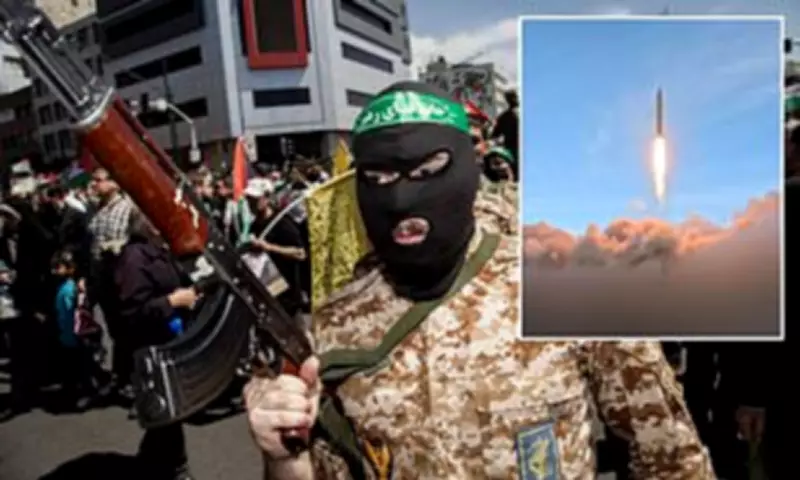
Iran's Revolutionary Guards have issued a stark warning to American companies operating across the Middle East, explicitly calling for the immediate evacuation of their employees from industrial sites. In a statement obtained by Drop Site News, the Guards declared: 'We warn the American regime to evacuate all American industries in the region. We ask people living near industrial factories in which Americans hold shares to leave those areas so they are not harmed.'
Targeted Companies and Circulating Graphic
A graphic being circulated by the Islamic Revolutionary Guard Corps (IRGC) lists fifteen major US companies that could be targeted, including high-profile names such as ExxonMobil, Boeing, Microsoft, Lockheed Martin, and Amazon Web Services. This threat underscores the escalating tensions between Iran and the United States, with the Guards positioning these corporations as potential casualties in the ongoing regional conflict.
Diplomatic Efforts and Denials
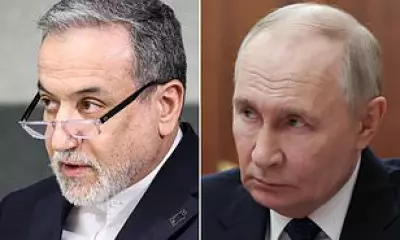
Amidst these threats, Iranian officials have allegedly attempted to reestablish diplomatic contact with Donald Trump's Middle East envoy, Steve Witkoff. However, senior White House officials told CNN that President Trump has no interest in negotiating with Tehran at this time. Iranian Foreign Minister Abbas Araghchi vehemently denied any such contact in a social media post, stating: 'My last contact with Mr. Witkoff was prior to his employer's decision to kill diplomacy with another illegal military attack on Iran. Any claim to the contrary appears geared solely to mislead oil traders and the public.'
Regional Violence and Military Actions
The threats against US companies come against a backdrop of intensified regional violence. Iran has recently launched fresh drone strikes on the United Arab Emirates (UAE), sparking huge fires near Dubai airport and at a major oil terminal in Fujairah. Simultaneously, the Israeli military has declared it has begun 'limited ground operations' against Hezbollah in southern Lebanon and vowed to continue bombing campaigns in Tehran for an additional three weeks.
International Response and Economic Impact
European leaders have pushed back against President Trump's plan to deploy an armada of warships to secure the Strait of Hormuz, with Trump warning that NATO faces a 'very bad' future if allies do not assist the US. The conflict has already disrupted oil tanker traffic in the Strait of Hormuz, bringing it to a standstill. This has contributed to a sharp rise in gas prices, with AAA reporting the average price for a gallon of regular gasoline has increased to $3.72, up from $2.93 just a month ago.
In a PBS News interview, President Trump downplayed the economic impact, calling inflated gas prices 'a very small price to pay' and predicting that 'oil prices will drop like a rock as soon as it's over.' When questioned about the war's duration, he expressed optimism, stating, 'I don't believe it will be long.' However, sources familiar with the matter told Axios that the conflict could extend into September, a timeline significantly longer than Trump has publicly acknowledged.
Political and Human Costs
The prolonged conflict poses significant political risks for President Trump, with midterm elections looming just weeks after a potential September endpoint. According to an exclusive Daily Mail/JL Partners poll, Americans largely oppose the war. The human toll continues to mount, with Central Command spokesperson Capt. Tim Hawkins confirming that thirteen US troops have been killed and 200 injured, including ten seriously, since the conflict began.
Uncertain Messaging and Internal Dynamics
President Trump's messaging on the war has been inconsistent. Initially, he told the Daily Mail in a phone interview that the conflict could last up to four weeks, later revising this to five weeks. Since then, he has been evasive on specifics, stating only that the war will last as long as 'necessary.' This flip-flopping occurs as Americans express skepticism and Republicans on Capitol Hill strive to maintain their narrow majority ahead of the November midterms.
Internal Iranian Developments
Leaked audio has revealed a dramatic account of how Iran's new Ayatollah, Mojtaba Khamenei, narrowly escaped death during an Israeli missile strike on February 28 that killed his father. According to Mazaher Hosseini, head of protocol for the regime, Khamenei survived by stepping out into his garden 'to do something' moments before the attack, sustaining only a leg injury. This incident highlights the precarious security situation within Iran's leadership amid the broader regional turmoil.