Iranian Cleric Demands 'Shedding of Trump's Blood' After US Sinks Warship
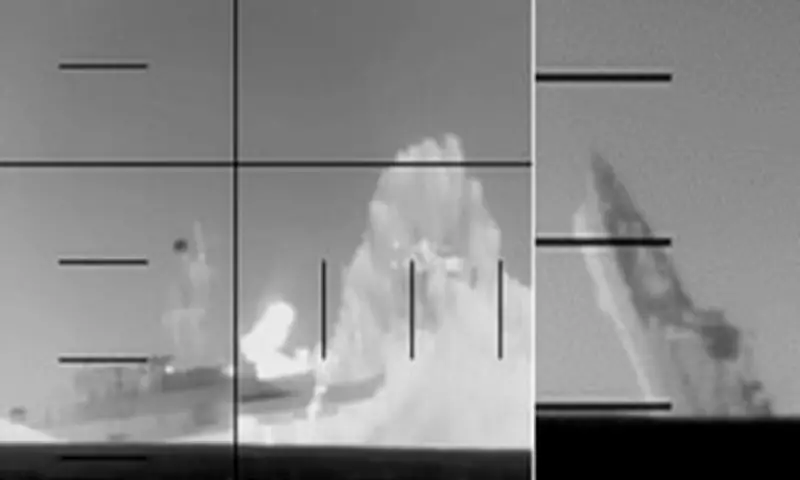
A senior Iranian cleric has issued a violent call for 'the shedding of Trump's blood' as Iran's leadership warned the United States will 'bitterly regret' sinking an Iranian warship in the Indian Ocean. The US navy attacked and sank the Iranian frigate Dena on Tuesday night, resulting in the deaths of at least eighty-seven Iranian sailors. This aggressive naval action has dramatically escalated tensions in a conflict that began just days earlier.
Iranian Foreign Minister Condemns 'Atrocity at Sea'
Iranian Foreign Minister Abbas Araghchi strongly denounced the sinking, labeling it 'an atrocity at sea.' In a statement posted on social media, he revealed that the Frigate Dena, which was a guest of the Indian navy and carrying nearly one hundred thirty sailors, was struck without warning in international waters. Araghchi emphatically declared, 'Mark my words: The US will come to bitterly regret the precedent it has set.' This condemnation underscores the severe diplomatic fallout from the military engagement.
Ayatollah's Rare Call for Violence
Ayatollah Abdollah Javadi Amoli, a top-ranking cleric within Shiite Islam, delivered a rare and explicit call for violence. In one of the few clerical statements issued since the conflict erupted, he proclaimed that Iran is 'on the verge of a great test' and urged state television to advocate for 'the shedding of Zionist blood, the shedding of Trump's blood.' He added, 'Fight the oppressive America, his blood is on my shoulders.' Such direct incitement from an ayatollah, a high religious authority, signals a significant intensification in Iran's rhetorical stance.

Escalating Conflict and Regional Strikes
The US and Israel initiated this war on Saturday, targeting Iran's leadership, missile arsenal, and nuclear program, with suggestions that overthrowing the Iranian government is an objective. However, the exact aims and timelines have been fluid, indicating an open-ended and unpredictable conflict. Today, Israel reported multiple incoming missile attacks, with air sirens activated in Tel Aviv and Jerusalem. Iranian state television claimed additional strikes targeted US bases, while the Israeli military launched attacks on Hezbollah in Lebanon and conducted a 'large-scale wave of strikes against infrastructure' in Tehran, where explosions were subsequently heard.
Mounting Casualties and Global Disruption
The war has already inflicted heavy casualties, with officials reporting over one thousand deaths in Iran, more than seventy in Lebanon, and around a dozen in Israel. Beyond the human toll, the conflict has severely disrupted global oil and gas supplies, snarled international shipping routes, and stranded hundreds of thousands of travelers across the Middle East. The strategic Strait of Hormuz, through which about twenty percent of the world's oil passes, has seen attacks, further threatening energy markets.
Expanding Regional Instability
Incidents have spread erratically beyond the immediate conflict zones. A drone crashed near an airport in Nakhchivan, an Azerbaijani exclave bordering Iran, while another fell near a school in Azerbaijan, injuring two civilians. Although Iran has not acknowledged targeting Azerbaijan, these events highlight the war's spillover effects. Qatar evacuated residents near the US embassy in Doha as a precaution, and fighter jets were heard over Dubai in the United Arab Emirates. Saudi Arabia reported destroying a drone in a province near Jordan, and an explosion off Kuwait's coast suggested expanded threats to commercial shipping, with a tanker apparently attacked.
Economic Impacts and Oil Price Surge
The conflict has triggered significant economic volatility. US stocks briefly rebounded after oil prices stabilized, but Brent crude, the international benchmark, resumed its ascent early Thursday, rising approximately fifteen percent since the conflict began due to Iranian attacks disrupting traffic through the Strait of Hormuz. This surge underscores the war's profound impact on global energy markets and economic stability.