Iranian Americans Voice Anguish Over Regime's Brutal Crackdown
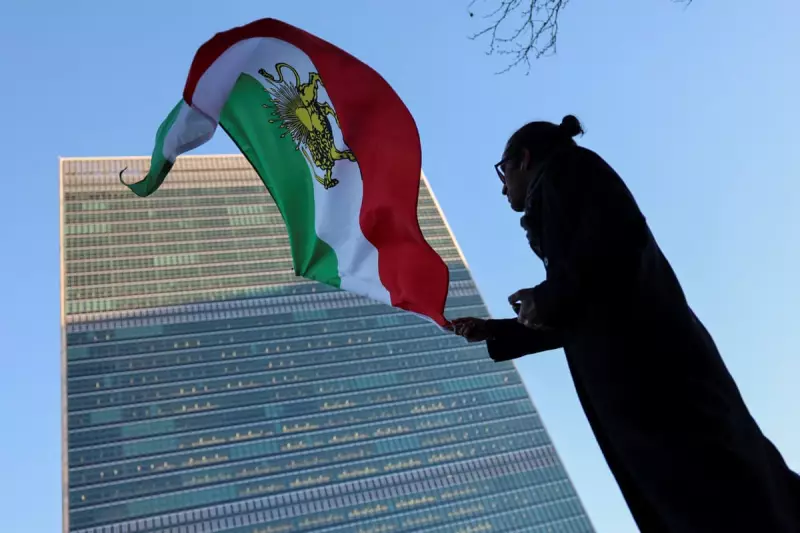
A protester waves the Iranian flag outside the United Nations headquarters in New York, a poignant symbol of the diaspora's desperate plea for global attention. Recent protests in Iran have sparked the most serious and deadly unrest since the 1979 revolution, drawing worldwide focus to the escalating crisis in the Middle East.
Living in a State of Constant Anxiety
The Guardian spoke to Iranians living outside the country to gauge their views on the current situation and the potential for US intervention. Hundreds based in the United States described existing in a perpetual state of anxiety and helplessness, consumed by fear for loved ones back home. This distress is exacerbated by internet blackouts that sever crucial communication lines.
"No one should have to wake up every day wondering whether their loved ones have been executed, imprisoned, or killed in the streets simply for demanding dignity and freedom," wrote Mahnaz, 36. "The scale of these atrocities demands more than statements of concern."

Emotional Devastation from Afar
Fereshteh, a 45-year-old lab scientist, characterised the past weeks as "emotionally devastating". "Even from far away, the fear never stops. Many days I wake up terrified to check my phone, afraid of seeing bad news or learning that someone I love has been arrested, injured, or killed," she said. Fereshteh added that many Iranians she speaks with now believe peaceful protests alone are insufficient.
"The regime has shown that it will respond only with bullets, prisons, and executions," she continued. "In this situation, international military intervention may be the only realistic way to stop the killing and dismantle this system of repression. If intervention can end this dictatorship and give people a chance to live freely, many of us believe it is a price worth paying."
The Moral Dilemma of Intervention
Ellie, 33, described feeling "an intense sense of survivor's guilt" being in the US and is "emotionally paralysed and often speechless" by news from Iran. "A regime that suppresses its own people through violence, fear, and isolation does not remain a local problem," she argued. "It destabilises regions, fuels extremism, drives forced migration, and normalises brutality. Ignoring this does not create peace – it postpones a larger crisis."
Many respondents expressed a belief that some form of international intervention is now necessary. Luna Houshmand, a software engineer in her 30s, stated, "I believe words and sanctions have failed for decades. If they worked, this regime would not still be killing people in the streets. If the world truly believes in human rights, it must move beyond statements and take real action."
Desperation and Hope for Foreign Assistance
An anonymous woman in New York reported that her family in Iran feels "desperate and helpless, and their only hope is foreign assistance". "President Trump promised the people of Iran that he would come to save them, and the people have counted on that promise," she said. "Our only concern right now is that he may not follow through."
Maryam Tehrani, based in Seattle, emphasised that Iranians need "not empty statements, but meaningful pressure on the Islamic Republic". "Sanctions targeting officials, international isolation, and real accountability matter," she said. "Military intervention is complicated and risky, but indifference is not an option. The priority should be protecting civilians and supporting the Iranian people's right to decide their own future without repression."

Navigating Impossible Choices
Sahar Haddadian, a 36-year-old civil engineer in Florida, noted that "no one wants war" or "foreign intervention or to see innocent lives lost" but "history has shown that some regimes leave the world with no good options – only difficult ones". "You cannot negotiate with a regime that rules through terror," Haddadian said, adding that "dialogue, appeasement, and empty diplomacy have failed".
Haddadian also called for the US to "make it clear that it stands with the Iranian people". "That means real consequences for regime leaders, full isolation of those responsible for crimes against humanity, and unwavering support for the people of Iran who are bravely demanding freedom," they asserted.
The Conflict Between Principle and Desperation
Ellie, 42, in Colorado, stated that while she is "strongly against war", the "situation in Iran has reached a point where people are being killed for demanding basic rights". She argued that "without some form of international intervention, whether political, diplomatic, economic, or strategic pressure, it is difficult to see how this regime can be stopped". "If President Trump or any other world leader is willing to take meaningful, non‑military action that helps end the ongoing repression, I would welcome that support," she added.
An anonymous Iranian in California, who has long opposed foreign military intervention and distrusts US intentions, now feels profoundly torn. "We are now at such a deadlock that I honestly don't know what to feel anymore," they confessed. "When a regime responds to peaceful protests with mass bloodshed, when civilians are gunned down and hospitals overflow with the injured, it forces people like me into impossible moral contradictions. I find myself torn between my long-held beliefs and the sheer desperation of watching my people slaughtered with no protection and no voice."
Tara, a 36-year-old engineer, also described herself as "deeply conflicted" about US intervention. "I can't predict what would happen to my family, and I fear that any intervention could lead to more death and devastation," she said. "At the same time, I see no clear alternative for ending the Islamic regime's grip on power. I wish there were a way to remove those responsible without harming ordinary people or destroying our beautiful country. I'm worried this could turn into a never-ending war."