Talks between Iran and the United States to end the ongoing war appeared stalled on Wednesday, despite U.S. President Donald Trump's earlier claim that Iran had informed his administration it was in a "State of Collapse." Trump posted on social media that Iran wants the U.S. to "Open the Hormuz Strait" as soon as possible while they sort out their leadership. The White House did not immediately clarify how this message was conveyed.
Global Economic Fallout
Pakistan reported that its weekly oil import bill has surged by approximately 167% due to soaring global energy prices. Prime Minister Shehbaz Sharif stated on Wednesday that the weekly oil import bill had risen from $300 million before the Middle East conflict to $800 million. Similarly, European Commission President Ursula von der Leyen highlighted that the U.S.-Israel war, combined with Iranian retaliation such as blocking the Strait of Hormuz, costs the European Union nearly 500 million euros ($600 million) per day. This has led to higher fuel prices and fears of a jet fuel shortage within weeks.
The United Arab Emirates announced on Tuesday that it would leave OPEC effective May 1, removing one of the cartel's largest producers. While this move will not immediately impact constrained global oil supplies due to the Iran war and the closure of the Strait of Hormuz, it could help lower oil prices after the conflict ends.

Lebanese Soldier Killed
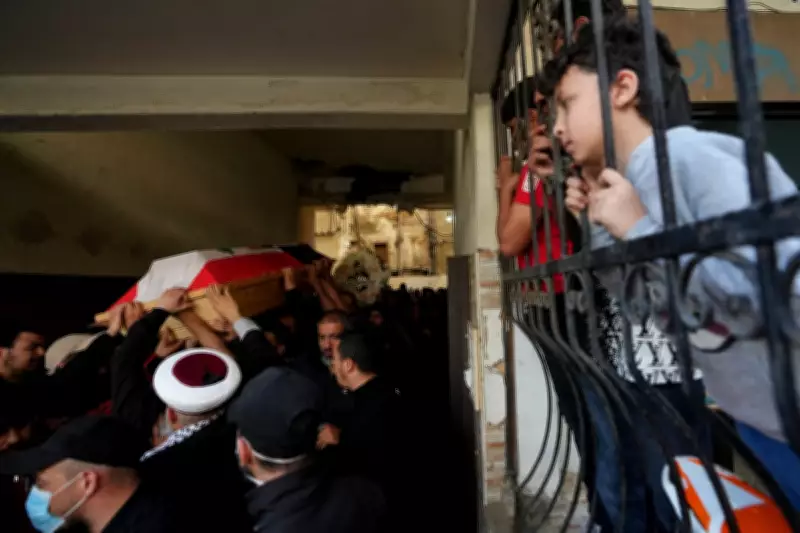
A Lebanese army soldier was killed on Wednesday along with his brother in an Israeli strike on a motorcycle they were riding from the soldier's work post to his home in the village of al-Souaneh, the army confirmed. The Lebanese army has remained on the sidelines during the Israel-Hezbollah war that began on March 2, but soldiers have frequently been caught in crossfire. A total of 20 Lebanese army soldiers have been killed by Israeli strikes since March 2, most while traveling to or from duty. Over 2,500 people have been killed in Lebanon during the war and a shaky ceasefire that has reduced but not halted fighting.
Nuclear Concerns
The head of the U.N. nuclear agency, Rafael Grossi, told the Associated Press that most of Iran's highly enriched uranium is likely still at the Isfahan nuclear complex, which was bombed last year and faced less intense attacks in the current U.S.-Israeli war. The International Atomic Energy Agency (IAEA) has satellite images showing the effects of the latest airstrikes and continues to gather information. IAEA inspections at Isfahan ended when Israel launched a 12-day war in June 2025 that saw the U.S. bomb three Iranian nuclear sites. Grossi stated that a large percentage of Iran's highly enriched uranium was stored there in June 2025 and has remained there since.
Currency Crisis
Iran's national rial currency hit a record low on Wednesday, trading at 1.8 million to $1, as a shaky ceasefire with the U.S. and Israel holds. The rial had been stable for weeks during the war due to limited trading and imports. However, it began sliding two days ago, reaching the record low. Experts warn that the fall of the rial will likely fuel inflation, as many imported goods—from food and medicine to electronics and raw materials—are affected by the dollar rate. The war is under a ceasefire, but a U.S. blockade continues to pressure Iran's economy by intercepting oil shipments, cutting into government revenue and hard currency.
Diplomatic Efforts
Prime Minister Shehbaz Sharif said Pakistan is continuing efforts to ease U.S.-Iran tensions. A "marathon session" in Islamabad on April 11 led to progress on a ceasefire that remains in place. Iran's Foreign Minister Abbas Araghchi visited Pakistan over the weekend for extended talks, then traveled to Oman, returned briefly, and departed for Russia. Before leaving for Moscow, Araghchi assured Sharif by phone that he would respond as soon as possible after consulting with his leadership. Pakistan is seeking to host a second round of talks between the U.S. and Iran.

Congressional Hearing
U.S. Defense Secretary Pete Hegseth will face questioning from Congress for the first time since the Iran war began. The hearing before the House Armed Services Committee will focus on the Trump administration's $1.5 trillion military budget for 2027. Democratic lawmakers are expected to question Hegseth on the war's costs and the drawdown of critical munitions. The U.S. and Israel launched the war on Feb. 28 without congressional oversight.