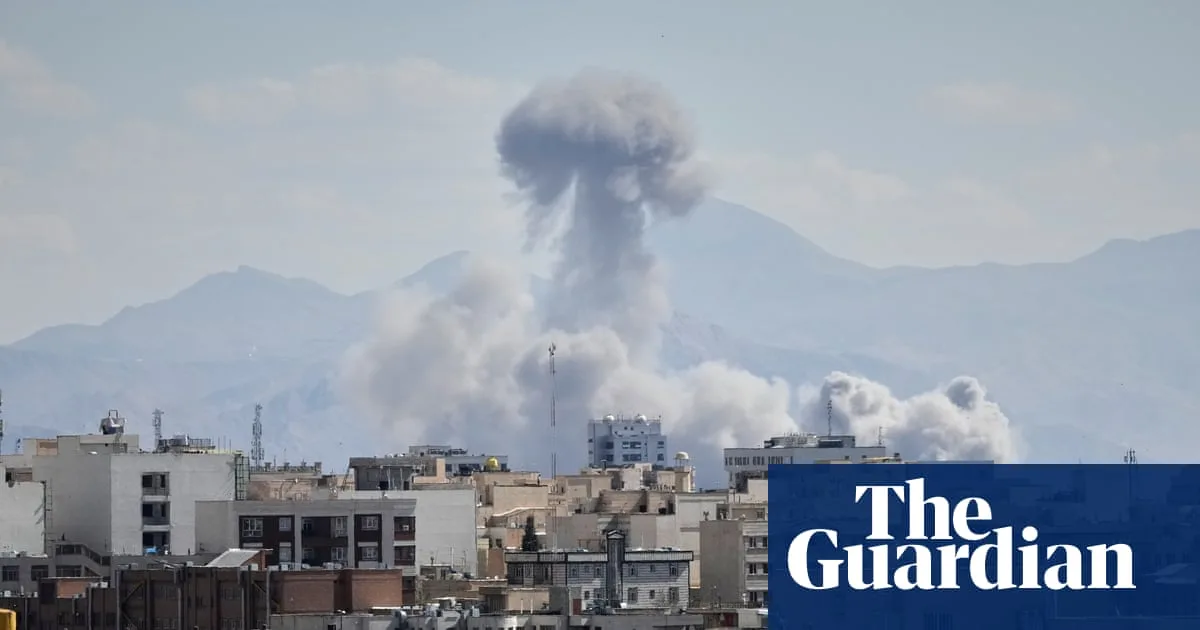
Iran Issues Stark Warning to Target Middle East Economic Centres
Iran has issued a severe threat to strike all economic centres across the Middle East, escalating fears that global financial hubs such as Dubai could be drawn deeper into the intensifying regional conflict. The warning came from an Islamic Revolutionary Guard commander, who declared that Tehran would retaliate if US and Israeli strikes continue, specifically targeting the region's key commercial and economic hubs.
Direct Threat to Global Energy Markets and Shipping Lanes
In remarks broadcast on Iranian state media, the general stated, 'We are saying to the enemy that if it decides to hit our main centres, we will hit all economic centres in the region.' He further warned that Iran could instigate chaos in the global energy market, claiming, 'We have closed the Strait of Hormuz. Currently, the price of oil is above $80 and will soon reach $200.' The Strait of Hormuz is a critical chokepoint for oil and gas flows from the Middle East, accounting for approximately one-fifth of global liquefied natural gas trade.
Recent Attacks and Immediate Fallout in Dubai
The threat followed a drone strike that hit the car park of the US consulate in Dubai overnight, sparking a fire that was quickly extinguished with no reported injuries. Local authorities confirmed the incident, stating that competent forces succeeded in controlling a limited fire resulting from a drone targeting operation. US Secretary of State Marco Rubio noted that the drone struck a car park adjacent to the consulate building, which is situated near Dubai's British embassy.
Panic had already spread through Dubai the previous night when missiles streaked across the sky and explosions lit up the city, sending tourists and influencers running for cover. Videos posted to social media showed a huge plume of smoke rising from the building, while holidaymakers described scenes of chaos as visitors fled beaches, restaurants, and luxury hotels amid echoing air raid sirens.
British Travellers and Expats Scramble to Evacuate
British travellers are now scrambling to leave the region as flights are disrupted and governments warn nationals to depart amid fears the conflict could widen. The British Government announced its first emergency evacuation flight to help stranded British nationals escape, scheduled to leave Oman's Muscat International Airport. This repatriation flight will prioritise the most vulnerable Brits first, with eligibility extended to British nationals, their spouse or partner, and children under 18 with valid travel documents.
However, British expats have expressed frustration over the lack of urgency in evacuation efforts. Despite around 130,000 Brits registering as stranded in the Gulf, a British Airways emergency evacuation flight departed with more than 100 empty seats. The Foreign Office has urged people not to travel to airports unless officially called, promising to contact British nationals to secure their exit.
Wider Disruption Across the Gulf Region
The escalating conflict is causing significant disruption across the Gulf, with thousands of cruise passengers now stranded in regional ports. Passengers and crews are unable to leave their ships, which have become floating hotels, due to safety fears in the Strait of Hormuz. At least six ships from major cruise companies are at a standstill, awaiting news on when they can depart.
Families have described terrifying scenes as missile interceptions lit up the skies above Dubai, hotels were evacuated, and airports descended into confusion with flights cancelled without warning. More than 11,000 commercial flights have been cancelled, affecting 1 million people since airspace over the Gulf largely closed following coordinated US and Israeli attacks on Iran.
Retaliatory Strikes and International Response
Iran has responded furiously to the killing of Supreme Leader Ayatollah Ali Khamenei, launching retaliation attacks across the Middle East. These have targeted US bases, including a CIA station at the US Embassy in Saudi Arabia that was blown up, and have hit expat hotspots such as Dubai, Abu Dhabi, Qatar, Bahrain, and Kuwait, affecting hotels and airports.
Foreign Secretary Yvette Cooper told MPs that the safety and security of British nationals is a top priority. Meanwhile, airlines are ramping up flights out of the Middle East, with Emirates operating seven flights from Dubai to the UK, Etihad scheduling two departures from Abu Dhabi, and Virgin Atlantic running a flight from Dubai to London Heathrow.
Desperate Measures and Regional Tensions
Desperate wealthy expats in Dubai have been driving across the desert to escape via neighbouring Oman or Saudi Arabia. The conflict has exposed tensions, with US officials admitting they did not expect Tehran to lash out against Gulf neighbours housing US bases. As the war rages on, the situation remains volatile, with ongoing threats to economic stability and regional security.






