Iranian Forces Seize Two Ships in Strait of Hormuz Amid Escalating Tensions
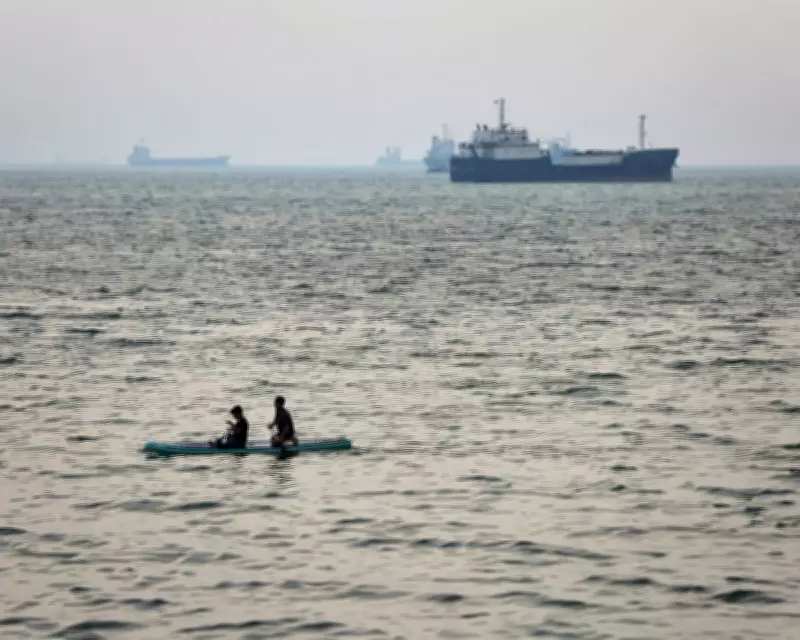
Ships remain anchored near the shoreline in Bandar Abbas, Iran, a key port city along the Gulf and the strategic Strait of Hormuz. This visual underscores the deepening maritime standoff that has gripped the region.
'Impossible' to Reopen Critical Waterway, Says Iranian Negotiator
Mohammad Bagher Ghalibaf, the speaker of the Iranian parliament and lead negotiator, declared late on Wednesday that reopening the Strait of Hormuz would be 'impossible' while the United States and Israel commit what he termed 'flagrant' breaches of the ceasefire. In a post on X, Ghalibaf accused the US of imposing a naval blockade, engaging in 'the hostage-taking of the world's economy', and condemned 'Zionist warmongering'. He asserted that the US and Israel 'did not achieve their goals through military aggression, nor will they through bullying'.
Seizures Mark First Iranian Ship Takeovers Since War Began
Iran's Islamic Revolutionary Guard Corps (IRGC) confirmed that their naval forces had stopped two ships attempting to cross the strait and brought them to shore. According to Iran's semi-official Tasnim news agency, the IRGC accused the Panama-flagged MSC Francesca and Liberia-flagged Epaminondas of 'attempting to exit the strait of Hormuz covertly'. The Epaminondas is Greek-operated, and Greece's foreign minister verified an attack against a Greek-owned cargo ship. A UK-based maritime security monitor reported incidents on Wednesday, including one where an Iranian gunboat fired upon a vessel, causing heavy damage to its bridge.

These seizures represent the first time Iran has taken control of ships since the conflict began on 28 February, following earlier US actions that included firing on and seizing an Iranian cargo vessel and boarding an Iranian oil tanker in the Indian Ocean.
US and Iran Maintain Separate Blockades, Deepening Global Crisis
The standoff over the strait—through which approximately 20% of the world's oil and liquefied fossil gas passed during peacetime—has cast serious doubts on the resumption of stalled peace negotiations. The White House press secretary stated that Donald Trump was 'satisfied' with the naval blockade and understood Iran to be in a 'very weak position'. Karoline Leavitt added that the US was 'completely strangling their economy through this blockade, they're losing $500m a day'.
Trump's administration has been unable to contain the global economic and diplomatic crisis stemming from the war, which has not overthrown the anti-US regime or ended Iran's nuclear ambitions. Instead, Tehran's forced closure of the strait has triggered a spiralling global economic crisis, with countries in Asia dependent on Gulf oil experiencing severe shortages of fuel, fertiliser, and other raw materials.
Economic Fallout and International Appeals
Germany, Europe's largest economy, halved its 2026 growth forecast to 0.5% on Wednesday, while Greece announced €500m (£434m) in extra aid for households and farmers. Prime Minister Kyriakos Mitsotakis noted that while the nation's economy is holding up, stresses from supermarket costs, children's expenses, pricier fuel, and elderly care persist.
The head of the UN maritime agency has appealed for assistance for thousands of seafarers stranded in the Gulf due to the strait's closure. Approximately 20,000 seafarers and 2,000 ships have been stranded, according to the International Maritime Organization (IMO).
Stalled Peace Talks and Regional Instability
Over the weekend, Iran indicated it had received new proposals from Washington but suggested a wide gap remains between the sides. Pakistan has acted as a mediator, but a luxury hotel in Islamabad prepared for talks remained empty on Wednesday. Iran never publicly accepted the invitation, and the US delegation, led by Vice-President JD Vance, never left Washington.
A Pakistani official briefed on the preparations expressed disappointment, stating, 'We had prepared everything. We were all prepared for the talks, the stage was set. If you ask me honestly, it was a setback we were not expecting, because the Iranians never refused, they were up to come and join and they still are.'

Escalating Violence in Lebanon and Ceasefire Violations
Adding to the bloodshed and instability, Israel and the Iranian proxy group Hezbollah have fought a second front in Lebanon. Despite a tenuous 10-day ceasefire set to expire on Sunday, Israeli strikes killed five people in Lebanon on Wednesday, including journalist Amal Khalil, according to Lebanese state media. Hezbollah responded with an attack on northern Israel, citing 'flagrant' violations of the ceasefire.
Lebanese authorities report that at least 2,454 people have been killed in Lebanon in Israeli attacks since the war began. Lebanese President Joseph Aoun mentioned preparations for negotiations between Lebanon and Israel on Thursday, a significant development given the lack of diplomatic relations between the countries.
This report incorporates contributions from Reuters, the Associated Press, and Agence France-Presse, highlighting the complex and volatile situation in the Middle East.