Iran's Nuclear Ambassador Alleges US-Israeli Airstrikes Hit Natanz Enrichment Site
Iran's Ambassador to the International Atomic Energy Agency, Reza Najafi, has made a serious allegation that airstrikes conducted by the United States and Israel specifically targeted the Natanz uranium enrichment facility within Iran. This claim was presented to reporters on Monday at the IAEA headquarters in Vienna, where a special session of the Board of Governors is currently being convened at Russia's request.
Contradictory Assessments from the UN Nuclear Watchdog
These allegations stand in direct contradiction to the assessment provided by Rafael Grossi, the Director-General of the IAEA. Grossi stated clearly that, "up to now," the agency has "no indication" that any nuclear facilities in Iran have been struck or damaged. He specifically mentioned that this includes major installations such as the Bushehr Nuclear Power Plant, the Tehran Research Reactor, and other nuclear fuel cycle facilities.
Najafi was explicit in his accusations, telling the press, "Again they attacked Iran's peaceful safeguarded nuclear facilities yesterday. Their justification that Iran wants to develop nuclear weapons is simply a big lie." When questioned by a reporter to specify which facility he was referring to, Najafi confirmed it was the Natanz site.

The Strategic Importance of the Natanz Facility
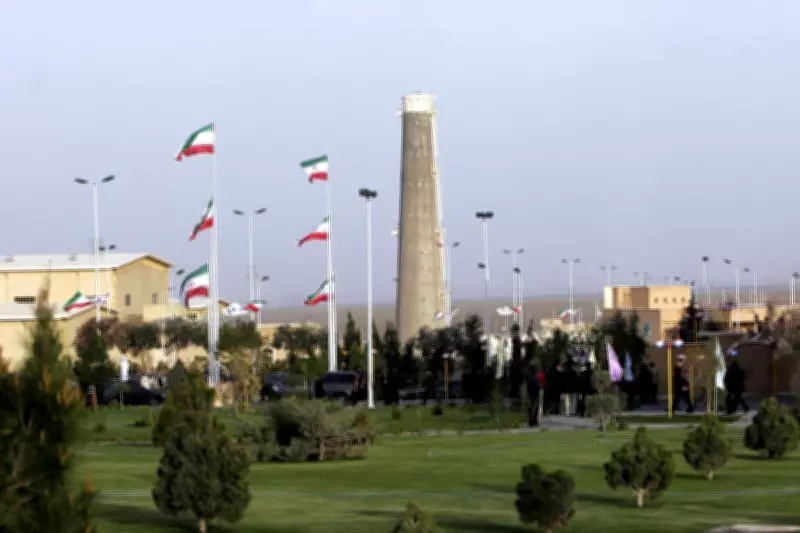
The Natanz enrichment complex, located approximately 220 kilometers (135 miles) south of Tehran, is a critical component of Iran's nuclear program. It consists of a mixture of above-ground and underground laboratories and has historically been responsible for the majority of Iran's uranium enrichment activities.
Prior to the ongoing conflict, the IAEA reported that Iran was utilizing advanced centrifuges at Natanz to enrich uranium up to 60% purity. This level is considered just a short technical step away from the 90% enrichment required for weapons-grade material. It is presumed that some of this enriched material was still onsite during recent hostilities.
The facility has a history of being targeted. The main above-ground structure, known as the Pilot Fuel Enrichment Plant, was reportedly "functionally destroyed" by an Israeli strike on June 13, which also caused serious damage to underground halls housing cascades of centrifuges. A subsequent U.S. attack on June 22 is believed to have targeted Natanz's underground facilities with bunker-busting munitions.
IAEA's Ongoing Monitoring and Safety Concerns
Director-General Grossi addressed the Board of Governors, highlighting the challenges in communication due to the conflict. He noted that the IAEA's Incident and Emergency Center has been attempting to contact Iranian nuclear regulatory authorities but has received no response so far.
Grossi issued a stern warning, urging military restraint. He emphasized that Iran, along with other countries in the region that have been militarily targeted, possesses operational nuclear power plants and research reactors, as well as associated fuel storage sites. This situation, he argued, significantly increases the threat to nuclear safety and security across the Middle East.
However, he provided a measure of reassurance, stating that monitoring has so far detected "no elevation of radiation levels above the usual background levels in countries bordering Iran."
Diplomatic Condemnation and Broader Accusations
Ambassador Najafi did not limit his criticism to the alleged airstrikes. He launched a broader political attack, accusing the United States of using "deception and disinformation to invade other countries." He specifically blamed former U.S. President Donald Trump for initiating the conflict, alleging that Trump attempts to "portray himself as a man of peace" while seeking accolades like the Nobel Peace Prize.
"Even when they talk about peace, it is a lie. And if they call for diplomacy, it's about deception," Najafi asserted. He characterized the strikes against Iran as "unlawful, criminal and brutal" and called upon the 35 member states of the IAEA Board of Governors to "categorically condemn" these attacks.

The special session in Vienna continues as the international community grapples with these conflicting narratives regarding the security of Iran's nuclear infrastructure amidst ongoing regional tensions.