
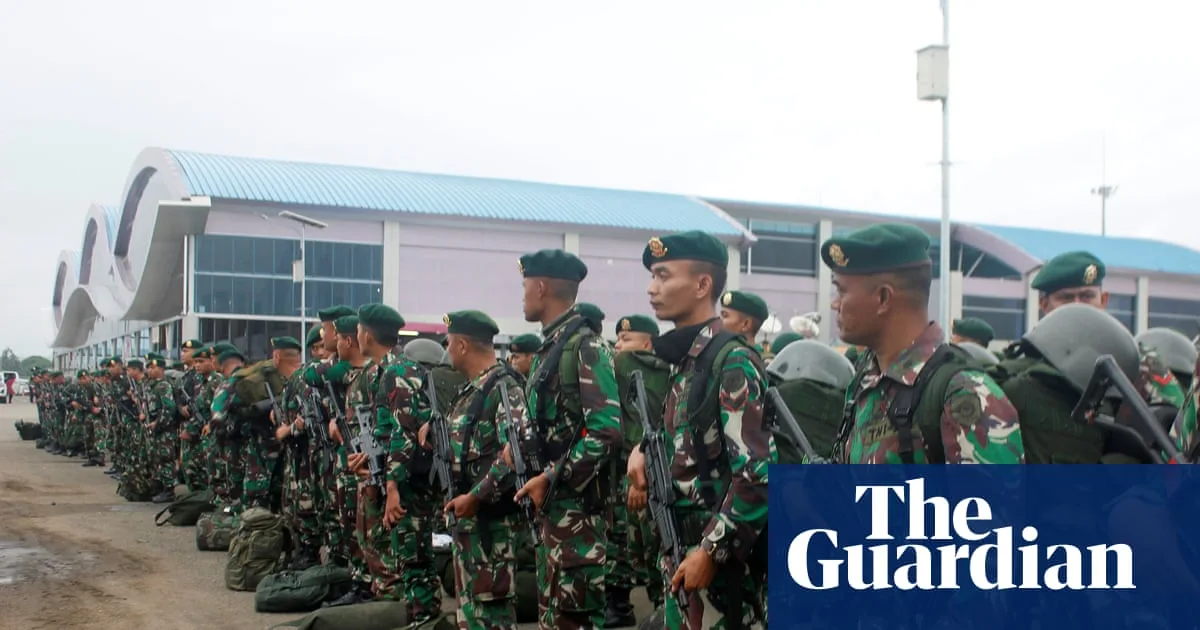
Indonesia has announced it is preparing to send up to 8,000 troops to Gaza as part of an international stabilisation force envisioned under Donald Trump's Middle East peace plan. The statement from the army chief, General Maruli Simanjuntak, makes Indonesia the first country to offer a specific commitment to the force.
The deployment would be historic, marking the first foreign military presence in Gaza since 1967. If it proceeds, the force would place the world's most populous Islamic nation at the centre of one of the Middle East's most entrenched conflicts. General Maruli said an army brigade of between 5,000 and 8,000 troops could be sent, but stressed the plans remain under negotiation.
Israeli public radio reported that a site in southern Gaza, between Rafah and Khan Younis, has been designated for a barracks for the Indonesian contingent. The potential role of the international force has been unclear since Mr Trump proposed it last September. Contributing nations have been reluctant to take on the task of disarming Hamas on Israel's behalf.
General Maruli suggested Indonesian troops would play a supporting role, providing engineering and health units. He said: 'We've started training people who could potentially become peacemakers.' Under the Trump plan, an interim Palestinian administration would handle daily governance, including disarming Hamas, with help from a Palestinian police force trained in Jordan and Egypt.
The deployment of foreign soldiers, especially from an Islamic country, is likely to face strong opposition from the far-right wing of Prime Minister Benjamin Netanyahu's coalition, who see it as a step towards Palestinian statehood. Mr Netanyahu was due to fly to Washington for talks with Mr Trump on Gaza and other issues.
Indonesia's President Prabowo Subianto has agreed to join the 'board of peace' overseeing the peace process. He initially offered 20,000 troops for the force. However, some Indonesian observers have expressed concern that the country could become embroiled in a situation beyond its control, with one Jakarta Globe commentary calling it a 'diplomatic gamble'.




