
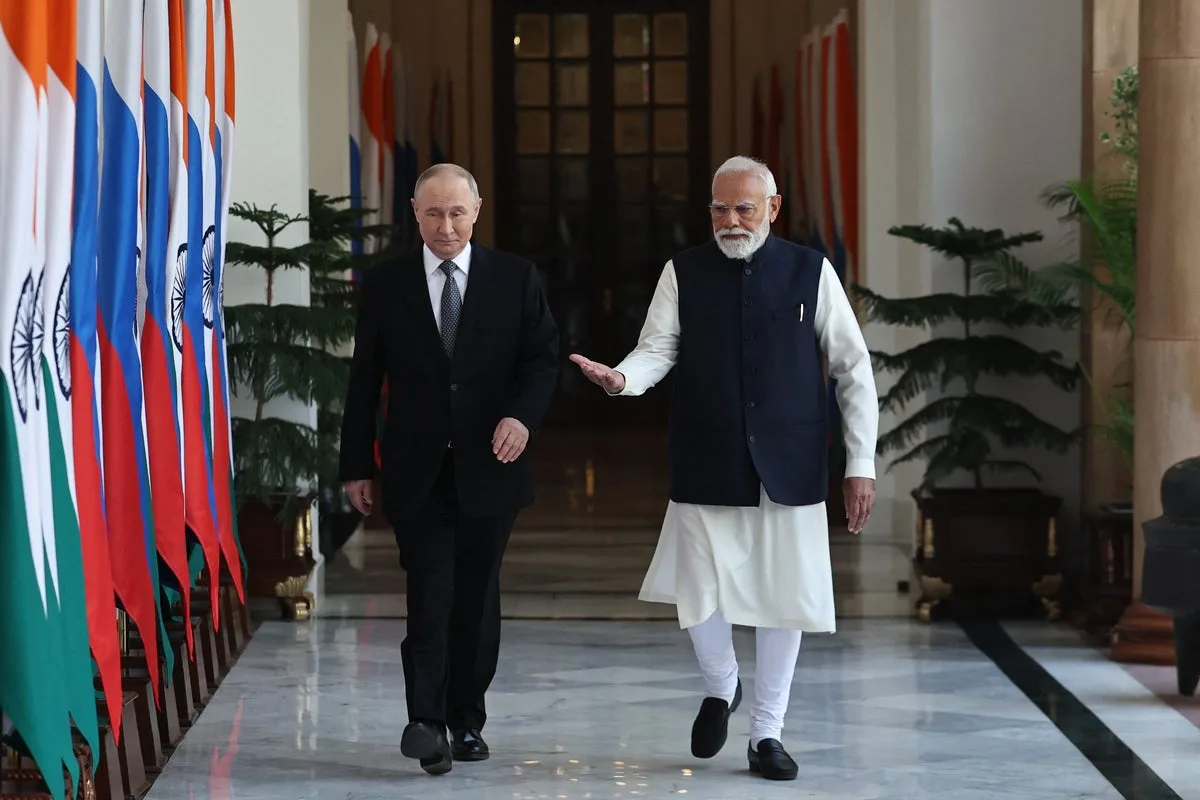
Indian Prime Minister Narendra Modi told Russian President Vladimir Putin on Friday that India is not neutral in the Russia-Ukraine war, stating that its position is for peace. Modi made the remarks as he welcomed Putin to New Delhi for a two-day visit focused on security and trade.
“India is not neutral – India has a position, and that position is for peace,” Modi said during their talks. “We support every effort for peace, and we stand shoulder to shoulder with every initiative taken for peace.” In response, Putin thanked Modi for his attention and efforts aimed at resolving the war, noting that they had discussed steps towards a possible peaceful settlement, including with other partners such as the United States.
The visit comes as India continues to purchase discounted Russian oil despite warnings from Washington that this helps fund Moscow's war effort. US President Donald Trump has imposed additional 25 per cent tariffs on Indian imports in retaliation. The two leaders also discussed cooperation in defence, energy, high technologies, aviation, space, and artificial intelligence.
The 23rd Russia-India Summit tests New Delhi's ability to balance relations with Moscow and Washington as the Ukraine war nears its fourth year. India is not a signatory of the Rome Statute of the International Criminal Court, allowing it to host Putin, who is wanted on a war crimes arrest warrant for Ukraine.
Three European envoys – the British high commissioner, French ambassador, and German ambassador – published a rare joint op-ed criticising Russia's war in Ukraine, accusing Moscow of launching large air attacks even during peace talks. They described the attacks as “a systematic choice by Russia to wage its war of aggression with absolute ruthlessness.”




