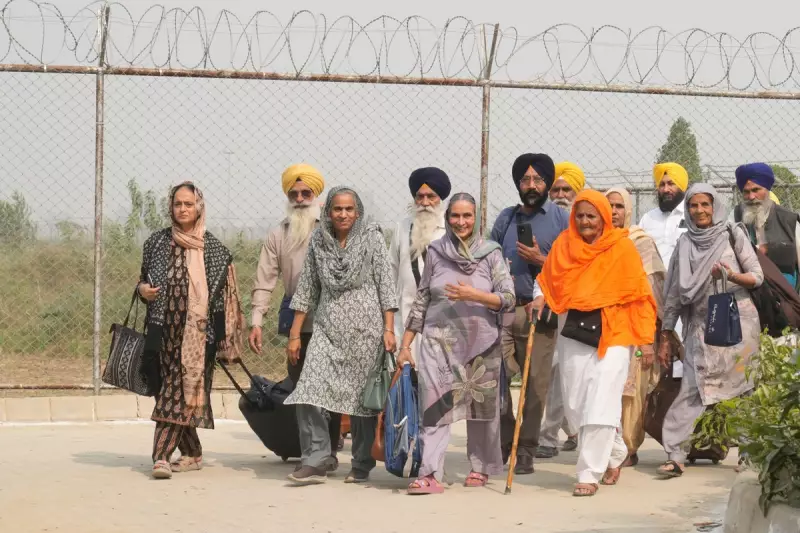
Dozens of Indian Sikh pilgrims find themselves in an unexpected extended stay in Pakistan after the Indian government declined to issue the necessary documentation for their return home, creating a diplomatic and humanitarian dilemma.
Religious Pilgrimage Turns Into Protracted Stay
What began as a spiritual journey to sacred sites in Pakistan has transformed into an uncertain waiting game for approximately 70 Sikh pilgrims from India. The group, which travelled to Lahore to visit revered Gurdwaras, now faces indefinite accommodation in the city while diplomatic channels attempt to resolve the impasse.
Pakistani officials have confirmed they are providing accommodation and meals for the stranded visitors at a local Gurdwara, ensuring their comfort during this unexpected extension of their religious journey.
Documentation Dispute Halts Return Journey
The heart of the issue lies in travel documentation. The pilgrims originally crossed into Pakistan using a list system rather than individual passports—a arrangement typically permitted for such religious exchanges. However, Indian authorities are now insisting on passport-based returns, creating a bureaucratic deadlock.
A Pakistani foreign office spokesperson stated: "We have approached Indian authorities to permit the return of these pilgrims based on the same documents they used for entry, but we're still awaiting a positive response."
Historical Context of Sikh Pilgrimages
Sikh pilgrims have historically travelled between India and Pakistan to visit holy sites, including the birthplace of Guru Nanak Dev in Nankana Sahib. These religious exchanges have often served as rare moments of cooperation between the two nuclear-armed neighbours, whose relationship remains strained over various political issues.
The current situation represents one of the more significant disruptions to this religious tourism in recent years, highlighting the fragility of such cross-border arrangements.
Humanitarian Concerns Mount
As the pilgrims' stay extends, concerns about family separations and personal obligations back in India are growing. Many travellers had planned for a brief pilgrimage and now face uncertainty about when they might return to their homes and livelihoods.
Local Pakistani Sikh community leaders have stepped in to provide additional support, organizing religious activities and cultural exchanges to make the extended stay more comfortable for their Indian counterparts.
Diplomatic Channels Remain Active
Despite the current impasse, communication between the two nations continues. Pakistani officials emphasize their commitment to resolving the situation amicably while ensuring the wellbeing of the stranded pilgrims remains the top priority.
The incident underscores how religious exchanges between India and Pakistan remain vulnerable to the broader political climate, with ordinary citizens often caught in the middle of diplomatic complexities.