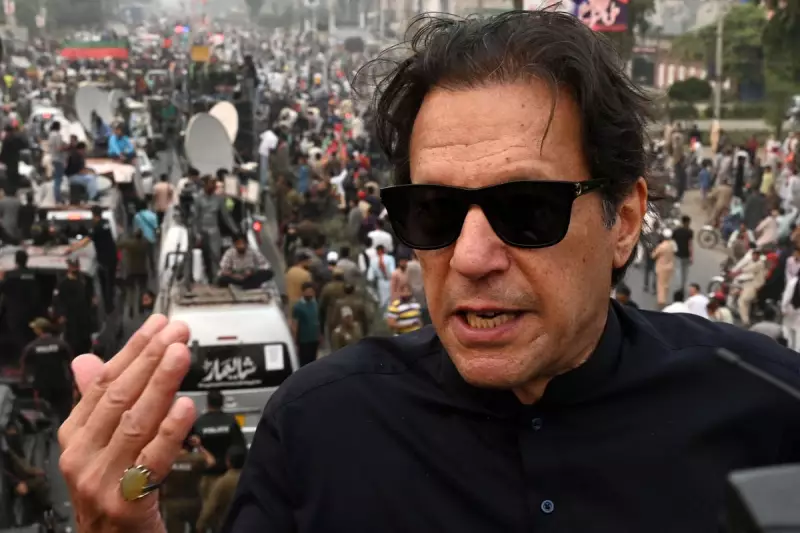
Pakistan's imprisoned former prime minister Imran Khan has now endured a full 100 days without any communication with his legal defence team, according to a senior aide, prompting renewed international scrutiny of due process and judicial fairness in the country's ongoing legal proceedings against the former leader.
A Complete Cut-Off from Legal Representation
Beyond being denied access to his defence lawyers, Khan remains held in solitary confinement and has not been seen or heard from by any visitors for nearly three months. Zulfiqar Ali Bukhari, a spokesperson for Khan's Pakistan Tehreek-e-Insaf party and close confidant, described the situation as "heartbreaking" in an interview with The Independent, highlighting how the former cricket icon has been completely severed from the outside world.
The 73-year-old politician, who was removed from office via a no-confidence vote in 2022 and arrested in August 2023, faces numerous charges across more than 100 separate cases. These allegations range from leaking state secrets to improperly selling state gifts. While Pakistani courts have dismissed several charges against him, December brought additional convictions when Khan and his wife Bushra Bibi each received 17-year prison sentences in a corruption case involving the under-priced purchase of luxury state gifts.

Political Motivations and International Scrutiny
Khan's political party maintains that all cases against him are politically motivated, a position echoed by international observers who have expressed concern about how PTI was sidelined by authorities during Pakistan's most recent election. Mr Bukhari characterised the denial of legal access as "absurd," particularly as authorities continue to pursue multiple legal cases against the former leader.
"They know that whenever he speaks, it generates enormous public attention and noise, and offers guidance to the country, even from within a small jail cell," Bukhari explained. "Unfortunately, there is no rule of law. The courts have been completely paralysed and are taking no action. The current judicial system has left us helpless because nothing is being done in accordance with the rule of law or any meaningful justice system."
Family Concerns and Psychological Impact
The last confirmed visitor to see Khan was his sister Uzma Khan, who visited the prison on 2 December. She reported that while his physical health appeared "perfectly fine," he was struggling psychologically with the effects of solitary confinement. "When I met with him, he was very angry," she revealed, quoting her brother as saying that the "mental torture" of his conditions is "worse than physical abuse."
Prior to this December visit, Khan had been inaccessible for months, leading to growing speculation about his health and possible secret relocation until his sisters began staging a sit-in protest outside Adiala jail where he is detained. Another sister, Aleema Khan, suggested to Independent Urdu that this period of isolation represented a deliberate "test run" to gauge public reaction to potential rumours about the popular leader's death.
Violations of International Legal Standards
Khan's party has asserted that denying legal counsel "over such an extended period meets the threshold of arbitrary detention under international law." They argue this treatment breaches the International Covenant on Civil and Political Rights, to which Pakistan is a signatory, which guarantees accused persons the right to communicate with legal counsel of their choosing and to have adequate time and facilities to prepare a defence.
Furthermore, PTI contends the restrictions violate the UN Basic Principles on the Role of Lawyers, which require authorities to ensure detainees have prompt, regular, confidential and unhindered access to legal counsel without intimidation, interference or delay. The party describes this treatment as amounting to "inhuman or degrading treatment," particularly within the context of what they characterise as politically motivated prosecutions.

Government Response and Broader Context
Pakistani authorities have not publicly addressed these latest allegations, though they have previously denied any mistreatment and stated that Khan receives all facilities available to ordinary prisoners. His arrest followed closely on revelations to The Independent about lasting nerve damage from an earlier assassination attempt, which triggered unprecedented nationwide protests before authorities cracked down on PTI workers, arresting thousands.
Khan has consistently claimed that the no-confidence vote leading to his removal and subsequent criminal cases were orchestrated by Pakistan's powerful military, allegedly acting under American government direction to remove him from power. Both Pakistan's current government and military, along with Washington, have denied these accusations.
Potential for Popular Mobilisation
Mr Bukhari, who has fled Pakistan and now resides in the UK, suggested that only a popular uprising might end Khan's incarceration at this stage. "Ultimately, any major movement will have to come from within Pakistan, driven by the people themselves," he stated. "There will come a point when the entire nation comes together – not only over Imran Khan, but over the many injustices taking place across the country. The failure of this hybrid government will eventually spill onto the streets. When people have had enough, there will be consequences."
This extended legal blackout for Pakistan's former leader raises fundamental questions about judicial independence and the protection of basic legal rights within the country's justice system, with implications that extend far beyond this single high-profile case.