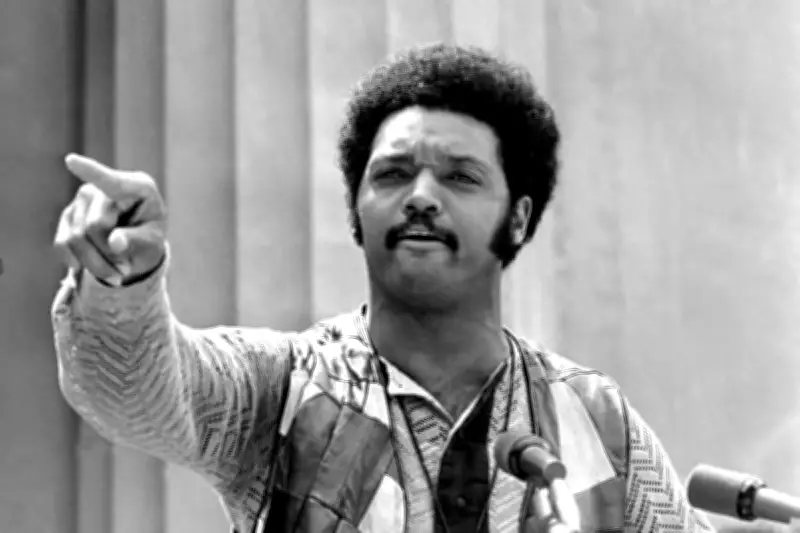
A London Encounter That Revealed Jesse Jackson's True Global Stature
As heartfelt tributes continue to pour in for American civil rights leader Jesse Jackson, who passed away at age eighty-four, I find myself reflecting on a remarkable chance encounter that taught me about his profound significance far beyond United States borders. This unexpected lesson came through a frail elderly stranger during what I initially considered a disastrous interview situation in central London.
The Misjudged Leicester Square Interview
This memorable incident occurred back in 2012, when Jackson was sixty-seven years old and still regularly visiting London to meet with various campaigners and activists. Although he no longer attracted massive media attention everywhere he went, I eagerly jumped at the opportunity to interview this living legend. Jackson represented a direct connection to the historic battle against segregation in America and had been a close friend and ally of Dr Martin Luther King Jr.
My serious mistake was assuming I could conduct this interview on a park bench in Leicester Square. I had been warned that I would only get about twenty minutes with him, including time for photographs, as he passed through the area. Thinking it was a lovely spring day and that few British people would recognize him, I proceeded with this ill-conceived plan. I had previously interviewed cabinet ministers in public places without interruption, so I foolishly believed this would be similar.
The reality proved dramatically different. When the tall, imposing figure of Jesse Jackson appeared in the square, his remarkable presence immediately drew attention. He stood out with his height, charisma, and unmistakable aura. Although he looked mildly surprised when I explained we would be conducting the interview on a park bench, he gracefully consented with a warm smile.
The Unexpected Interruption That Changed Everything
As we began with photographs, people naturally started approaching. They wanted to shake his hand, and Jackson remained charming to everyone. My creeping sense that I should have booked a private hotel room intensified as the interruptions continued even after we put the cameras away. People kept approaching with deep emotion visible on their faces—they weren't just seeing a famous person but someone who had genuinely shaped their lives.
Then came the encounter I will never forget. A tiny, frail, brown-skinned man approached tentatively, his eyes moist with emotion despite his excited smile. He asked if he could pay his respects to Reverend Jackson. When I reluctantly agreed, thinking my interview was becoming a complete disaster, they shook hands warmly. The visitor said a few words of thanks before separating from Jackson, who responded with characteristic kindness.
The Revelation from a South African Survivor
When I asked this fragile elderly man what Jesse Jackson meant to him, his answer left me thoroughly humbled. He introduced himself as Daniel Mogorosi, aged ninety-one, and explained that he had been born in South Africa under apartheid. He had come to London fifty years earlier because he could not continue living under that oppressive system.
"I never dreamed I would one day have a chance to meet Jesse Jackson, who was a leader in the fight for civil rights," Mogorosi told me emotionally. "I remember when he joined the march to Trafalgar Square to call for Nelson Mandela's freedom. I am so happy to meet him and thank him."
In that moment, everything became clear. Jackson was not merely an American politician paying a visit to Britain; he was a truly global figure whose significance spanned continents. It didn't matter that British people hadn't lived under the Jim Crow laws of the American South—the fight for freedom that Jackson waged alongside Dr King had universal resonance and meaning.
The Enduring Legacy and Broader Implications
Although the Baptist minister and left-winger might have been considered unfashionable by certain circles, his stature remained eternal and undiminished for countless Britons. Chastened by this realization, I finally moved our interview to a nearby hotel, where Jackson—remaining charming throughout—gave me far more time and better quotes than I truly deserved.
The lesson from this experience is both simple and profound. Some individuals in political life are routinely undervalued by media and establishment figures. Diane Abbott, Britain's first Black woman Member of Parliament, represents another such figure—a left-winger with views often dismissed as unfashionable.
Fortunately, as Mother of the House, Diane Abbott is now receiving the respect she genuinely merits. We should cherish such pioneering figures while they are still with us. As I witnessed firsthand in Leicester Square that spring day, the public already understands their true value far better than many commentators and journalists ever will. Jesse Jackson's legacy extends far beyond American borders, touching lives across the world through his unwavering commitment to justice and equality for all people.