In a striking critique of transatlantic diplomacy, columnist Peter Hitchens has declared the much-vaunted "special relationship" between Britain and America to be nothing more than a persistent myth. His comments come as former US President Donald Trump threatens to impose punitive tariffs on eight European nations, including the United Kingdom, over their military deployments to the Arctic territory of Greenland.
Trump's Tariff Threats and the European Response
On Friday, Donald Trump announced via his Truth Social platform that several NATO allies would face a new 10% tariff. This economic retaliation is a direct response to these nations sending troops to Greenland, amid Trump's renewed threats of military action and his longstanding ambition to purchase the vast island from Denmark. The former president stated these tariffs could escalate to 25% by June if the allies refuse to endorse his acquisition plan for Greenland.
'No Great, Abiding Friendship': Hitchens on US Expansionism
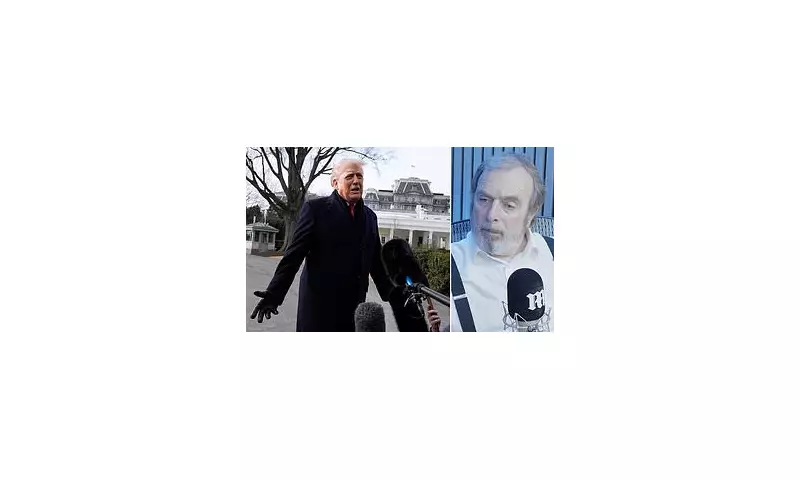
Speaking on the Alas Vine & Hitchens podcast alongside fellow Daily Mail columnist Sarah Vine, Peter Hitchens expressed bewilderment at the public shock over Trump's aggressive stance. "I don't know why everyone's so surprised," Hitchens remarked. He argued that the United States has consistently behaved as an expansionist power, perfectly willing to bully its so-called friends to achieve its goals.

"There's a lot of fake bonhomie between the British and the Americans," Hitchens stated. "We have always been rivals. In fact, we're rivals in a rivalry we lost. They are not our friends, they never were and never will be." He elaborated on his personal experiences, noting that during his time living in America, he found most citizens were largely indifferent to Britain, with many unaware of the historical and linguistic connections between the two nations.
Hitchens was unequivocal in his assessment: "There's no great, abiding friendship. The US is an expansionist and violent country." This perspective frames Trump's recent actions not as an aberration, but as a continuation of longstanding American foreign policy tendencies.
Sarah Vine's Disappointment and Historical Context
Sarah Vine, co-host of the podcast, admitted that while she has grown to expect "incredibly childish and silly" behaviour from Donald Trump, she was particularly taken aback by the inclusion of the United Kingdom in his tariff threats. Vine reflected on growing up during the era of Ronald Reagan and Margaret Thatcher, a period that fostered a widespread belief in a genuine and powerful bond between the two nations.
Hitchens countered this nostalgic view with stark realism. "Trump has his mother and the golf course," he quipped, referring to the former president's Scottish heritage and business interests, "but that's not really enough to shape national policy, is it?"
The Greenland Question and Historical Precedent
On the specific issue of Greenland, Hitchens adopted a more ambivalent position. He suggested Denmark has not treated the territory well and possesses a "pretty slender" claim to it. He pointed to historical precedent, noting that the United States Virgin Islands were formerly Danish possessions that America purchased. "If they can sell that," Hitchens reasoned, "surely they can sell Greenland?"
American Power: A 'Deformed Creature' in Decline
Beyond the immediate crisis, Hitchens offered a broader analysis of American power. He observed that for all his bluster, Donald Trump has historically backed down when confronted by determined opponents like China. This, Hitchens argued, is symptomatic of America's wider decline on the global stage.
"America is now this deformed creature," Hitchens said. "It is immensely powerful militarily. That power used to reflect its economic and political might, but it doesn't anymore. It has the power of force, but nothing like the diplomatic clout it used to."

He predicted a consequential shift, stating, "The United States is becoming weaker in general and I think the end result of that will be that it will not be able to maintain an army on the scale it has now." This analysis frames the current tensions not merely as a diplomatic spat, but as a symptom of a fundamental reordering of international power dynamics, where traditional alliances are strained by shifting national interests and perceptions.