Pete Hegseth's Ground Forces Remarks Fuel Speculation Over US Troop Deployment to Iran
Donald Trump has negotiated a temporary ceasefire with Iran, but his defense secretary may have just established a framework for future military operations, including the potential deployment of ground troops. As Washington and European capitals nervously await peace talks this weekend aimed at ending a month-long conflict that has devastated the global economy and claimed thousands of lives, Defense Secretary Pete Hegseth's recent comments have sparked intense debate.
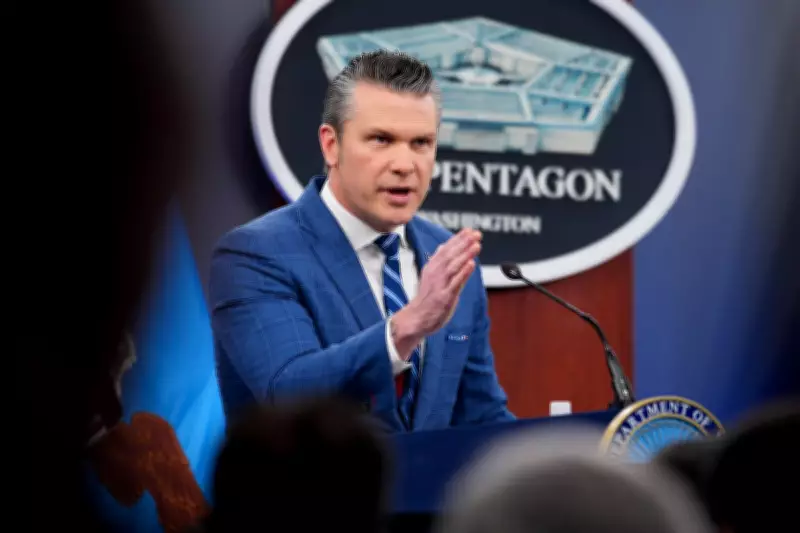
During a press conference on Wednesday, Hegseth emphasized the role of ground forces in a recent rescue mission for US service members whose F-15 aircraft was downed by Iranian air defenses. "Boots on the ground. A midnight raid right in the middle of their country. Boots...on...the...ground," the defense secretary repeatedly stated, highlighting the tactical significance of infantry operations within Iranian territory.
Administration's Hardline Stance on Ceasefire Compliance
Hegseth was not alone in projecting military resolve. Throughout Tuesday and Wednesday, a series of top officials, including President Trump and Vice President JD Vance, issued stern warnings about consequences if Iran violates the ceasefire agreement or if a comprehensive peace deal is not reached within two weeks. On his Truth Social platform, Trump explicitly declared that US military assets would remain positioned in the region indefinitely.

"All US ships, aircraft, and military personnel will remain in place in, and around, Iran, until such time as the REAL AGREEMENT reached is fully complied with," Trump wrote, underscoring the administration's uncompromising stance on enforcement mechanisms.
Strategic Challenges in the Strait of Hormuz
Critical issues remain unresolved as negotiations enter their crucial phase. Control of the strategically vital Strait of Hormuz represents a particularly contentious point for Washington. Oil and natural gas shipping through this essential waterway has not returned to pre-war levels, and intelligence reports suggest Iranian authorities are considering imposing a toll of one dollar per barrel of oil transiting the strait, which typically handles millions of barrels daily.
Trump appeared to dismiss this possibility outright on Thursday, simultaneously casting doubt on the ceasefire's durability. "There are reports that Iran is charging fees to tankers going through the Hormuz Strait. They better not be and, if they are, they better stop now!" he posted on Truth Social. Such a toll would directly impact an oil economy already destabilized by the conflict, exacerbating price pressures on American consumers.
Hawkish Voices Advocate for Military Escalation
Within Republican circles, pressure mounts for more aggressive military action. Representative Pat Fallon, who serves on both the House Armed Services and Intelligence committees, told Military Times shortly before the ceasefire announcement that deploying special operations forces "may be required to secure victory and prevent the regime from regrouping" in coming weeks.
Conservative commentators and advisors are amplifying calls for military intervention. Columnist Marc Thiessen argued in The Washington Post that Trump should deploy US ground troops to invade Iran's Kharg Island port if Tehran fails to honor the two-week deadline for a comprehensive peace agreement. Similarly, Senator Lindsey Graham, a prominent congressional supporter of the war, urges continued military presence until US forces secure complete removal of Iran's enriched uranium stockpiles.
Political Pressure from Trump's Base
No segment of Trump's political base currently views the ceasefire as an American victory, creating significant domestic pressure for more decisive action. During her conservative podcast on Tuesday, Megyn Kelly expressed relief that Trump's threat to annihilate Iran's civilization remained unfulfilled but refused to characterize the situation as triumphant.
"I'm glad it's coming to an end, don't get me wrong," Kelly stated. "But I'm not willing to pretend that this is some huge victory for us. The strait is now controlled by Iran, it wasn't before. It now costs a toll potentially to get through; it didn't before."

Despite polling indicating broad American disapproval of the war and skepticism about White House strategy, the drumbeat for military escalation resonates powerfully throughout MAGA circles. This sentiment appears unlikely to be satisfied by partial measures or anything short of Iran's complete pacification.
Countdown to Critical Negotiations
With twelve days remaining for US and Iranian officials to negotiate a durable agreement that prevents further violence, the international community anxiously anticipates the outcome of Saturday's peace talks. Ultimately, Trump's ability to present "mission accomplished" to Republicans who simultaneously support him and oppose Iran may prove decisive in these high-stakes discussions. Having failed to achieve initial objectives including regime collapse in Tehran, expulsion of Iranian forces from the Strait of Hormuz, or neutralization of ballistic missile and drone threats, the administration faces mounting pressure to demonstrate tangible success through either diplomatic or military means.