Finnish President Alexander Stubb has issued a stark warning that tensions surrounding Greenland "are not over yet," despite recent statements from US President Donald Trump ruling out military force to acquire the territory.
De-escalation with Ongoing Concerns
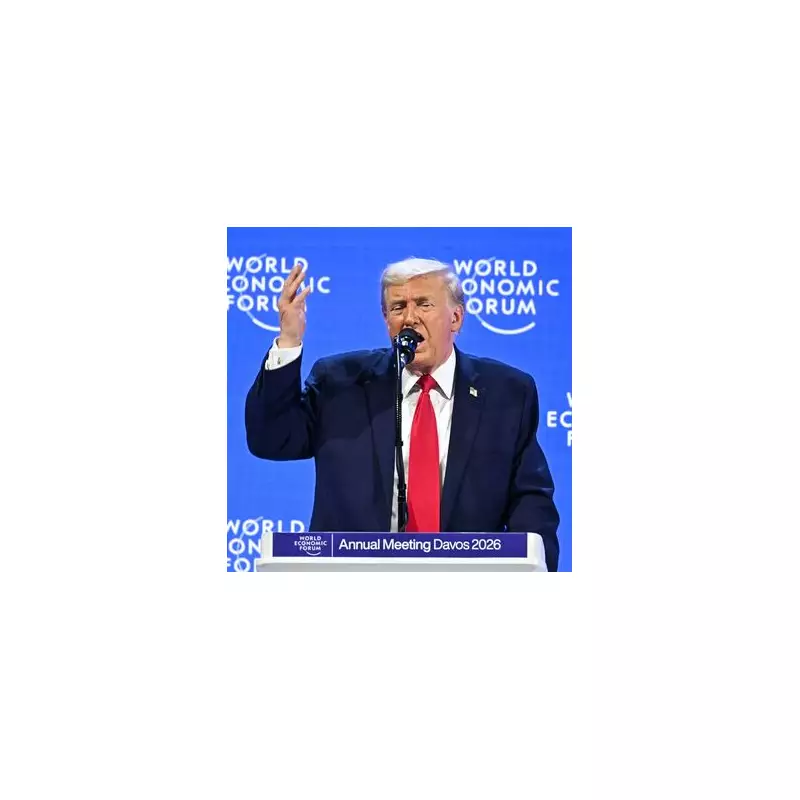
President Stubb acknowledged that Trump's recent comments at the World Economic Forum in Davos, Switzerland, had helped to "de-escalate" the immediate crisis. However, he emphasised that the underlying geopolitical tensions in the Arctic region remain potent and unresolved.
The Finnish leader's assessment follows a notably rambling speech by President Trump, during which he appeared to confuse Greenland with Iceland and made controversial claims about European nations.

Three Scenarios for Arctic Security
In his analysis, President Stubb outlined three distinct potential futures for the situation, which he characterised as "the good, the bad, and the ugly."
- The Good Scenario: This optimistic path involves finding a diplomatic "off-ramp" and establishing a structured process to enhance Arctic security through NATO frameworks. Stubb suggested this collaborative approach would be the most desirable outcome for regional stability.
- The Bad Scenario: A continuation of the current trade tensions and tariff wars between the United States and other nations, which could further strain international relations and economic cooperation in the sensitive Arctic region.
- The Ugly Scenario: The most concerning possibility, which would have involved military intervention by the United States to forcibly acquire Greenland. President Stubb expressed clear relief that President Trump has explicitly ruled out this option in his recent assurances.
"We've now de-escalated, but obviously it's not over yet," Stubb stated, capturing the precarious nature of the current diplomatic situation. His comments reflect broader European concerns about American intentions in the strategically important Arctic, even as immediate military threats appear to have diminished.
The ongoing situation highlights the complex interplay between great power politics, territorial sovereignty, and environmental considerations in one of the world's most strategically significant regions. As climate change opens new Arctic shipping routes and access to natural resources, international attention on Greenland's future continues to intensify.