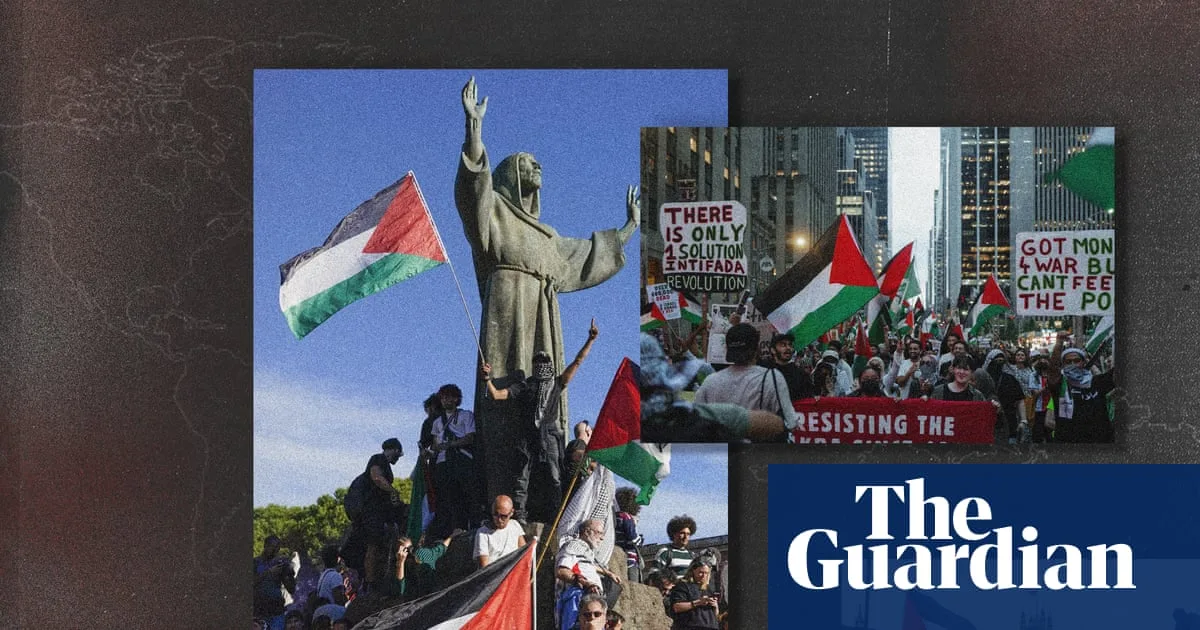
Across Europe and the United States, pro-Palestinian solidarity marches have erupted in response to Israel's war in Gaza, sparking varied government responses ranging from arrests to outright bans. The ceasefire between Hamas and Israel has brought relief, but international anger over the conflict, which a UN commission of inquiry has deemed a genocide, remains raw, as evidenced by recent large rallies in Spain and Italy.
In the US, pro-Palestinian activism has been met with arrests and legal action. After students at Columbia University set up a pro-Palestinian encampment in spring 2024, universities across the country called police onto campuses, leading to thousands of arrests. The Trump administration has used allegations of antisemitism to cut billions in university funding, screen visa applicants for pro-Palestinian views, and detain foreign scholars over their political opinions.
In the UK, the Metropolitan police have arrested over 1,900 people at pro-Palestinian events, mostly for alleged support of Palestine Action, a group proscribed under anti-terrorism legislation. The UN human rights chief has called the ban disproportionate. Prime Minister Keir Starmer has described planned protests as 'un-British' and pledged to consider further curbs, including action against specific chants.
In Germany, tensions have emerged between public opinion and the state's longstanding solidarity with Israel. A recent Berlin rally attracted about 100,000 demonstrators, but activists accuse police of excessive and brutal tactics. Disputes centre on banned slogans; in May 2024, a pro-Palestinian activist was convicted for using the chant 'from the river to the sea, Palestine will be free', which the judge ruled denied Israel's right to exist.