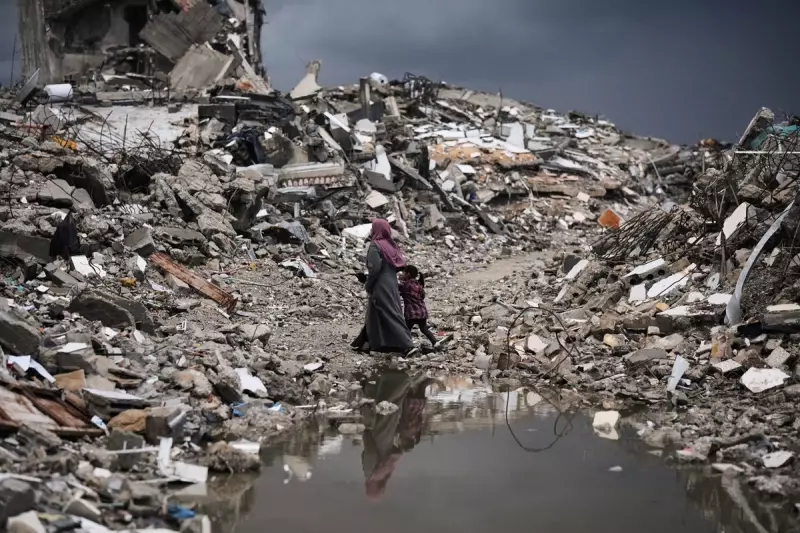
When a ceasefire brokered by former US President Donald Trump was announced in October, it was heralded as a promise of 'peace for all eternity'. Yet for the people of Gaza, the grim daily reality of violence, destruction, and death has continued unabated, casting a long shadow over any hopes for lasting security.
A Ceasefire in Name Only
According to the Gaza Health Ministry, at least 406 Palestinians have been killed since the truce came into effect on 10 October 2025. A further 1,118 people have been injured by Israeli shelling and gunfire in the same period. The most lethal single incident occurred on 29 October, when Israeli forces killed at least 109 Palestinians in an overnight attack, which the military stated was a response to the killing of an IDF soldier.
For individuals like Dr Jaber al-Attar, a 51-year-old physician from northern Gaza, the ceasefire brought a fleeting moment of elation that was brutally shattered. Just four weeks after the announcement, his 32-year-old daughter, Maysaa, was killed by an Israeli drone strike as she sheltered in a tent in the Al-Atatra area.

"There is absolutely no safety; there is no hope for us to have any security," Dr al-Attar told The Independent from his displacement tent. "I spent my life in hardship and misery." His personal tragedy is mirrored in the physical landscape of Gaza, where vast areas remain reduced to rubble, and families wander among the ruins of their former homes.
Deadly Lines and Shifting Boundaries
A central point of contention and danger is the so-called 'yellow line' – a boundary from which Israeli forces agreed to withdraw under the ceasefire terms. Palestinians report that its position is constantly changing, with deadly consequences for those who inadvertently cross it. The Israeli military states its operations within these zones are necessary "to address direct threats from terrorist organisations in Gaza".
This justification was used after a drone strike killed two young boys, eight-year-old Fadi and eleven-year-old Jumaa, as they gathered firewood for their wheelchair-bound father near Khan Younis. The IDF described the children as "two suspects" who posed an "immediate threat".
Meanwhile, humanitarian agencies issue stark warnings that nowhere near enough aid is entering the strip, which remains in the grip of a severe hunger crisis. A dispute over aid deliveries is ongoing, with Hamas claiming fewer trucks are entering than agreed and Israel maintaining it is fulfilling all its obligations.
Lives Shattered and a Bleak Winter
The psychological toll on survivors is profound. Dr al-Attar says his weight has plummeted from 100kg to 75kg since his daughter's death. "I used to own three houses, and now I’m homeless in a tent," he said.
Freelance journalist Imad Abu Shawish, 38, experienced the horror first-hand on 22 November, pulling his 19-year-old cousin Batoul from the rubble of an Israeli airstrike on a residential building in Nuseirat. The attack killed 11 members of the Abu Shawish family, including seven children. "I don’t know where I am or what I am going through," Abu Shawish said. "I’ve become terrified, anxious, fearful, and panicky."
Compounding the man-made disaster, severe winter weather has lashed Gaza, with strong winds and torrential rain tearing apart the flimsy tents housing hundreds of thousands of displaced families. "Everyone’s tents are flooded," said Abed al-Moneim al-Zein, 60, displaced in Khan Younis. His brother Ameen was killed 19 days after the ceasefire began while seeking shelter.
The Israeli military, in a statement, asserted that the IDF "will continue to act to remove any immediate threat" and accused Hamas of violating the ceasefire "hundreds of times". As the blame game continues, the suffering of ordinary Gazans deepens, with the promised 'eternal peace' feeling more distant than ever.