A former senior official from Donald Trump's administration has come forward with startling revelations about the ex-president's behavior during crisis situations, as current tensions in the Middle East escalate dramatically. Miles Taylor, who worked closely with Trump during his first term, has described a particularly bizarre incident that occurred during preparations for an approaching Category 5 hurricane.
The Hurricane Briefing That Went Off Course
According to Taylor's account published in The i newspaper, the emergency meeting was called to discuss the imminent landfall of a powerful Category 5 hurricane - the most severe classification of tropical storm systems. The purpose was straightforward: secure presidential authorization for evacuation warnings to protect American citizens in the hurricane's projected path.
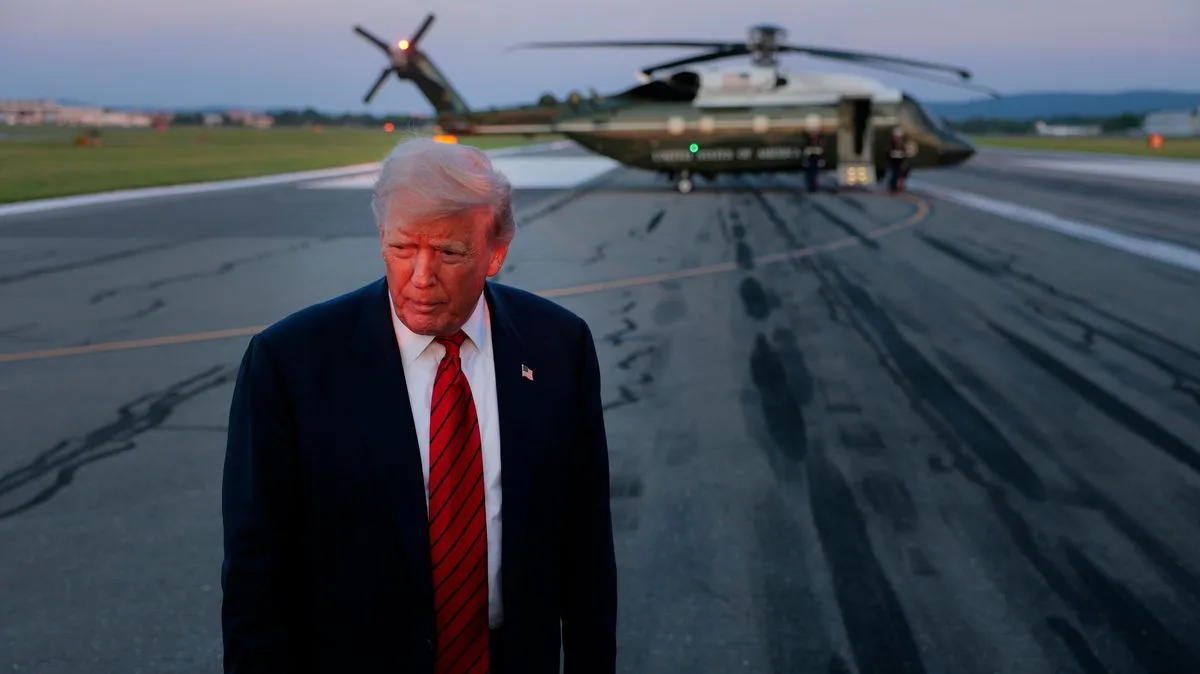
Instead, Taylor reports that Trump embarked on what he described as "jarring" tangents completely unrelated to the emergency at hand. "He started talking about helicopters," Taylor recalled. "Specifically, he wanted to share with us his frustration that helicopters are always breaking down because, in his words, 'there are too many parts!' Mid-briefing."
A Pattern of Distraction During Crises
The former official detailed how the situation unfolded: "We were asking him to issue a warning to Americans to evacuate the affected area, and he went off on a tangent about helicopters. And then another about the election. We finally got him back on track, but the clock was ticking."
Taylor admitted that at the time he simply "filed it away" as an odd moment, but with hindsight, he now views it as "an eye-opening preview" of Trump's approach to crisis management. This revelation comes at a particularly sensitive moment as international observers attempt to decipher Trump's current strategy regarding the escalating conflict with Iran.
Current Middle East Strategy Remains Unclear
As military tensions continue to mount in the Middle East, there is growing confusion about America's strategic direction. Trump has publicly discussed potential peace negotiations with Iran while simultaneously considering a substantial troop increase in the region. Recent reports suggest the administration is contemplating deploying up to 10,000 additional soldiers to join the already substantial American military presence.
For context, Trump has already mobilized significant forces including the elite 82nd Airborne Division and approximately 5,000 Marines. Despite this buildup, the White House maintains that no final decisions have been made regarding further deployments.
Official Statements and Military Options
White House spokeswoman Anna Kelly addressed the speculation directly, stating: "All announcements regarding troop deployments will come from the Department of War. As we have said, President Trump always has all military options at his disposal."
This ambiguous position has created what Taylor describes as "contradicting information flying around" that makes it "hard for many to get a read on what exactly is going on." The former official's hurricane anecdote provides insight into why such confusion might persist during Trump's leadership.
Connecting Past Behavior to Present Uncertainty
Analysts and former administration officials are increasingly looking to Trump's first term for clues about how he might handle the current Iran crisis. Taylor's account of the hurricane briefing offers a window into the president's decision-making process during high-pressure situations.
The timing of these revelations coincides with Trump's extension of a pause on striking Iranian energy facilities until April 6, even as military planning continues for potential escalation. This dual-track approach - simultaneously pursuing diplomacy while preparing for conflict - mirrors the contradictory signals that have characterized Trump's foreign policy throughout his presidency.
As the situation develops, Taylor's reflections serve as a reminder that understanding Trump's actions requires examining not just his policy statements but his operational style during moments of crisis. The former aide's experience suggests that even during genuine emergencies requiring immediate attention, the president's focus could shift unexpectedly to unrelated topics, creating challenges for coherent crisis response.






