Mystery Deepens as Bolivian Socialist Leader Evo Morales Remains Out of Sight
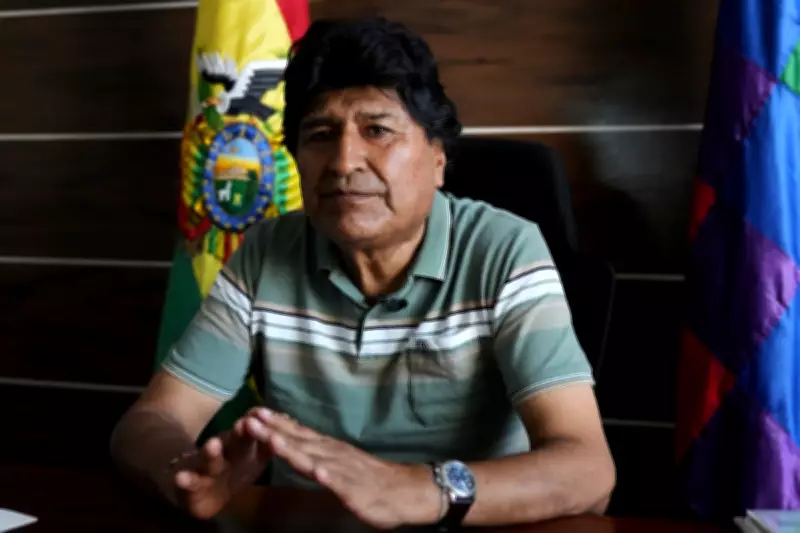
Bolivia's former president, Evo Morales, has vanished from public view for almost a month, creating widespread concern among his supporters and triggering intense online speculation. His conspicuous absence follows closely on the heels of the United States' seizure of assets belonging to his close political ally, former Venezuelan leader Nicolás Maduro, adding a significant geopolitical dimension to the unfolding mystery.
Key Events Missed and Routine Broken
The former leader failed to attend a traditional ceremony on Monday that welcomes students back from their summer break, an event he has consistently participated in for years. Furthermore, this past Sunday marked the fourth consecutive week that Morales did not appear on his long-running political radio show, which he has hosted without interruption throughout his career. Since early January, reports indicate he has also skipped planned meetings with members of his influential coca-leaf growing union in Bolivia's remote Chapare region.
Perhaps most tellingly, his previously consistent stream of social media updates has virtually ceased, creating a digital silence that contrasts sharply with his normally vocal public presence. This pattern of absence represents a significant departure from his behaviour over the past year, during which he has managed to evade an arrest warrant on human trafficking charges while maintaining an active political profile.

Contrasting Explanations and Political Context
Morales' close associates have privately declined to provide detailed explanations for his absences while publicly telling supporters that the former president has been recovering from dengue fever. "We have asked our brother Evo Morales to rest completely," stated Dieter Mendoza, vice president of the Six Federations that oversees the coca-leaf trade in the tropics, though he declined to elaborate further on the situation.
For Morales' political rivals, the mystery has stirred memories of 2019, when he resigned under military pressure after his disputed bid for an unconstitutional third term provoked mass protests. "Evo Morales is in Mexico," declared right-wing lawmaker Edgar Zegarra without providing evidence, while demanding that the government prove otherwise. "He has not appeared, not even at political events, and they don't know how to justify it."
Security officials within Bolivia's first conservative government following almost two decades of dominance by Morales' Movement Toward Socialism party have offered cryptic statements. Police Commander General Mirko Sokol confirmed that "the former president has not left Bolivia, at least not through any official channels."
Regional Political Shifts and Historical Context
Bolivia's election of centrist President Rodrigo Paz last October forms part of a wider ideological swing across Latin America, where US political influence has become increasingly pronounced. In recent years, right-wing leaders have come to power in countries grappling with economic crises like Argentina and concerns about violent crime like Chile, with Costa Rica's recent election of a right-wing populist reinforcing this regional trend.
During his fourteen years as Bolivia's first Indigenous president from 2006 to 2019, Morales maintained openly hostile relations with the United States while cultivating ties with its political adversaries. His administration expelled the US ambassador and counternarcotics officials in 2008 over alleged conspiracy claims, while welcoming investment from Russia in energy and lithium mining, contracts with Chinese companies for infrastructure projects, and drone technology offers from Iran.
Current Government's Reorientation and Local Concerns
The Paz government is actively reversing this political direction, having scrapped visa requirements for American tourists, held talks with US officials about securing economic rescue loans, and paved the way for the return of the Drug Enforcement Agency to Bolivia. This prospect has caused significant concern in the Bolivian tropics, where memories remain fresh of an aggressive US-backed war on drugs in the late 1990s that forced coca farmers to eradicate their crops.

Coca farmers in the Chapare region report not having seen Morales since January 8th, coinciding with panic about a rare overflight by a Super Puma helicopter in the jungle area. Deputy Social Defence Minister Ernesto Justiniano later explained this was a data collection mission coordinated with foreign agencies including the DEA, but insisted it had "nothing to do with Morales." He added that "state surveillance should not be a threat to anyone."
Political Pressure and Speculation Intensifies
Right-wing contenders from last year's presidential election campaign, including former President Jorge Quiroga who ultimately lost to the more moderate Paz, are seizing on unverified rumours about Morales' whereabouts to increase political pressure. "He's playing hide-and-seek, he's making a mockery of the state," Quiroga said of Morales. "The country cannot speak of legal security when an arrest warrant is not executed."
Bolivia's judiciary, with its history of shifting with political winds, has already pursued cases against former officials, detaining ex-President Luis Arce just weeks after Paz's inauguration. However, unlike Arce, Morales retains a strong though diminished base of support, with loyalists vowing to resist with guerrilla tactics if security forces attempt to enter the Chapare region to arrest him.
While Morales could potentially reappear at any moment to quell the speculation surrounding his status, his inner circle appears content to maintain the mystery for now. "Our brother president is doing very well," said Leonardo Loza, a former senator and close friend of Morales. "He is in a corner of our greater homeland." This enigmatic statement does little to clarify the situation, leaving Bolivia and international observers awaiting further developments in this unfolding political drama.