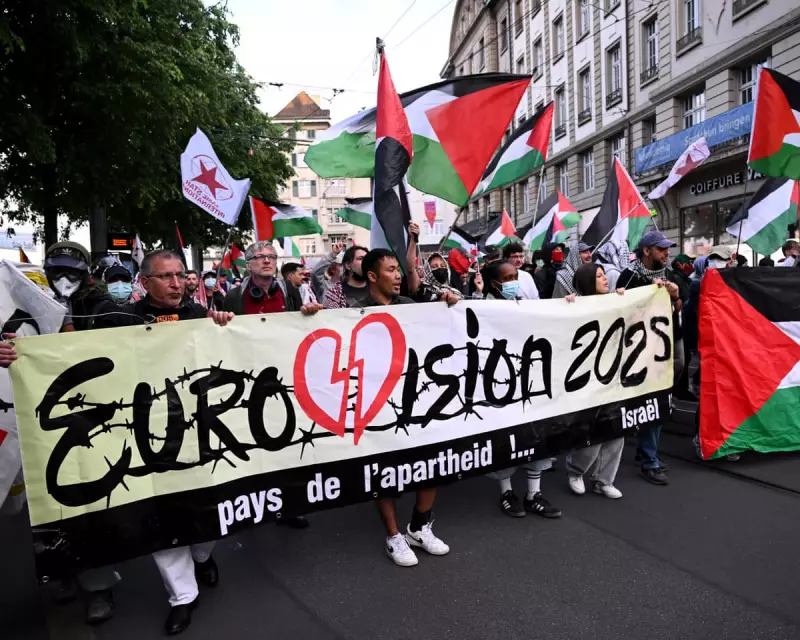
The Eurovision Song Contest is facing one of its most significant political crises in its seven-decade history. Four European nations – Spain, Ireland, the Netherlands, and Slovenia – have confirmed they will boycott the 2025 contest in Basel over Israel's inclusion. This coordinated withdrawal marks a watershed moment for the popular pan-European event, raising profound questions about its future and the intersection of culture and geopolitics.
A Historic Boycott with Significant Weight
The decision carries substantial symbolic and practical weight. Spain is one of the contest's 'big five' financial contributors, while Ireland holds the record for the most wins alongside Sweden. The Netherlands is a founding member from 1956, and Slovenia represents the European Union's eastern expansion. Their collective absence will undeniably alter the fabric of the competition.
The boycott comes amid the ongoing conflict in Gaza, with only a fragile ceasefire in place. Israel's national broadcaster, KAN, has shown no indication of voluntarily withdrawing. Consequently, this standoff may define the contest's landscape for the foreseeable future, challenging the European Broadcasting Union's (EBU) long-held stance that Eurovision is a non-political event.
Political Boycotts: A Recurring Theme in Eurovision History
While unprecedented in its current scale, political discord is not new to Eurovision. Cultural historian Paul Jordan notes that Greece and Turkey boycotted in 1975 and 1976 respectively following Turkey's invasion of Cyprus. Armenia refused to participate when the contest was held in Baku, Azerbaijan, in 2012.
Ironically, Spain itself was the target of the first major boycott call. During the 1964 contest in Copenhagen, a Danish activist stormed the stage with a placard reading 'Boycott Franco & Salazar', protesting the inclusion of Spain and Portugal under military dictatorships. Spain later faced a boycott from Austria when it hosted in 1969 following its win the previous year.
Duncan Wheeler, Chair of Spanish Studies at the University of Leeds, suggests Spain's current stance is informed by its own history. "Spain entered Eurovision just after it was blocked from joining the European Economic Community," he said. "Its own history in Eurovision has made it acutely aware of how pop culture can function as a soft power."
Israel's Participation and the EBU's Broader Membership
Some question Israel's right to compete in a ostensibly European event. However, this misunderstands Eurovision's origins as a technical broadcasting collaboration under the EBU, not a strictly geographic or political union. Israel has been a full EBU member since 1973.
Furthermore, the EBU's membership extends beyond Europe to include North African and Middle Eastern nations like Algeria, Lebanon, Libya, Morocco, and Tunisia. Morocco participated in 1980 when Israel was absent, and Lebanon withdrew its 2005 entry when required to broadcast the Israeli performance. In effect, these nations have maintained a consistent, if less publicised, boycott over Israel's involvement for decades.
The withdrawal of four prominent European broadcasters, however, creates a new and more visible dilemma for the EBU. It presents a problem that may take years to resolve, testing the contest's resilience and its ability to remain a unifying cultural force.
Yet, the crisis may not be existential. Eurovision's core values have always been fluid, shaped by the nations that choose to participate. Its strength lies in its adaptability. Whenever Spain, Ireland, the Netherlands, and Slovenia decide to return, they may well inject the contest with a renewed sense of purpose and a new lease of life.