European NATO Allies Assume Leadership as US Steps Back Under Trump Administration
European allies within NATO are demonstrating resilience and determination as the United States significantly reduces its traditional leadership role within the world's foremost security alliance. This strategic shift has left European members and Canada to shoulder the primary responsibility for defending Europe, marking a profound transformation in transatlantic security dynamics.
Notable Absences at Key Meetings
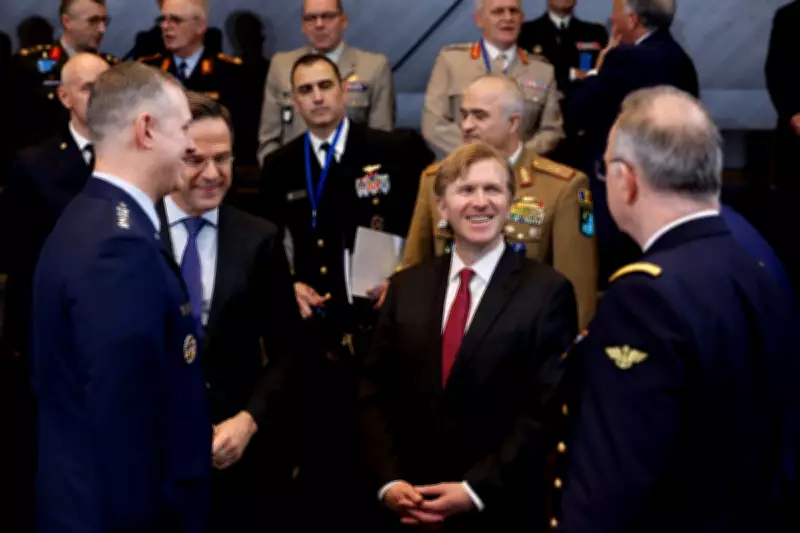
During Thursday's gathering of defense ministers at NATO headquarters in Brussels, U.S. Defense Secretary Pete Hegseth was conspicuously absent. This followed Secretary of State Marco Rubio's decision to skip the previous meeting of NATO foreign ministers in December. Such consecutive absences by senior U.S. administration officials from the North Atlantic Council's ministerial-level meetings are exceptionally rare and signal a deliberate recalibration of American engagement.
Under Secretary of Defense Elbridge Colby represented the United States in Hegseth's place, while European allies maintained diplomatic composure. Icelandic Foreign Minister Þorgerður Katrín Gunnarsdóttir remarked to reporters, "Sadly for him, he is missing a good party. Of course, it's always better that the ministers attend here, but I would not describe it as a bad signal."

German Defense Minister Boris Pistorius echoed this sentiment, stating, "I'm not disappointed. Each of us has a full agenda. And one time the American defense minister is here, and one time not, so it's his decision and his duties he has to fulfill."
Historical Context and Modern Realities
The evolution of NATO's purpose reflects changing geopolitical realities. When asked about the alliance's original mission in 1949, NATO's first secretary-general, British general and diplomat Lord Hastings Ismay, famously responded: "To keep the Americans in, the Russians out and the Germans down." Today, Germany has emerged as a leading defense contributor, committing 100 billion euros ($118 billion) to modernize its armed forces following Russia's invasion of Ukraine four years ago.
NATO Secretary-General Mark Rutte emphasized his role in maintaining American involvement, telling reporters, "They have to take care of the whole world. This is the United States. I totally accept it, agree with it." He added that U.S. leaders have consistently advocated for increased European and Canadian contributions to NATO territory defense, albeit in conjunction with American support.
Increased European Defense Responsibilities
This shift necessitates greater European spending on conventional weapons and defense systems, while the United States continues to guarantee NATO's nuclear deterrent. However, uncertainty persists among allies regarding potential further withdrawals of U.S. troops from Europe and unexpected policy changes from the Trump administration.
Dutch Defense Minister Ruben Brekelmans highlighted the importance of predictability, stating, "What for me is the most important is the no-surprise policy that has been agreed between the NATO secretary-general and the U.S."
Publicly, the Trump administration has significantly reduced its NATO engagement. A year ago, Hegseth warned that America's security priorities lie elsewhere, urging Europe to assume greater responsibility for its own defense and for supporting Ukraine against Russia's full-scale invasion. Under the Trump administration, U.S. military and financial aid to Ukraine has diminished, compelling European allies and Canada to purchase American weapons for donation to Kyiv.
Ukraine Support and New Initiatives
Western supporters of Ukraine convened at NATO headquarters on Thursday to bolster military assistance. The Ukraine Defense Contact Group, previously championed by the Pentagon under President Biden, is now co-chaired by the United Kingdom and Germany.
U.K. Defense Secretary John Healey announced Britain would provide "an extra half a billion pounds ($682 million) in urgent air defense to Ukraine. This is Britain being a force for good in the world, building a new deal for European security within NATO." Sweden plans to fund additional American weapons purchases, while the Netherlands will supply flight simulators to train Ukrainian pilots on F-16 jets.

Arctic Sentry: A Strategic Response
The primary outcome from Thursday's meeting was the announcement of Arctic Sentry, NATO's response to U.S. security concerns in the Arctic region and an effort to dissuade President Trump from pursuing annexation of Greenland. While ostensibly addressing Russian and Chinese activities in the Arctic, this initiative primarily represents a rebranding of existing national exercises conducted by Denmark and Norway under NATO oversight.
Arctic Sentry is not a long-term NATO operation but rather coordinates ongoing military activities involving Denmark, France, and Germany, with Finland, Sweden, and Belgium likely participating. The United States' role remains undefined, reflecting broader uncertainties about its commitment.
U.S. Ambassador to NATO Matthew Whitaker emphasized the need for capable allies, stating, "It can't just be more from the United States. We need capable allies that are ready and strong, that can bring assets to all of these areas of our collective security."
Addressing the Greenland Controversy
President Trump's renewed threats last month to annex Greenland—a semiautonomous territory of NATO ally Denmark—have profoundly unsettled the alliance. NATO's fundamental purpose is to defend member territories, not undermine them, making this controversy particularly damaging.
European allies and Canada hope Arctic Sentry and ongoing discussions between the Trump administration, Denmark, and Greenland will resolve the dispute, allowing NATO to refocus on Europe's paramount security concern: Russia's war against Ukraine.
Belgian Defense Minister Theo Francken noted that the Arctic security arrangement at least ensures "we stop having some food fights over the Atlantic." He reflected, "I think that the Greenland saga was not the best moment of NATO over the last 76 years. It was a crisis that was not needed."
As European NATO members adapt to increased responsibilities and navigate complex relationships with a less engaged United States, the alliance faces both challenges and opportunities to redefine its collective security framework for a new era.