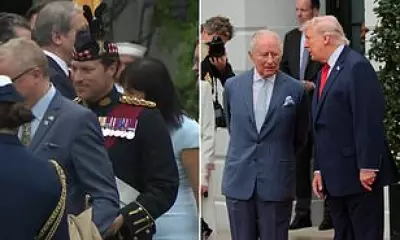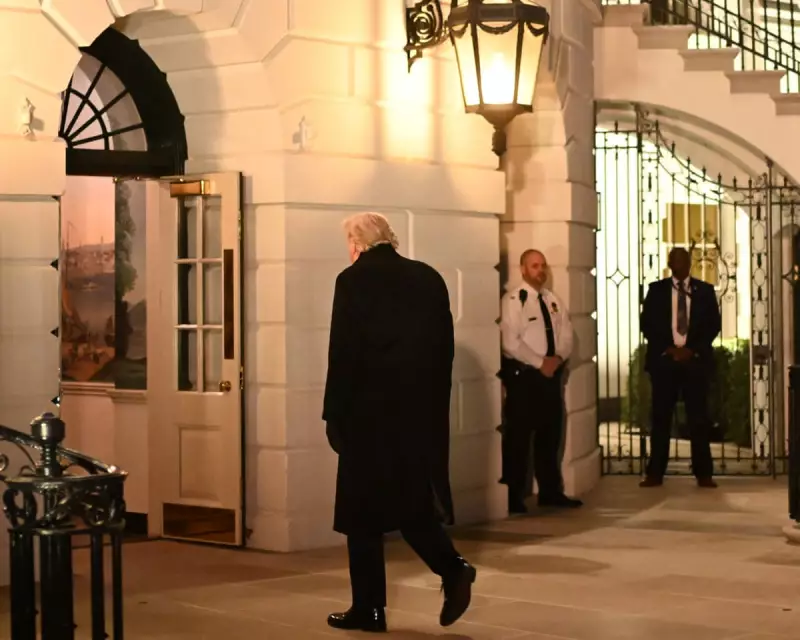
In a dramatic turn of events, former US President Donald Trump arrived at the White House on 22 January 2026, fresh from the World Economic Forum in Davos, only to backtrack on threats to annex Greenland. This reversal came after the European Union flexed its economic muscles, deploying a potential $93bn retaliatory package that sent markets into a spin and forced Trump's hand.
The Crisis That Shook Transatlantic Relations
The past fortnight witnessed an unprecedented escalation in transatlantic tensions, centred on Trump's audacious threat to annex Greenland, a self-governing Danish territory. This move risked sparking a major conflict within Nato, the world's most formidable security alliance, pushing diplomatic relations to the brink.
Diplomatic Maneuvers and Market Pressures
Following a crucial meeting with Nato Secretary General Mark Rutte, Trump withdrew his tariff warnings against nations opposing the annexation. European leaders, convening in Brussels for a post-crisis debrief, lauded their unity and Rutte's so-called "Daddy diplomacy." However, this narrative overlooks pivotal factors that truly dictated the outcome.

Rutte, experienced in handling Trump, likely provided an offramp addressing the US's psychological and strategic interests in Greenland, such as national security, mineral resources, and space access. Yet, it was the EU's threat of retaliatory measures under the Anti-Coercion Instrument (ACI) that proved decisive. This tool, never before used, allows the European Commission to counteract foreign economic coercion with measures ranging from tariffs to sanctions.
Europe's Unity Tested
Paradoxically, European unity wavered in the face of activating the ACI. Had Trump persisted, securing the qualified majority needed for its deployment was uncertain. Ultimately, market reactions to the EU's "trade bazooka" compelled Trump's climbdown, highlighting how economic leverage can trump diplomatic wrangling.
Lessons from the Greenland Debacle
This episode demonstrates Europe's capacity to challenge its dependence on the US through economic statecraft and savvy diplomacy. By engaging with US institutional counterparts like Congress and leveraging security cooperation, Europe can counter fabricated justifications for American actions. However, it also exposes enduring struggles.
Economic Power and Political Will
First, the EU grapples with wielding economic influence politically, akin to the US and China. As a community of law, it differs from authoritarian states, but strategic economic tools could amplify its global weight. At Davos, leaders like Ursula von der Leyen and Friedrich Merz emphasised economic strength, yet practical implementation lags, as seen in underwhelming reports by Draghi and Letta.
The reluctance to use the ACI stems not from aligning economic and political tools, but from national leaders prioritising individual power over collective EU scale. Public support for the EU grows, but political will to harness it for global influence remains fragmented.
Cognitive Dependence and Internal Divisions
Second, Europe's cognitive reliance on the US, ingrained through generations of transatlantic diplomacy, hampers independent strategy. While unity was achieved after Russia's invasion of Ukraine, it mirrored Washington's stance. In eastern Europe, US involvement is central to post-Soviet identity, complicating EU cohesion.
Pro-Trump factions, such as Italy's Giorgia Meloni and Hungary's Viktor Orbán, exacerbate divisions. Meloni's silence post-summit hints at a precarious balancing act, while Orbán aligns with autocratic allies on Trump's "board of peace." This cacophony projects weakness, yet it could be reframed as "strategic ambiguity," keeping adversaries guessing about the EU's full response.
Looking Ahead: Europe's Strategic Path
The Greenland crisis underscores that strongmen respond to strength. Europe's economic leverage, when coupled with purposeful diplomacy, can deter coercion. By refining its toolbox and bridging internal rifts, the EU can transform discord into a strategic asset, ensuring it plays a pivotal role in tomorrow's geopolitical landscape.