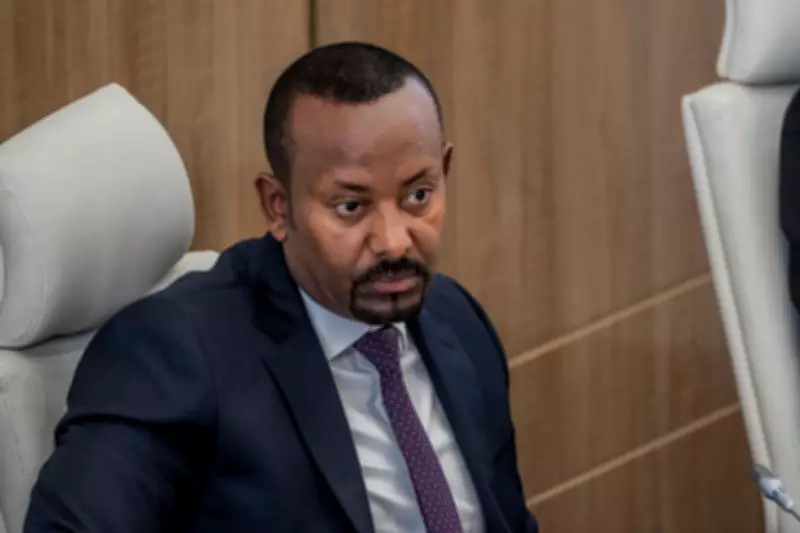
Ethiopian Prime Minister Accuses Eritrea of Mass Killings During Tigray Conflict
Ethiopian Prime Minister Abiy Ahmed has made a significant public accusation against neighbouring Eritrea, alleging that its troops committed mass killings while fighting alongside Ethiopian government forces during the devastating war in the northern Tigray region.
First Official Acknowledgment of Eritrean Involvement
In a parliamentary address on Tuesday, Prime Minister Abiy Ahmed for the first time officially acknowledged the involvement of Eritrean troops in the Tigray conflict, which concluded in 2022 with a peace agreement. The Ethiopian government directly accused these forces of perpetrating mass killings during the hostilities, which independent estimates suggest resulted in over 400,000 fatalities.
The war saw Eritrean and Ethiopian troops jointly combat regional forces in Tigray, a conflict that caused immense humanitarian suffering and displacement. This formal accusation marks a dramatic shift in the public narrative from Addis Ababa regarding Eritrea's role in the two-year conflict.

Eritrea Dismisses Allegations as "Despicable Lies"
Eritrea's Information Minister, Yemane Gebremeskel, swiftly rejected the Ethiopian leader's claims, describing them to The Associated Press as "cheap and despicable lies" that did not merit a formal response. This exchange highlights the rapidly deteriorating diplomatic relations between the two Horn of Africa nations.
Minister Gebremeskel suggested that Prime Minister Ahmed's changed rhetoric stems from his renewed focus on gaining access to the Red Sea, accusing him of developing a "delusional malaise" regarding maritime sovereignty. He pointed out that Ethiopian leadership had previously praised Eritrean military cooperation and awarded state medals to its officers.
Historical Context and Current Tensions
The current accusations occur against a backdrop of escalating tensions between Ethiopia and Eritrea, with both nations recently exchanging warnings about potential conflict. Ethiopia, which lost its Red Sea access when Eritrea gained independence in 1993, has expressed its maritime aspirations, while Eritrea accuses its neighbour of pursuing a "long-brewing war agenda" to seize its ports.
Prime Minister Ahmed told parliamentarians that the rift between the nations began during the initial phase of the Tigray war, stating: "The Eritrean army followed us into Shire and began demolishing houses, massacred our youth in Axum, looted factories in Adwa, and uprooted our factories." He added emphatically that "The Red Sea and Ethiopia cannot remain separated forever."
Regional Stability Concerns and Renewed Fighting
Analysts are expressing concern about renewed instability in the region, with reports emerging of fresh fighting in Tigray in recent weeks. The situation has become sufficiently concerning that Ethiopia's national carrier cancelled flights to the region last week due to security concerns.
There are growing indications that Eritrea may be forming an alliance with regional forces in Tigray, potentially creating new geopolitical alignments that could further complicate the fragile peace. This development comes despite the Nobel Peace Prize awarded to Prime Minister Abiy Ahmed in 2019 for his reconciliation efforts with Eritrea, which initially brought a period of improved relations following his assumption of power in 2018.
The public accusations and counter-accusations between the two governments suggest that diplomatic relations have reached a new low point, with serious implications for regional stability in the Horn of Africa. Observers are closely monitoring whether this war of words escalates into renewed military confrontation between the neighbouring states.