Dutch Queen Embarks on Military Reserve Training Programme
Queen Máxima of the Netherlands has formally begun her training to become a reserve member of the Dutch armed forces, marking a significant personal commitment to national security at a time of heightened European defence concerns. The 54-year-old Argentine-born royal, wife of King Willem-Alexander, started the rigorous programme this week, with the Ministry of Defence confirming her intention to contribute directly to the nation's security apparatus.
Following a Royal Family Tradition
Queen Máxima is following directly in the footsteps of her own daughter, Crown Princess Amalia, who completed basic military training as a volunteer reservist just last month. This development continues a broader European royal tradition of military engagement, exemplified by Belgian Princess Elisabeth's enrolment at Brussels' military school five years ago and her father King Philippe's own attendance at the Royal Military School.
The Royal House stated explicitly that the queen "wants to make a contribution to that security," mirroring the sentiments of many Dutch citizens who are responding to calls for greater military participation. Defence Ministry spokesperson Klaas Meijer emphasised that while enlisting was entirely Máxima's personal choice, the military establishment is "very proud that she is doing this and hope that other people will think, 'hey, this is something I could do.'"

Comprehensive Training Programme Unveiled
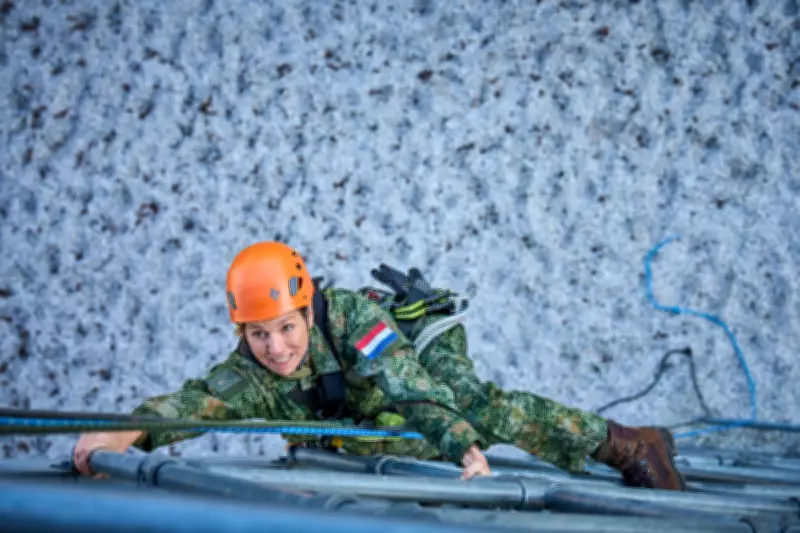
Photographs released by the House of Orange show Queen Máxima engaged in various training activities at a military academy in Breda, including marksmanship practice with a pistol, rock climbing exercises, and aquatic training involving a swimming pool jump while wearing specialised gear. The defence ministry outlined that her training will encompass "all the practical and theoretical military components necessary to become a reservist," specifically mentioning physical resilience, self-defence, marksmanship, map reading, and military law.
Upon successful completion of this comprehensive programme, Queen Máxima will be awarded the rank of lieutenant-colonel and will be available for deployment "wherever needed." While reservists typically undertake duties within the Netherlands, Ministry spokesperson Meijer noted they have occasionally been deployed overseas on a voluntary basis.
European-Wide Military Recruitment Drive
The Netherlands' military expansion occurs against a backdrop of broader European efforts to strengthen defence capabilities. The incoming Dutch coalition government, expected to be sworn in later this month, has announced plans to increase military personnel to 122,000 staff, a significant rise from the current 80,000 that includes military personnel, civilians, and reservists like Máxima.
This Dutch initiative parallels similar programmes across Europe. Germany has approved government plans to attract more military recruits, while France unveiled a new programme in November aimed at training thousands of volunteers aged 18 and 19, with ambitions to reach 50,000 volunteers annually by 2035. Denmark has extended compulsory enlistment to women for the first time, and neighbouring Belgium has reactivated two military brigades as part of wider defence enhancements.
Security Concerns Driving Recruitment Success
Dutch navy chief Vice Admiral Harold Liebregs noted at a recent Paris naval conference that European militaries are experiencing improved recruitment and retention rates, attributing this partly to growing public awareness of security threats. "Something happened in Europe," Liebregs observed. "We have been struggling with shortages of personnel for a couple of years but now for the first time in years we see that the retention rate is pretty OK. Recruitment and influx is also picking up... People are really willing to join the navy."

Retired French Air Force General Jean-Paul Paloméros commented on the broader significance of these recruitment drives, stating that while challenging and resource-intensive, they help ensure "that the young generations understand that freedom and peace are not taken for granted and it doesn't come as a free lunch." These European military expansions come as nations work toward NATO spending commitments made at last year's summit, with security concerns heightened by Russia's ongoing war against Ukraine and evolving transatlantic defence relationships.