Sophie, Duchess of Edinburgh has delivered a powerful statement emphasising the central role of women in rebuilding and peacekeeping efforts within conflict zones, as Sudan's brutal civil war passes a devastating milestone of 1,000 days.
A Stark and Terrible Milestone
The Duchess described the 1,000-day mark as a "stark and terrible milestone" that should compel global reflection, not only due to the immense scale of suffering but because this crisis has unfolded with alarmingly little international attention.
Sudan's conflict has created the world's most severe humanitarian crisis, with more than one in three people requiring urgent assistance. The collapse of livelihoods and essential services has left approximately 65% of the population without access to healthcare, as an estimated 70 to 80% of hospitals and health facilities have been rendered non-operational.

Witnessing Resilience Amid Desperation
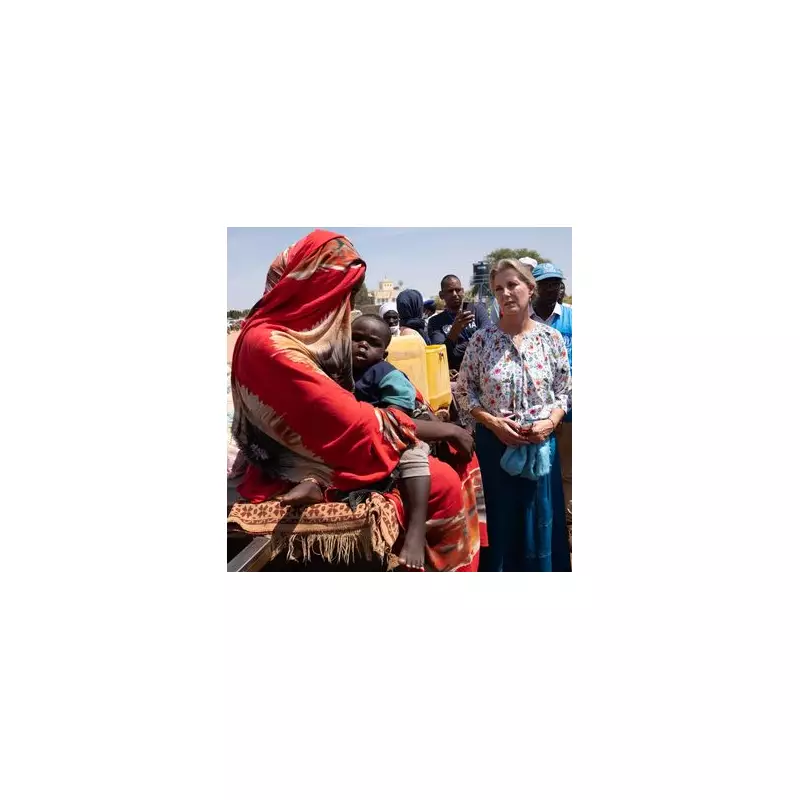
Speaking to The Telegraph, the 61-year-old royal shared harrowing accounts from her visit to the Adré transit camp on the Chad-Sudan border, where she witnessed the work of organisations including Plan International UK and UNICEF.
"I heard stories of profound loss and resilience," the Duchess revealed. "Young children whose entire families had been killed in the most indescribable ways, mothers who had witnessed the murder of their husbands and sons, and women who had suffered sexual exploitation in exchange for food and water."
She described how survivors' eyes told "tales of horrors no one should ever see," recounting specific atrocities including bodies piled like walls, families drowned at gunpoint, children carved in two, and systematic rape and beatings of women.
Women as Central to Recovery
Despite these desperate circumstances, the Duchess emphasised that what stayed with her most was "the extraordinary strength" she witnessed among women affected by the conflict.
"I met women who had fled the conflict now caring for children separated from their families," she said. "Their resilience and quiet leadership reminded me of what I have witnessed time and again – that women are central not only to surviving crises, but to rebuilding and striving for lasting peace."
The Duchess, who serves as a champion for the Women, Peace and Security agenda both domestically and internationally, stressed that when women are supported and empowered, entire communities demonstrate better recovery capabilities.
Compounding Humanitarian Challenges
The crisis has been exacerbated by multiple overlapping emergencies. Sudan currently faces the world's largest food crisis, with close to 21.2 million people experiencing high levels of acute food insecurity.
Displaced populations are forced into increasingly precarious conditions within unsafe settlements, where overcrowding, makeshift shelters, hunger and disease outbreaks create complex challenges that become harder to address amid reduced international funding.
Sharp cuts in foreign assistance have weakened humanitarian operations significantly, stripping funding from essential programmes that provide food, basic healthcare, clean water, sanitation and safe living spaces while increasing risks of gender-based violence.
International Community Urged to Act
The Duchess joined her voice with 13 of Britain's leading aid agencies who have united to call on the UK government to take immediate action to prevent further catastrophe in Sudan.
"We cannot change the past 1,000 days," Sophie stated, "but this sobering milestone reminds us of the opportunity for organisations working tirelessly on the ground to shape what happens next."
She emphasised the importance of standing alongside "remarkable individuals, including female peace-builders and women-led organisations" to ensure that the voices and needs of conflict-affected populations are heard and valued.
On-the-Ground Realities
Humanitarian workers operating in Sudan have provided stark assessments of the deteriorating situation. Samy Guissebi, Country Director for Action Against Hunger in Sudan, warned that "Sudan cannot be allowed to fade into another forgotten crisis, worse, a neglected one."

Mohamed Kamal, Country Director for Plan International Sudan, described conditions as "unimaginable," with staff meeting families who haven't regularly accessed food for over a year. He noted that women, children and people with disabilities are suffering most severely from hunger and exhaustion upon reaching displacement camps.
Despite severe constraints, humanitarian organisations continue working in hardest-to-reach areas including North Darfur, which has experienced some of the conflict's worst fighting. They urgently call for drastically scaled-up international funding and unfettered access for aid delivery across all regions of Sudan.
The Duchess concluded with a message of enduring hope: "Their courage is a powerful reminder that even in the most difficult circumstances, hope can endure."